Clear Sky Science · en
Quantifying the impact of fleet planning re-optimization on truck electrification in distribution logistics
Rethinking How Goods Get to the Store
As more companies pledge to cut their climate impact, the heavy trucks that restock our supermarkets have come under scrutiny. Swapping diesel trucks for battery-powered ones seems like an obvious fix, but this study shows that simply trading engines is not enough. By rethinking how delivery routes are planned in the first place, the authors find that grocery chains can electrify far more of their transport—while actually saving money.
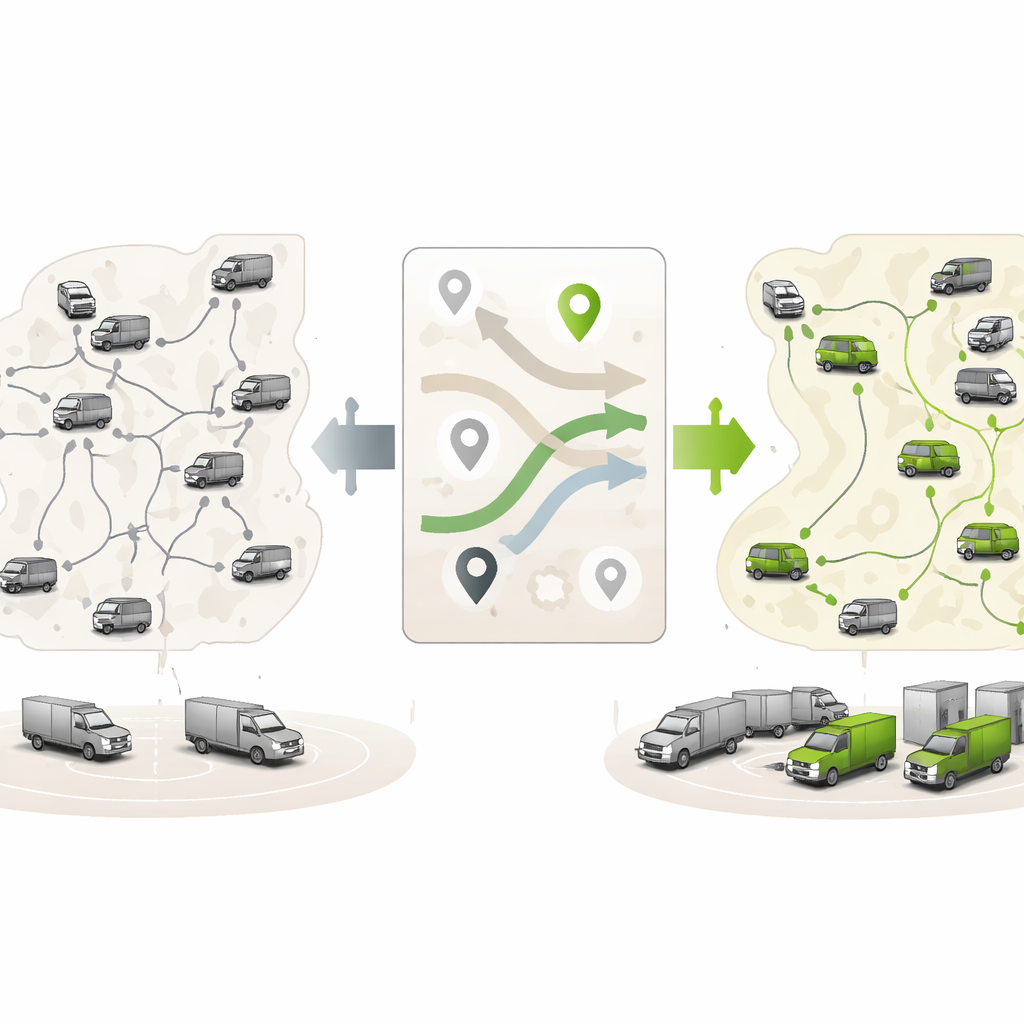
From One‑for‑One Swaps to Smarter Fleets
Most current plans to electrify freight treat electric trucks as if they were diesel trucks with a different fuel tank. A diesel vehicle’s route and schedule are taken as given, and planners ask whether an electric truck can handle that exact pattern of trips without running out of charge or overloading its battery budget. This one‑for‑one swap is simple and familiar, but it ignores how different electric trucks really are: they have other cost structures, need charging windows instead of refueling stops, and may be better suited to some types of trips than others. Logistics providers have long suspected that this approach underestimates what electric fleets could do; this study sets out to measure that gap.
Real Deliveries, Not Toy Examples
The authors base their analysis on a month of real shipment data from one of Germany’s largest grocery chains, covering about 38,000 deliveries to more than 500 stores served by two distribution centers. They compare two strategies. In the first, an optimized diesel schedule is created and then individual diesel trucks are replaced by electric ones wherever technically and economically feasible, but the underlying routes stay the same. In the second, the entire fleet is redesigned from scratch: the mix of diesel and electric vehicles, which truck serves which store, and when and where each truck charges are all co‑optimized using a specialized planning tool. They test both strategies under two charging setups—only at the depot between shifts, or depot charging plus faster chargers available while trucks are being loaded—and under two objectives: minimizing total cost or maximizing the share of electric trips.
Much More Can Be Electrified Than Expected
When operations are re‑planned rather than copied from diesel schedules, the share of work that can be handled by electric trucks rises dramatically. Under realistic assumptions, the optimized approach lets electric trucks carry roughly 79–85% of all delivered weight, compared with only 36–48% under one‑for‑one replacement. Similar jumps appear for distance driven and tonne‑kilometers. The bottleneck is not so much battery range or lack of chargers but the way routes are structured: legacy diesel plans scatter long and short trips across trucks in ways that are awkward for electric vehicles. By clustering deliveries that are well suited to battery trucks and reshuffling the remaining work toward diesel, the optimizer unlocks far more electrification without changing the physical hardware.
Lower Costs Through Better Use of Each Truck
The study also follows the money by calculating total cost of ownership for the whole fleet, including vehicles, drivers, energy, tolls, and charging stations over an eight‑year period. Electric trucks are more efficient but more expensive to buy, so they only pay off if they are used intensively. Re‑optimization ensures that this happens: it assigns electric trucks to frequent, high‑payload trips within their comfortable range, while diesel trucks are reserved for fewer, longer routes to distant stores. This division of labor boosts the use of battery trucks and cuts operating costs. In the most cost‑effective scenarios, re‑optimization roughly doubles the fleet’s cost savings compared with one‑for‑one replacement, reducing total costs by about 7% versus 3.5% relative to an all‑diesel baseline. Interestingly, while extra charging at loading bays is essential to increase electrification under the one‑for‑one strategy, a re‑optimized fleet can often work around limited charging by choosing different schedules.
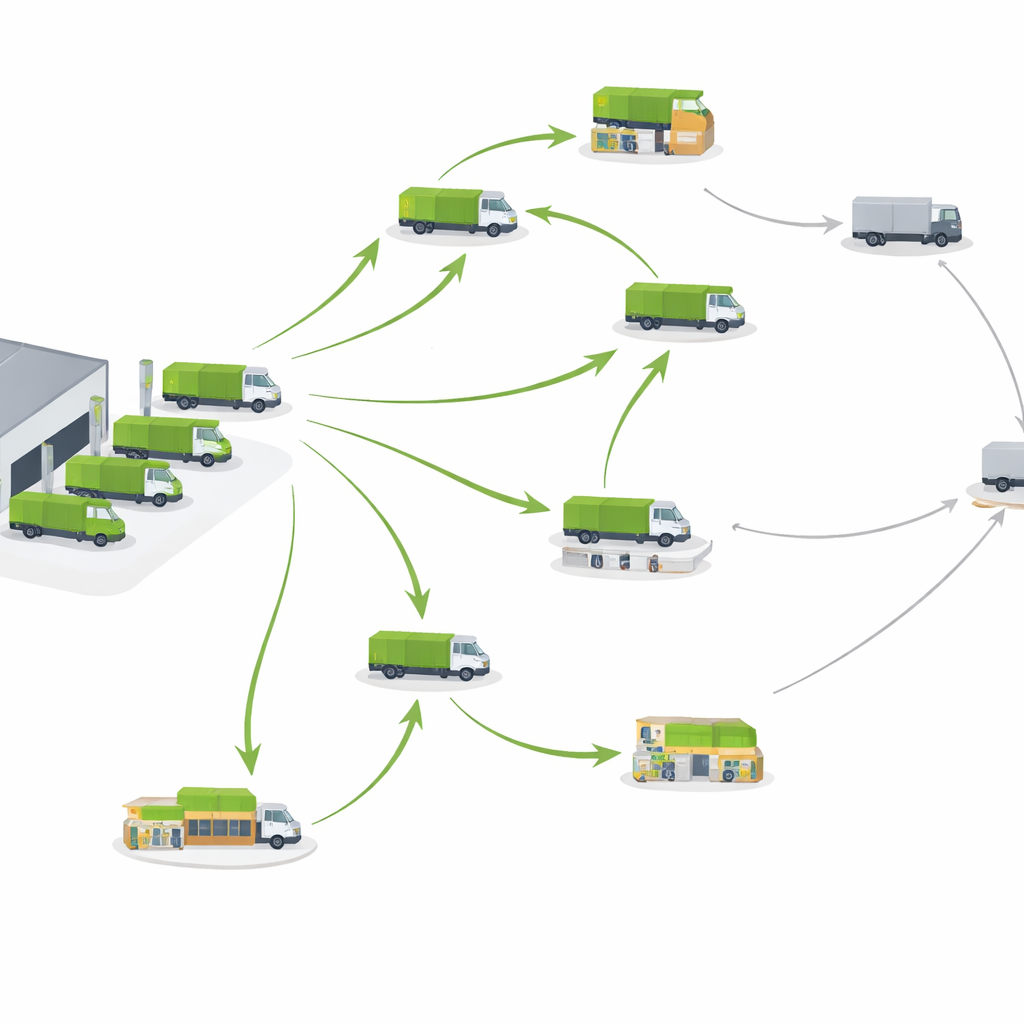
How Electric and Diesel Trucks Find Their Niche
Looking closely at daily patterns, the authors find that mixed fleets naturally split into two roles. Electric trucks tend to carry larger loads over shorter daily distances, running many full trips close to the distribution centers. Diesel trucks, by contrast, drive longer distances with lighter loads, linking far‑flung stores and absorbing more empty miles between them. This “specialization by design” is not obvious when routes are simply inherited from diesel days, but it emerges clearly once an algorithm is allowed to reorganize the work. The result is a heterogeneous but coordinated system in which each type of truck does what it is best suited for, rather than trying to use electric vehicles as drop‑in replacements everywhere.
What This Means for the Road Ahead
For retailers, freight companies, and policymakers, the message is that software and planning are as important as batteries and chargers. Studies that assume today’s diesel routes will simply be driven by electric vehicles may be painting an overly pessimistic picture of what is technically and economically possible. This work suggests that by redesigning delivery plans around the strengths and limits of electric trucks, companies can electrify the majority of their regional freight, cut total costs, and still rely on a smaller number of diesel trucks for the hardest routes. In short, the path to cleaner truck fleets is less about waiting for perfect vehicles and more about using smarter planning to make the most of the ones we already have.
Citation: Zackrisson, A., Engholm, A., Bengtsson, T. et al. Quantifying the impact of fleet planning re-optimization on truck electrification in distribution logistics. npj. Sustain. Mobil. Transp. 3, 23 (2026). https://doi.org/10.1038/s44333-026-00091-7
Keywords: electric trucks, fleet optimization, grocery logistics, charging infrastructure, transport decarbonization