Clear Sky Science · en
Balancing energy resilience and mobility: a multi-objective strategy for deploying shared autonomous electric vehicles during power outages
Cars That Keep the Lights On
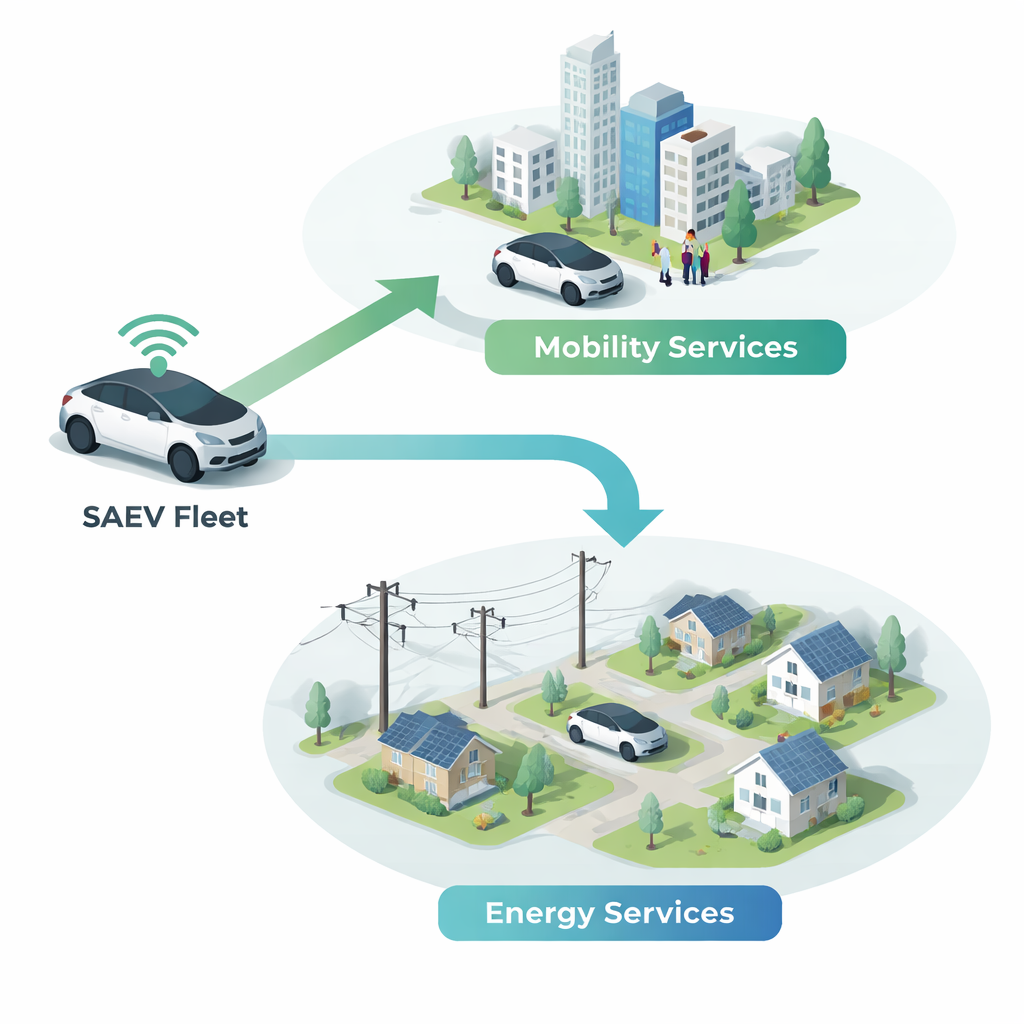
Imagine a future blackout where the same driverless electric cars that usually ferry people around the city quietly roll in to power homes, clinics, and shelters. This paper explores how fleets of shared autonomous electric vehicles (SAEVs) could serve this double duty—keeping people moving while also acting as mobile batteries that help neighborhoods ride out power outages.
Two Jobs for One Fleet
SAEVs combine three ideas that are rapidly transforming cities: car sharing, self-driving technology, and electric power. Because these vehicles are centrally managed rather than privately owned, operators can redirect them where they are most needed, instead of hoping that individual car owners will volunteer. Their batteries can be charged in normal times and then partly emptied at buildings or local hubs when the electricity grid fails. That makes every vehicle a small, flexible power plant on wheels. The catch is that every minute a car spends delivering electricity is a minute it is not carrying passengers—so cities and fleet operators must decide how to balance these roles.
Testing the Idea in a Real City
To study this trade-off, the authors built a detailed computer model of Montreal’s road network, travel demand, and likely outage locations. They imagined a medium-sized fleet of 100 SAEVs, each with a battery similar to a modern long-range electric car. The model tracks where people want to travel, how far vehicles must drive, how quickly they can charge, and how much backup power certain downtown areas might need during a day with several typical outage “pulses.” The key twist is that the fleet is guided by a decision-making framework that treats passenger trips and energy deliveries as two goals that often conflict, and then searches for operating plans that make the best possible compromises between them.
Finding the Sweet Spot
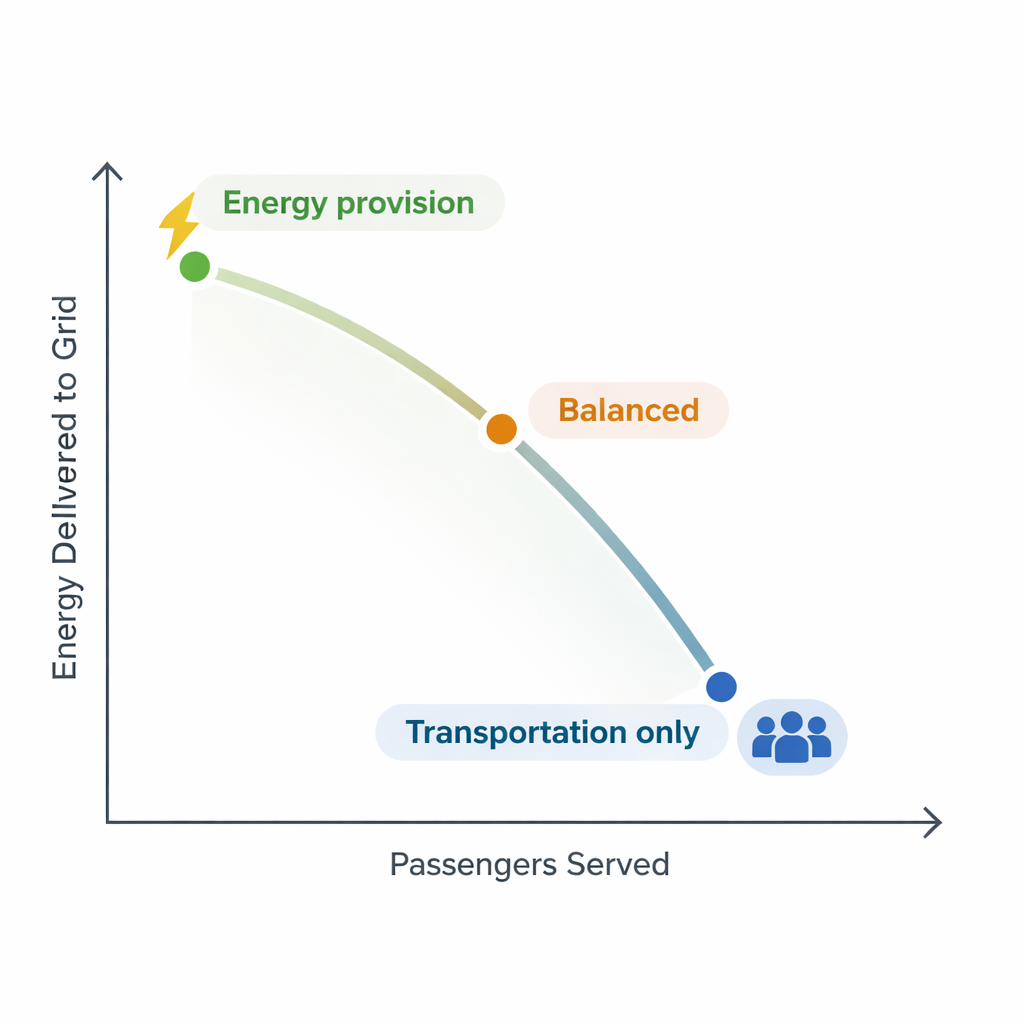
By running many simulations, the researchers mapped out a curve of possible outcomes. At one extreme, the fleet focuses solely on mobility, serving about 5,700 passenger pick-ups in a day but delivering no energy to the grid. At the opposite extreme, the same vehicles prioritize power support, supplying roughly 7,200 kilowatt-hours—enough for the daily use of around 180 homes—yet they move only about 1,600 passengers. A middle “balanced” plan lies between these poles: it serves roughly 3,500 trips while still delivering close to 4,000 kilowatt-hours to outage areas. In other words, the same fleet can satisfy roughly 2% of daily travel demand or about 28% of the energy needs in affected zones, but not both at once. Choosing where to operate on this curve is ultimately a policy and business decision.
What Matters More: More Cars or Better Chargers?
The team also tested how sensitive the system is to different design choices. Surprisingly, simply adding more vehicles did little to increase the number of trips when chargers were slow, because too many cars sat waiting to refuel. In contrast, upgrading charging power made a big difference: faster chargers allowed cars to return to service sooner, enabling many more passenger trips and more flexible energy deliveries. Likewise, raising the price paid for emergency power strongly boosted operator revenues without greatly harming mobility, whereas cutting that tariff discouraged vehicles from helping the grid at all. These results suggest that carefully designed payments and well-placed, powerful, bidirectional chargers matter more than squeezing in a few extra cars or slightly bigger batteries.
Why This Matters for Future Cities
For non-specialists, the main message is simple: future fleets of driverless electric taxis could do far more than just offer convenient rides. If cities invest in the right neighborhood charging hubs and pay fairly for emergency power, these vehicles could form a roaming safety net, shaving the peaks off blackouts and helping neighborhoods recover faster. Yet the study also warns that this energy role must be limited. Push SAEVs too hard as mobile generators and residents will face long waits for rides just when they most need to reach work, hospitals, or family. Striking a smart balance—supported by thoughtful rules, tariffs, and infrastructure—could turn tomorrow’s shared cars into quiet, dependable partners for both clean mobility and urban energy resilience.
Citation: Augusto Manzolli, J., Yu, J., D’Apice, A.V. et al. Balancing energy resilience and mobility: a multi-objective strategy for deploying shared autonomous electric vehicles during power outages. npj. Sustain. Mobil. Transp. 3, 13 (2026). https://doi.org/10.1038/s44333-026-00081-9
Keywords: shared autonomous electric vehicles, urban energy resilience, power outages, vehicle-to-grid, sustainable mobility