Clear Sky Science · en
Economic modeling of polygenic risk prediction of coronary artery disease in childhood
Why Heart Health Starts in Childhood
Most people think of heart attacks as a problem of middle age or later life, but this study argues that the seeds of heart disease are sown much earlier—often in childhood. The researchers explored whether a simple DNA-based test, done once early in life, could flag children who are much more likely to develop serious heart problems as adults. They then asked a practical question: if we used that information to focus healthy-living programs on those highest‑risk kids, would it be worth the cost for families and health systems?
Using DNA as an Early Warning Signal
The study centers on “polygenic risk scores,” which combine the tiny effects of many common genetic variants into a single measure of inherited risk for coronary artery disease, the main cause of heart attacks. Unlike cholesterol levels or blood pressure, which change over time, this genetic signal is fixed from birth. Earlier research in adults has shown that people with very high scores are far more likely to develop heart disease, and small studies in young people suggest that high scores go hand‑in‑hand with early artery changes even when standard lab tests look normal. Yet almost no work has examined what it would mean to use these scores in everyday pediatric care.
What the Researchers Simulated
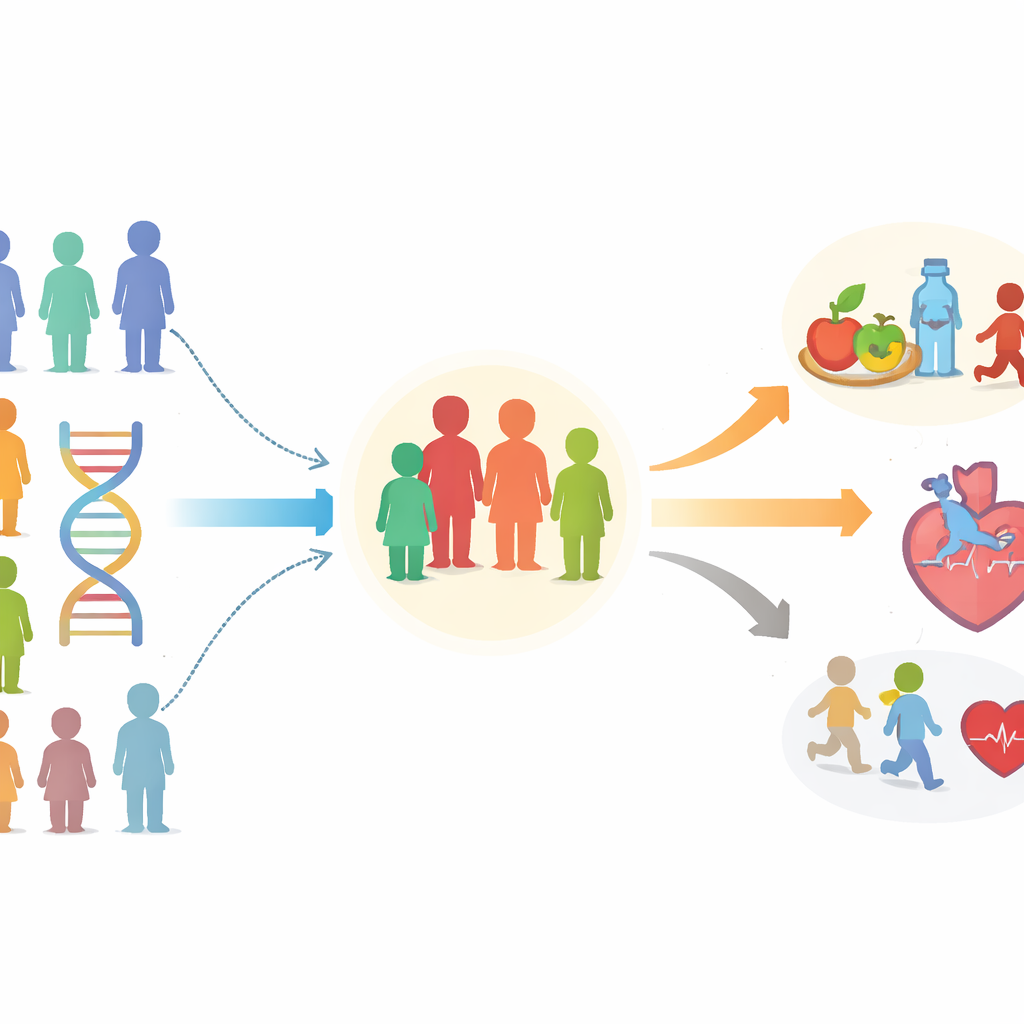
Because long-term trials in children do not yet exist, the authors built a computer model to simulate what might happen over a lifetime. They imagined a population of 10,000 children starting at age 10. Everyone received routine pediatric care, but only in the modeled “genetic program” arm did all children get a one-time DNA test. Those in the top fifth of genetic risk—about 2,000 kids—were offered extra help: structured lifestyle coaching around diet and exercise, and for the top 2% at very high risk, long-term cholesterol‑lowering medicine. The model then followed these children into adulthood, using adult data to estimate how often heart attacks, strokes, and deaths would occur with and without these extra steps.
Health Gains from Targeted Prevention
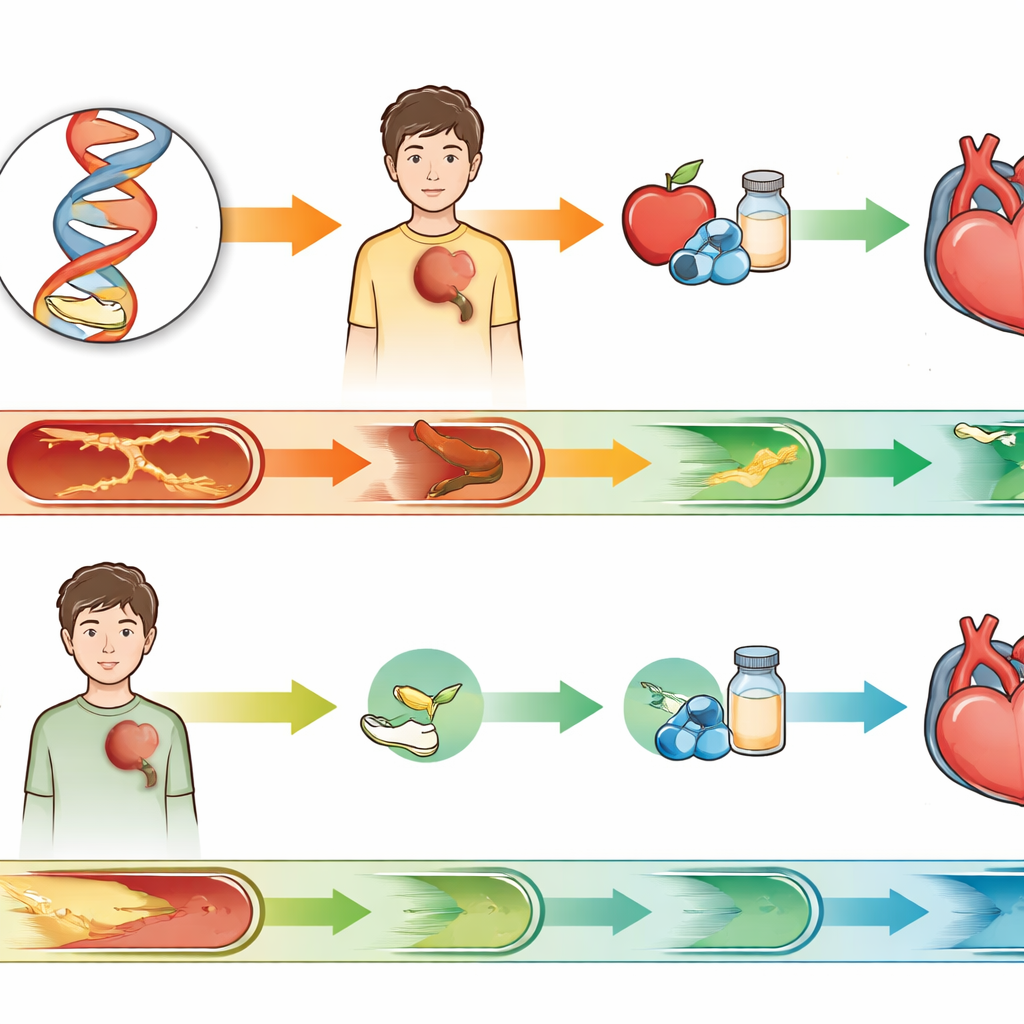
The simulations suggested that children with very high genetic risk who received no special prevention would live about 10 fewer years, and spend fewer of those years in good health, than children with low genetic risk. They also faced much higher chances of heart attack, stroke, and dying from heart disease. When targeted prevention was added for high‑risk children, the model projected that life expectancy could rebound by roughly seven years and that quality‑adjusted life years—a measure that blends length and quality of life—would climb sharply. Across the 10,000‑child population, focused interventions in just the top 20% of genetic risk were expected to prevent 72 cases of coronary artery disease over the first decade of adult life and many more over a full lifetime.
Does the Investment Pay Off?
To judge whether this strategy is worth pursuing, the team compared the costs of genetic testing, counseling, and long-term treatment with the savings from avoided hospital stays, procedures, and lost productivity. They estimated that testing 10,000 children and running the program would cost just under $5 million, most of it from the one-time genetic assay. In return, the model projected more than $30 million in direct medical savings, nearly $96 million in added healthy life years (valued using standard health‑economics methods), and additional gains from people remaining in the workforce. When broader spillover benefits—such as lower rates of diabetes and other conditions from healthier lifestyles—were included, the total societal benefit reached about $185 million. That translates to roughly $36 back for every $1 invested, and a cost per added healthy year of life far below what is usually considered good value in healthcare.
Challenges, Caveats, and Next Steps
The authors stress that their results are projections, not guarantees. Because long-term pediatric studies are scarce, they had to lean on adult data and make conservative assumptions, which likely understate the true benefit of starting prevention early. They also highlight ethical and practical hurdles: most existing genetic data come from people of European ancestry, meaning scores may be less accurate for other groups; families may worry about stigma or insurance issues; and keeping children and teenagers engaged in lifestyle changes and medication over many years is difficult. Still, sensitivity analyses showed that the strategy remained cost‑effective across a wide range of assumptions and across several high‑income countries. The study concludes that using DNA-based risk scores to guide early heart‑disease prevention in children is a promising, high‑value idea—worthy of carefully designed pilot programs and long‑term follow‑up to see how it works in the real world.
Citation: Bitar, F., Zareef, R., Ismaeel, H. et al. Economic modeling of polygenic risk prediction of coronary artery disease in childhood. npj Cardiovasc Health 3, 13 (2026). https://doi.org/10.1038/s44325-026-00110-z
Keywords: polygenic risk score, childhood heart disease prevention, coronary artery disease, genomic screening, health economic modeling