Clear Sky Science · en
Short- and long-term outcomes of systemic semilunar valve replacement in neonates and infants
Why tiny hearts and big decisions matter
When a baby is born with a serious problem in one of the heart’s main outlet valves, surgeons sometimes have to replace that valve in the first year of life. These are among the most complex operations in pediatric heart care, and families often face them with little long-term information to guide expectations. This study followed hundreds of such cases across the United States over several decades to find out which operations fare better, how risks have changed over time, and what factors tip the balance between life and death for these vulnerable patients.
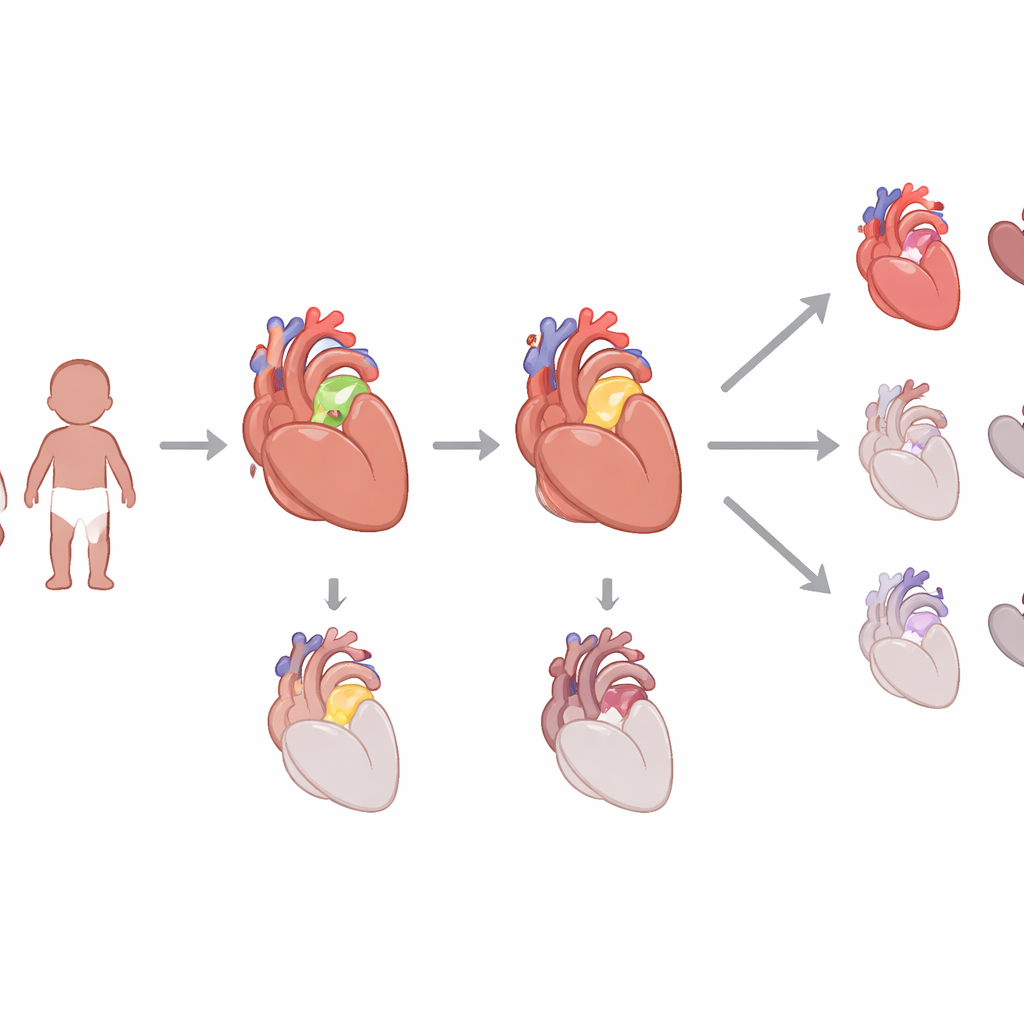
Three different paths for sick heart valves
The researchers focused on the “systemic semilunar valve,” the valve that lets blood leave the heart and travel to the body. In most babies in this study, that valve was the aortic valve; in some, it was a combined outlet called the truncal valve. When the valve is too damaged to repair, surgeons have three main choices. One is the Ross procedure, which moves the baby’s own lung valve into the main outlet position and replaces the lung valve with a donor or artificial one. Another is standard aortic valve replacement using a donated or artificial valve. The third, used for truncus arteriosus, is truncal valve replacement. All three are rare and used as a last resort when simpler repairs are not possible or have failed.
What the nationwide records revealed
Using the Pediatric Cardiac Care Consortium, a registry of operations at 35 U.S. centers from 1982 to 2011, the team identified 167 babies who had one of these valve replacements before their first birthday. They then linked this information to the National Death Index to follow survival for up to 25 years. Even within this highly selected group, valve replacement was uncommon, making up less than half of one percent of all heart surgeries in newborns and infants. Most babies were boys, and just over a quarter were operated on during the first month of life, the neonatal period, when bodies are smallest and most fragile.
High risk in the hospital and beyond
Across all three operations, early risk was striking. Nearly half of the babies who had aortic valve replacement and just over half who had truncal valve replacement died before leaving the hospital, compared with about one in four who had the Ross procedure. Looking further out, survival at 25 years was estimated at 59% for Ross, 41% for truncal valve replacement, and only 29% for standard aortic valve replacement. Most deaths occurred in the first year after surgery, but children who had aortic valve replacement also faced additional deaths more than a decade later. Repeat operations or catheter procedures on the valves were common, particularly after the Ross procedure, and tended to cluster in the first few years after surgery.
Who does better and why
By comparing many patients at once, the researchers could see which factors most strongly shaped outcomes. Babies treated in more recent years had lower in-hospital death rates than those operated on in the 1980s and 1990s, reflecting advances in surgical skill, heart-lung machines, and intensive care. Heavier babies did better: each extra kilogram (about 2.2 pounds) at the time of surgery was linked to a meaningful drop in both short- and long-term risk. Newborns had worse outcomes than older infants, likely because they are smaller and often sicker. After accounting for these factors, the Ross procedure still stood out as safer than standard aortic valve replacement, with about three times lower odds of death in the hospital and over the long term.

Looking ahead to new options
Despite improvements over time, the study makes clear that replacing the main outlet valve in the heart of a newborn or young infant remains extremely risky, and survival even decades later is far from guaranteed. The Ross procedure appears to offer the best balance of survival in this age group, but it creates a lifetime need to watch and sometimes re-treat the lung valve position. For babies whose anatomy rules out a Ross operation, new ideas such as living “partial heart” transplants or custom-built tissue valves are being explored, with early reports suggesting they may grow with the child and reduce the need for repeated major surgery. For families and doctors facing these difficult choices today, the long-term data from this work provide a clearer, if sobering, picture of the stakes and underline the urgent need for safer, more durable solutions for the smallest hearts.
Citation: Masri, A., Shi, C.Y., Winemiller, B. et al. Short- and long-term outcomes of systemic semilunar valve replacement in neonates and infants. npj Cardiovasc Health 3, 12 (2026). https://doi.org/10.1038/s44325-026-00109-6
Keywords: congenital heart surgery, aortic valve replacement, Ross procedure, neonatal cardiology, long-term survival