Clear Sky Science · en
Mechanisms underlying superior outcomes of transcatheter aortic valve implantation with the latest balloon expandable valve
Why This Heart Valve Study Matters
More and more older adults are getting a minimally invasive heart procedure called TAVI instead of open-heart surgery to fix a tight aortic valve. This study asks a simple but important question: does the newest version of a commonly used artificial valve actually keep people healthier than the earlier model, especially in people with smaller hearts and blood vessels? The answer affects not just how long patients live, but how often they avoid strokes, hospital stays, and shortness of breath in everyday life.
A New Generation of Heart Valve
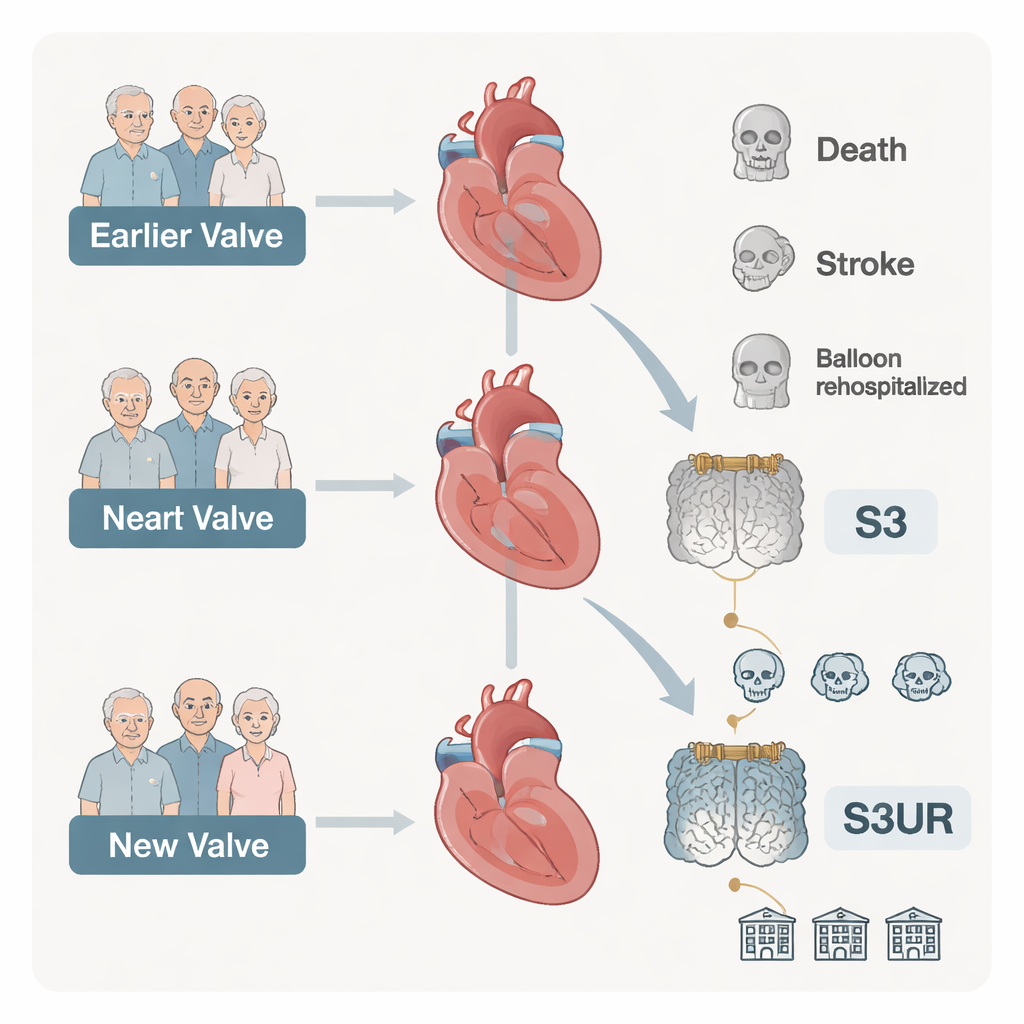
The research focuses on two balloon-expandable replacement valves used during TAVI: the older SAPIEN 3 (S3) and the newer SAPIEN 3 Ultra RESILIA (S3UR). Both are mounted on tiny metal frames that doctors deliver to the heart through a blood vessel in the leg, then expand to push aside the patient’s diseased valve. The S3UR adds refinements to the tissue and how the three valve flaps are sewn, particularly in the smallest sizes, with the goal of letting blood flow more freely and reducing leaks around the outside of the valve. The study uses data from a large Japanese registry of TAVI procedures to see whether these design tweaks translate into real-world benefits.
Tracking Real Patients Over a Year
From more than 3,800 people who received one of these valves, the team selected two groups of 775 patients each—one treated with S3UR, the other with S3—carefully matched so they were similar in age, frailty, and other health problems. Most participants were in their mid‑80s and had serious aortic narrowing that made it hard for the heart to pump blood to the body. Doctors recorded complications around the time of the procedure and then followed patients for about a year, checking survival, strokes, hospitalizations for heart failure, and ultrasound measures of how well the artificial valves were working.
Cleaner Blood Flow and Fewer Leaks
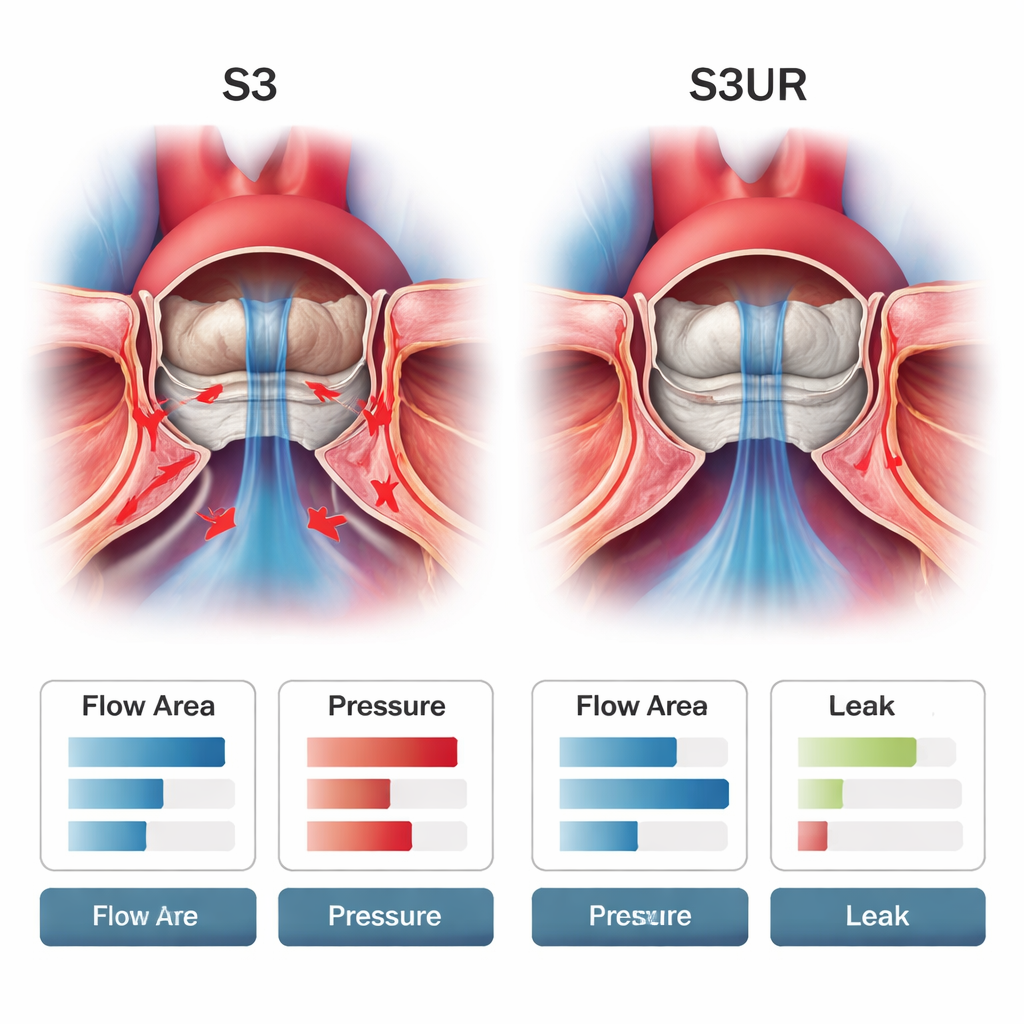
Right after the procedure, heart ultrasound showed that S3UR allowed blood to pass more easily than S3. The opening created by S3UR was larger, and the pressure the heart had to generate to push blood through was lower. Importantly, there was less “paravalvular leak,” where blood squirts backward around the outside of the valve instead of going forward through it. These benefits largely persisted at one year: valves in the S3UR group still had slightly larger openings, lower pressures, and fewer patients with troublesome levels of leak or with valves that were considered too small for their body size. These advantages were especially clear in people receiving the smallest valve sizes (20 and 23 millimeters), who are often at higher risk of problems because of their smaller anatomy.
Better Outcomes for the New Valve, Especially When Small
These mechanical improvements were mirrored by better clinical outcomes. After one year, fewer people with S3UR had died from any cause (about 10% versus 13% with S3), and they were less likely to have suffered a stroke or to be readmitted to the hospital for worsening heart failure. No one in either group needed another valve procedure. When the researchers looked specifically at patients who received the smaller valve sizes, the differences became even more pronounced: deaths, strokes, and heart failure hospitalizations were all clearly lower with S3UR, while results for larger valves were similar between the two models. The authors note that other factors—such as increased operator experience and greater use of lighter, local anesthesia—might also have helped improve outcomes over time.
What This Means for Patients
For patients and families, the study suggests that the latest generation S3UR valve does more than just look good on technical scans: it is linked with lower chances of death, stroke, and heart failure hospitalization, particularly in people who need the smallest devices. In everyday terms, the newer valve helps the heart pump more smoothly and with less backward leakage, which seems to pay off in better health over at least a year. While the study was not a randomized trial and longer follow-up is still needed, its large, real-world data set supports choosing the newer valve design when possible, especially for patients with smaller hearts and narrow blood vessels who stand to benefit the most.
Citation: Iwata, J., Yamamoto, M., Arita, R. et al. Mechanisms underlying superior outcomes of transcatheter aortic valve implantation with the latest balloon expandable valve. npj Cardiovasc Health 3, 9 (2026). https://doi.org/10.1038/s44325-026-00105-w
Keywords: aortic valve, TAVI, heart failure, stroke prevention, valve replacement