Clear Sky Science · en
An IL6 variant -174 G-C alters cardiac hypertrophy but not cardiometabolic responses to HFD in mice
Why a tiny genetic tweak matters
Doctors know that some people are more prone to heart disease and type 2 diabetes than others, even when their lifestyles look similar. One suspect is a common change in a gene that controls the inflammatory messenger interleukin‑6 (IL‑6). Because this change has been linked to higher blood IL‑6 levels and greater risk of heart and metabolic problems in some human populations, researchers set out to test whether the variant itself directly worsens the body’s response to an unhealthy, high‑fat diet.
A closer look at a common gene variant
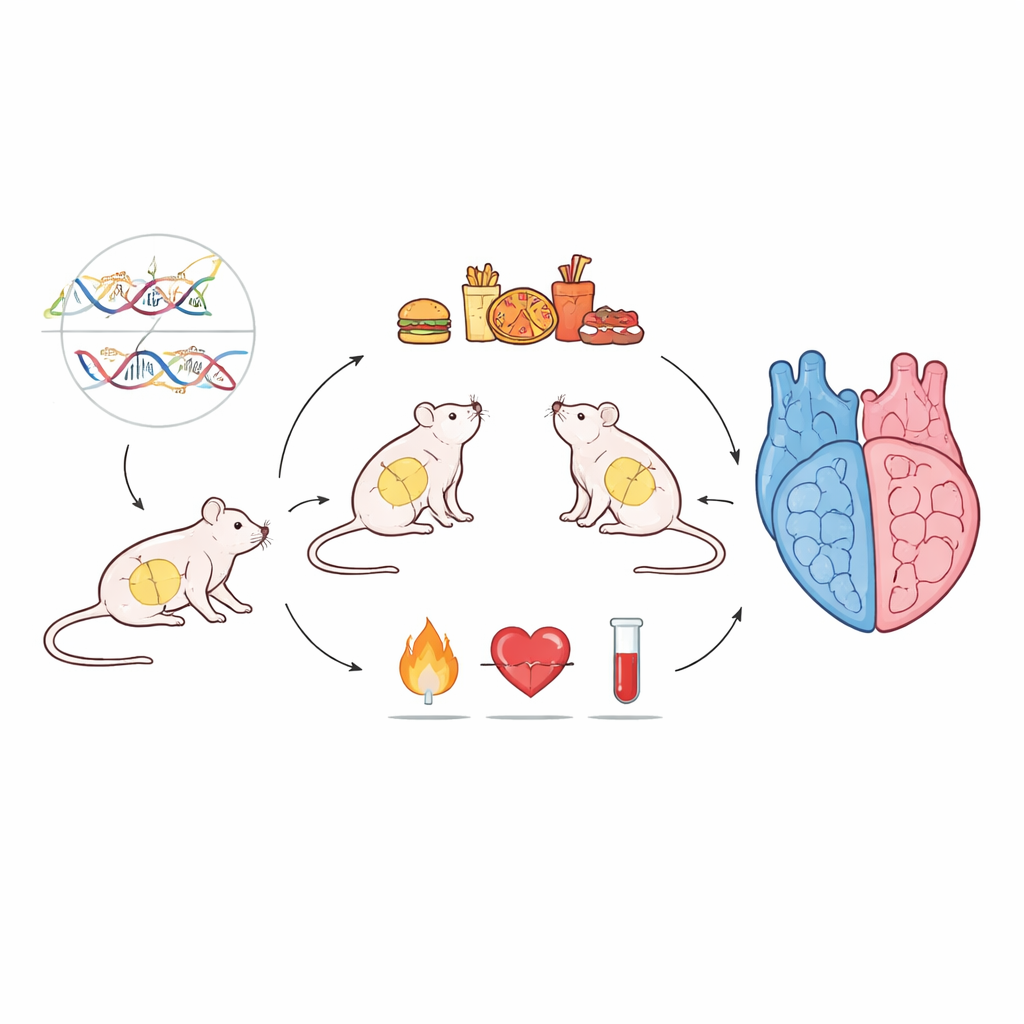
IL‑6 is a signaling protein that helps coordinate the body’s immune and inflammatory responses. Too much IL‑6 over long periods has been associated with obesity, insulin resistance, artery‑clogging plaques, and abnormal thickening of the heart muscle. A frequent DNA change in the IL‑6 promoter region, known as −174 G/C, is thought to dial IL‑6 production up or down. To isolate its effects, the team engineered mice that carry either the usual version of this promoter (GG) or the variant version (CC) in the mouse Il6 gene, closely mirroring the human change. Male and female mice from both groups were then fed a calorie‑dense, high‑fat diet for ten weeks to mimic chronic nutritional stress.
Weight, metabolism, and blood sugar stay surprisingly stable
Given the human data, one might expect the variant mice to gain more weight or develop worse blood‑sugar control on the high‑fat diet. Instead, the researchers found that GG and CC mice gained similar amounts of body weight and body fat, and their pattern of fat storage in different depots was nearly identical. When the animals’ energy use was monitored around the clock, there were no meaningful differences in how much energy they burned or in their preference for burning fats versus carbohydrates. Tests of fasting blood glucose, the body’s response to a sugar load, and sensitivity to injected insulin all came out alike in both genotypes and in both sexes. In other words, despite higher genetic potential for IL‑6 production, the CC mice did not show worse overall metabolic health under these conditions.
Inflammation rises, but tissues do not follow suit
The story became more nuanced when the team looked directly at IL‑6 and inflammation. As expected, the high‑fat diet raised IL‑6 levels in the blood, and this rise was more pronounced in the CC mice, especially in males. Yet the fat tissue—the major site where excess IL‑6 is thought to drive disease—did not show stronger inflammatory signatures. The numbers and types of immune cells infiltrating the fat, including pro‑ and anti‑inflammatory macrophages, were broadly similar between GG and CC animals. Thus, even though the variant pushed circulating IL‑6 higher, this did not translate into obvious extra damage in fat tissue, nor into detectable worsening of metabolic control.
Subtle, sex‑specific changes inside the heart
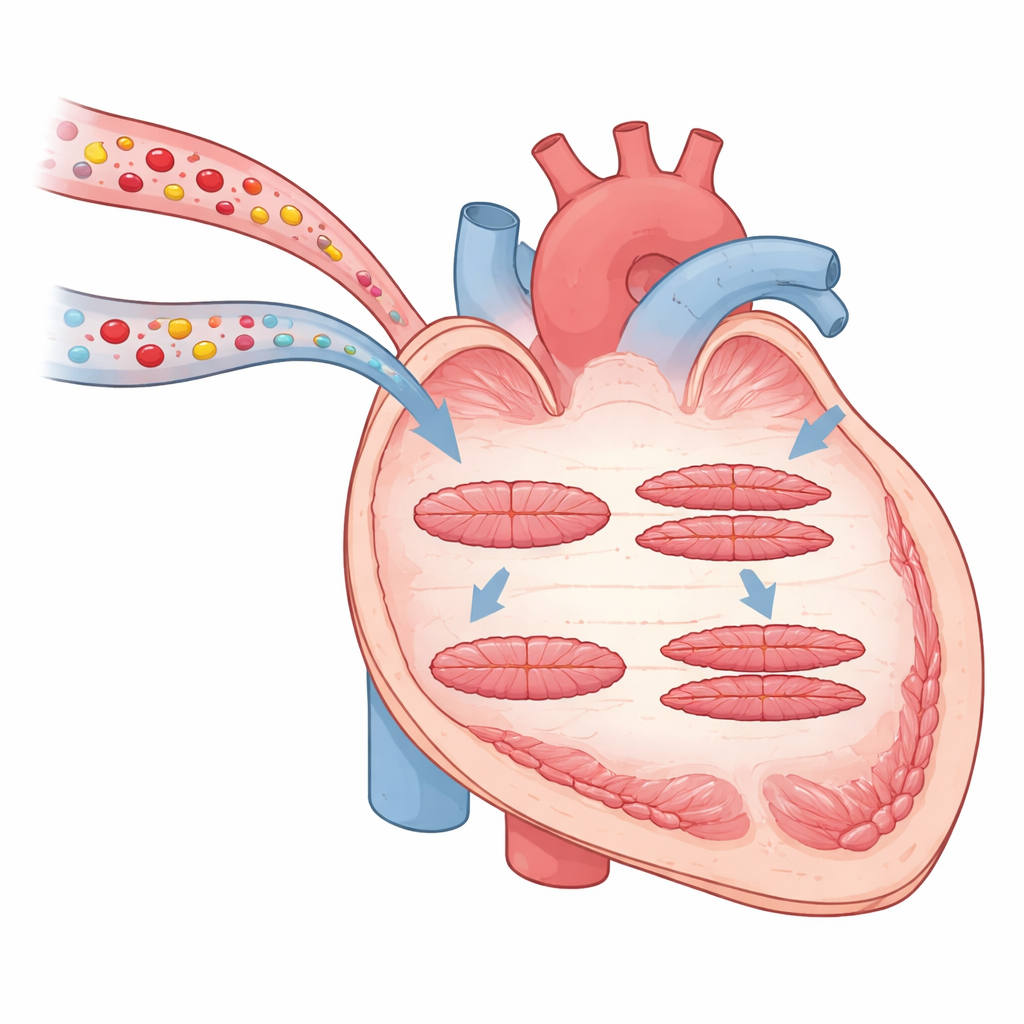
The heart offered the clearest hint that the IL‑6 variant can still leave a structural fingerprint. Standard ultrasound measurements showed that pump performance—the volume of blood ejected with each beat and the ease with which the heart relaxed between beats—remained normal and comparable between genotypes. However, when the researchers examined heart muscle under the microscope, they saw sex‑dependent remodeling. In male CC mice, individual heart muscle cells were smaller than in controls, suggesting a blunted thickening response and possibly more cells overall. In female CC mice, the opposite pattern appeared: their heart cells were larger, while overall heart mass was slightly lower, implying fewer cells that had grown bigger. These changes occurred alongside higher IL‑6 levels in the heart, particularly in females, hinting at a complex interplay between IL‑6 signaling, sex hormones, and heart‑cell survival.
What this means for human risk
Taken together, the findings suggest that, at least in this controlled mouse model and over a ten‑week high‑fat diet, the IL‑6 −174 G/C promoter variant by itself is not enough to trigger full‑blown cardiometabolic disease. The variant clearly boosts IL‑6 in the bloodstream and nudges heart‑cell structure in different directions in males and females, but it leaves body weight, fat gain, blood‑sugar handling, and basic heart function largely unchanged. For people carrying this genetic change, the work implies that any extra risk seen in population studies is likely to depend on other genetic variants, environmental exposures, or longer‑term stress. The variant may act more as a marker within a broader risk landscape than as a solitary driver of disease.
Citation: Watson, L., Annandale, M., MacRae, C. et al. An IL6 variant -174 G-C alters cardiac hypertrophy but not cardiometabolic responses to HFD in mice. npj Metab Health Dis 4, 13 (2026). https://doi.org/10.1038/s44324-026-00107-3
Keywords: interleukin-6, cardiometabolic disease, genetic variant, high-fat diet, cardiac hypertrophy