Clear Sky Science · en
A multi-omic approach reveals iron availability influences cell fate fidelity
Why the Iron in Lab Dishes Matters
When scientists grow human cells in a dish, they often assume the cells behave as they would in the body. But the chemical “soup” that keeps these cells alive can be very different from human blood. This study shows that one subtle ingredient—iron—can change the very identity of liver cells grown in the lab. The work reveals that getting nutrient levels right is crucial if we want lab results to truly reflect what happens in people.
A Tale of Two Liver Cell States
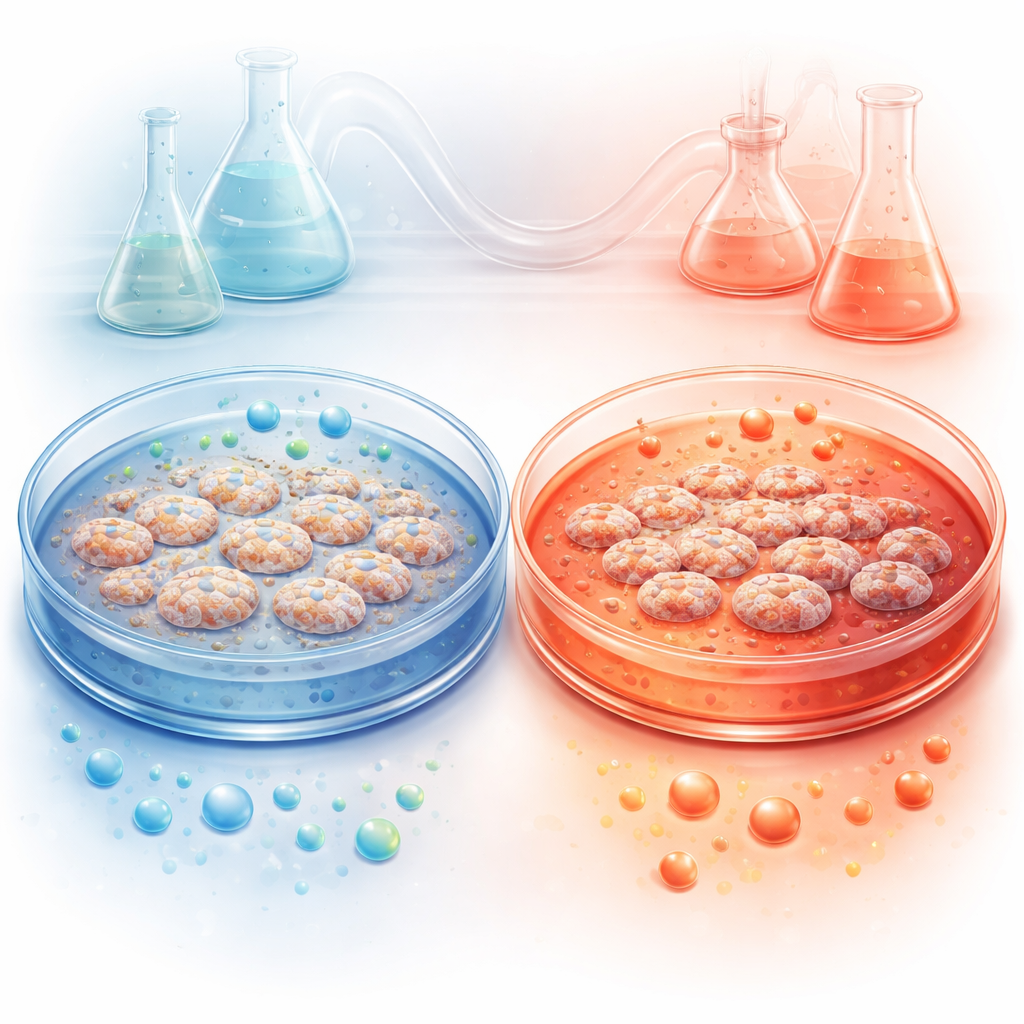
Liver cells, or hepatocytes, are workhorses of the body: they process drugs, manage fats, and detoxify chemicals. A widely used liver cell line called HepG2 comes from a childhood liver tumor, yet in standard lab media it behaves much like mature liver cells. The researchers asked what would happen if these cells were grown in a more realistic fluid called Plasmax, designed to mimic the mix of nutrients found in human blood. When HepG2 cells were moved from conventional media into Plasmax, their patterns of gene activity changed dramatically, unlike the minor differences seen between typical lab media recipes.
When Realistic Feels Less Mature
In Plasmax, HepG2 cells dialed down key genes controlled by a master regulator of liver identity called HNF4A. At the same time, genes linked to a more primitive, fetal-like liver cell type—known as hepatoblasts—switched on. The cells stored fewer fat droplets and became less sensitive to damage from alcohol, both signs that they had lost some of their mature liver functions. In effect, the cells reverted toward the kind of youthful state they originally came from, suggesting that the familiar “hepatocyte-like” behavior seen in standard media is actually a laboratory-induced identity rather than their native one.
Trace Elements and the Iron Clue
To pinpoint what in Plasmax caused this identity shift, the team removed specific components. Omitting a group of nutrients called trace elements—from iron to copper and selenium—restored HNF4A and brought the cells’ gene activity back toward a mature liver profile. Multi-layered measurements of genes and proteins showed that cells in Plasmax contained more than twenty times as much iron as those in conventional media, and several times more copper. When iron alone was added back to the trace element–free Plasmax, the cells again lost their mature liver signature, while copper did not have this effect. Proteins that depend on iron and other metals for their production changed in abundance, revealing that trace elements shape cell behavior not only by altering genes, but also by changing which proteins can actually be made.
How Iron Tips the Cellular Balance
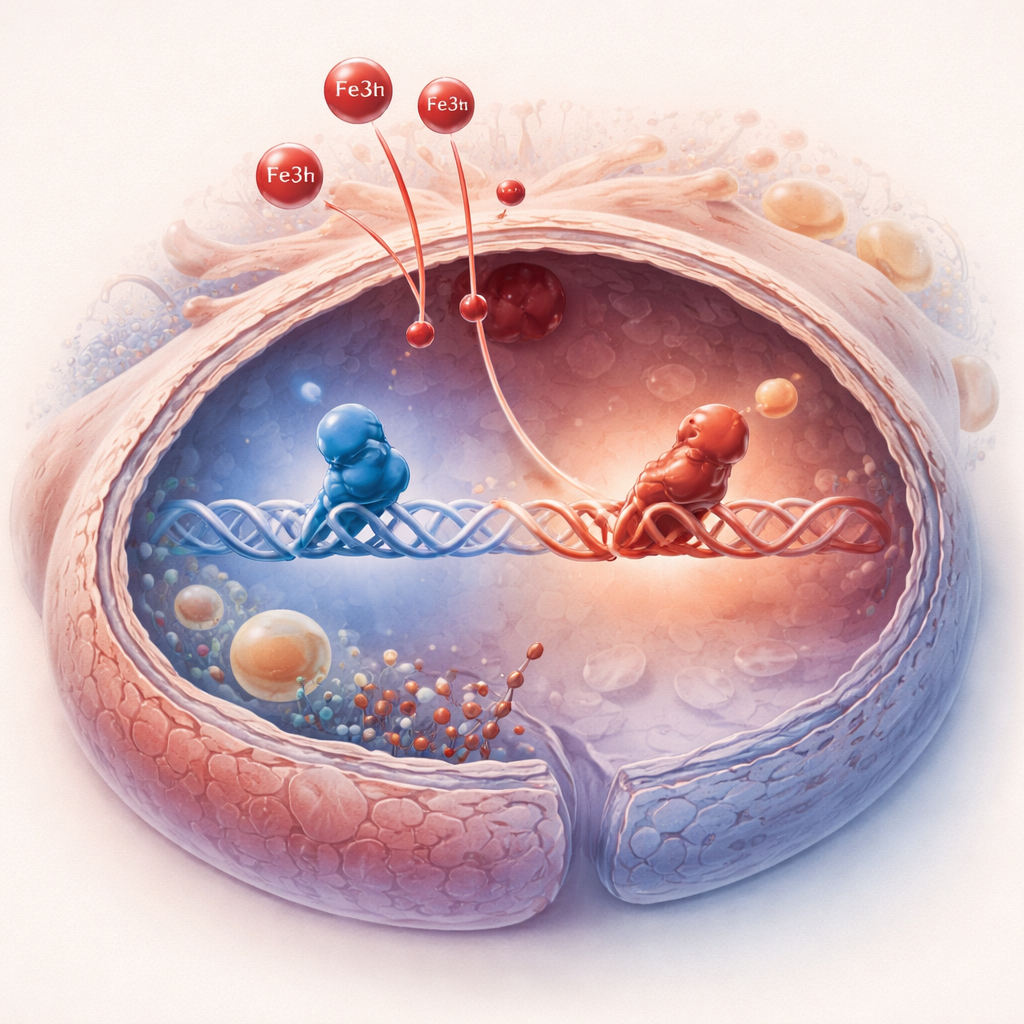
The authors found that iron’s influence seems to run through a network of regulators that respond to heme, the iron-containing molecule best known from hemoglobin. One such protein, BACH1, helps control how cells handle iron and can steer cell fate in other tissues. In the iron-rich Plasmax environment, patterns of protein changes suggested stronger activity of BACH1’s target genes, while the level of HNF4A fell. This push-and-pull between an iron-responsive regulator and a liver identity regulator appears to tilt HepG2 cells away from a mature state toward a more flexible, progenitor-like one. The findings highlight that even tiny changes in the availability of metals can ripple through regulatory networks and reshape what kind of cell a cell “decides” to be.
What This Means for Lab Models and Medicine
For non-specialists, the core message is that the broth surrounding cells in a dish is not just a backdrop—it can rewrite the cells’ identity. Here, realistic blood-like levels of iron revealed that a standard liver cell model is actually being pushed into a more mature state by unnaturally low iron in common lab media. Using physiologic media like Plasmax may give a more honest picture of how cells behave in the body and could uncover new ways nutrients and trace elements influence health and disease. At the same time, it reminds researchers that to trust what cells tell us, we must first make sure we are feeding them something that truly resembles the human environment.
Citation: Ong, A.J.S., Tigani, T.A., Gomes, A.J. et al. A multi-omic approach reveals iron availability influences cell fate fidelity. npj Metab Health Dis 4, 11 (2026). https://doi.org/10.1038/s44324-026-00102-8
Keywords: iron metabolism, cell culture media, liver cells, cell fate, trace elements