Clear Sky Science · en
Lifestyle strategies and mechanistic implications for slowing neurodegeneration
Why Everyday Habits Matter for Brain Aging
As people live longer, more of us worry about memory loss, dementia, and diseases like Alzheimer’s. This review article explores an encouraging idea: that everyday choices—how we eat and how much we move—can influence how quickly our brains age. Instead of focusing on new drugs, the authors sift through dozens of animal and human studies to ask whether specific diets and exercise patterns can help protect brain cells, delay decline, and possibly lower the risk of neurodegenerative disease.
How the Brain Breaks Down Over Time
Alzheimer’s disease and related dementias currently affect more than 55 million people worldwide, and those numbers are rising quickly. Deep inside the brain, these conditions are marked by sticky protein clumps called amyloid plaques, twisted strands of another protein called tau, ongoing inflammation, and gradual loss of nerve cells and brain volume. Standard medicines, including newer antibody drugs that clear some amyloid, can slow symptoms modestly but do not stop or reverse the disease. Many patients cannot take them because of side effects or cost. That is why researchers are turning serious attention to lifestyle strategies that may work alongside medication—or even help people who never receive drugs.
Food Patterns That “Switch” the Body’s Fuel
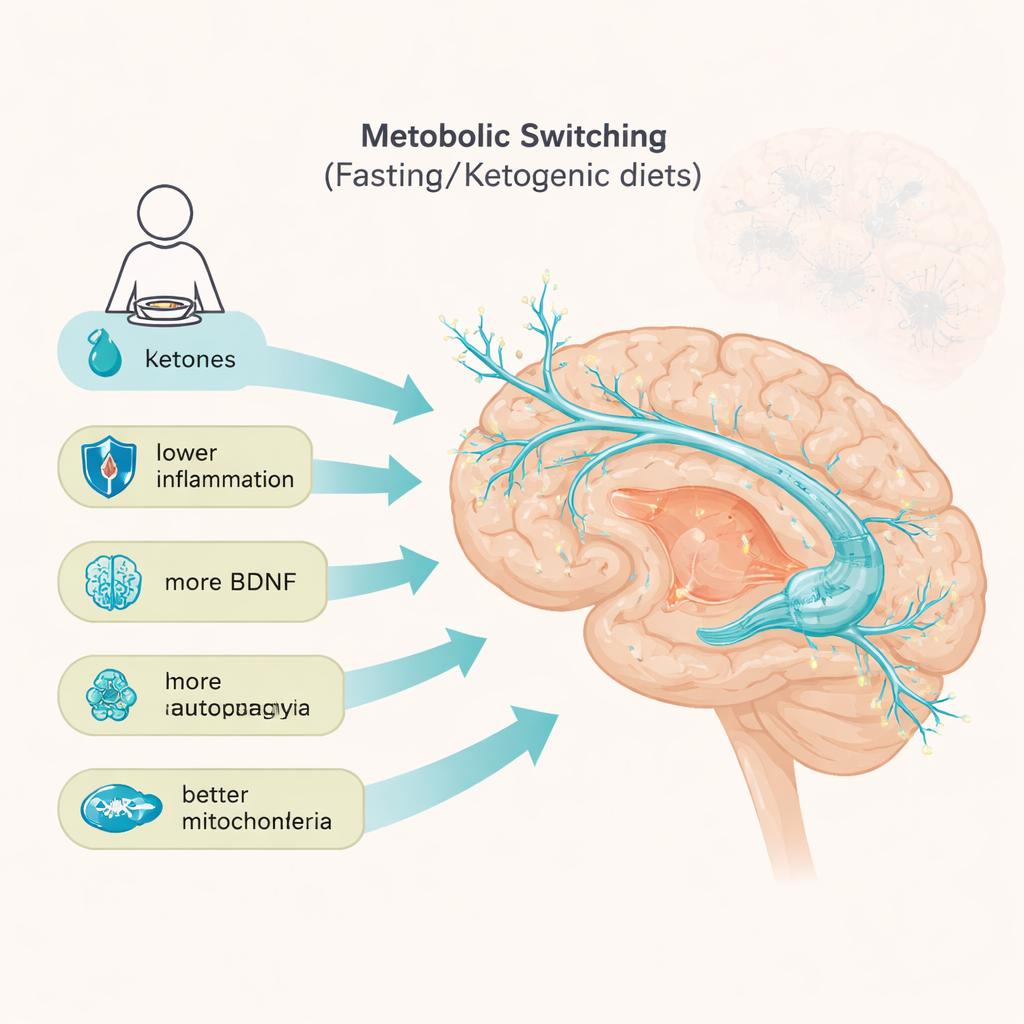
One major focus of the article is “metabolic switching,” when the body periodically shifts from burning sugar to burning fat and ketones. This can happen with intermittent fasting, time-restricted eating (for example, eating only within an 8–10 hour window each day), alternate-day fasting, or very low-carbohydrate ketogenic diets. In animal studies, these patterns consistently reduce brain inflammation and oxidative stress, encourage the brain’s natural cleanup systems (known as autophagy), and lower the buildup of harmful proteins. Fasting and ketones also boost levels of brain-derived neurotrophic factor (BDNF), a molecule that supports the growth, survival, and flexibility of nerve connections. Early human studies, including small trials in people with multiple sclerosis or mild memory problems, suggest that fasting-style approaches can improve brain volume, markers of inflammation, sleep, and some measures of thinking, though larger and longer studies are still needed.
Eating Less and Eating Better
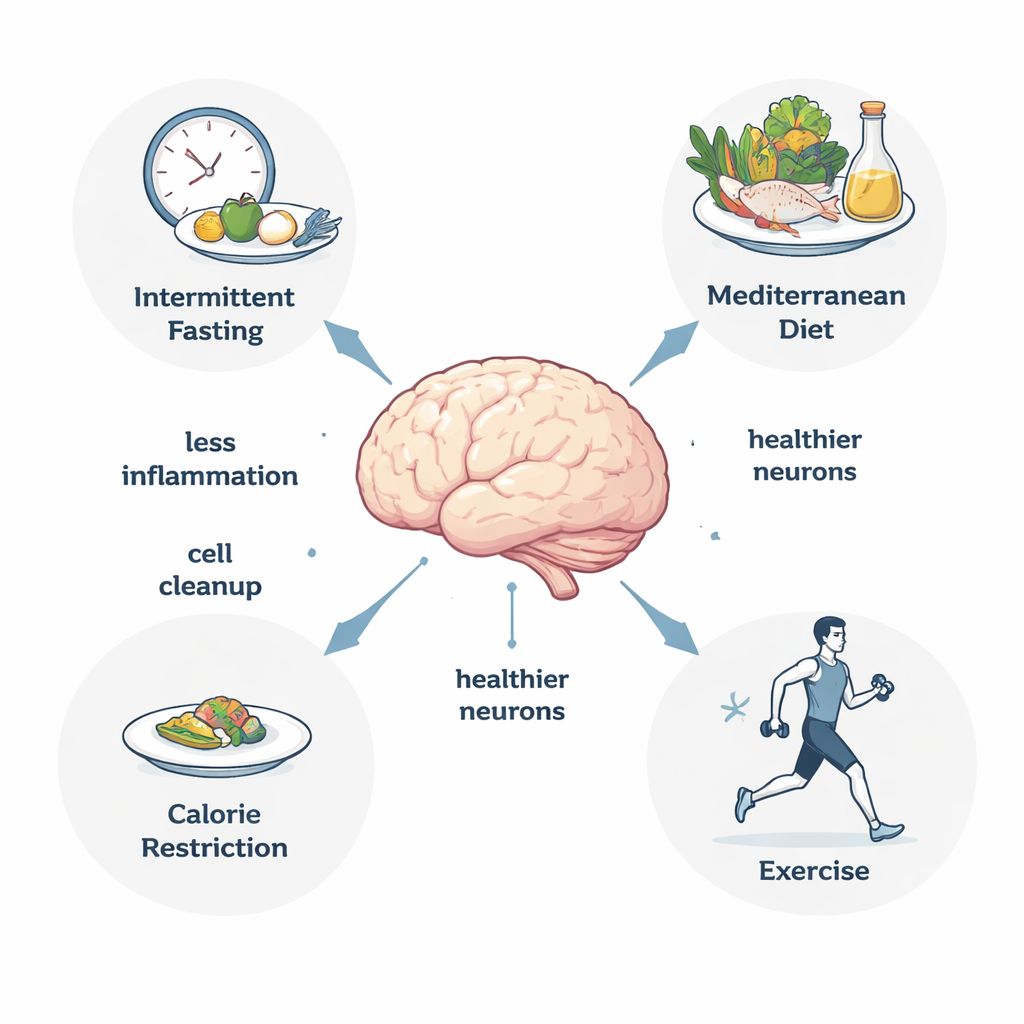
Calorie restriction—eating fewer calories than usual without becoming malnourished—has long been known to extend healthy lifespan in many species. In brain-focused experiments, cutting calories in animals often reduces amyloid plaque burden, dampens brain inflammation, improves the function of energy-producing mitochondria, and engages many of the same protective pathways seen with fasting, including BDNF and the SIRT family of proteins linked to healthy aging. Because strict calorie restriction and rigorous fasting are hard or unsafe for some people, the authors also review evidence for high-quality dietary patterns such as the Mediterranean, DASH, and MIND diets. Rich in vegetables, fruits, whole grains, nuts, olive oil, and fish, these diets deliver antioxidants and helpful fats while limiting ultra-processed foods. In animal models, components of olive oil and other plant compounds reduce inflammation and oxidative damage, support mitochondrial function, and sometimes lower amyloid and tau. Large human cohort studies link closer adherence to the MIND-like diet with slower biological aging and lower dementia risk, even though a recent three-year trial did not yet show clear cognitive advantages on its own.
Movement as a Brain Tonic
Exercise emerges as a powerful and versatile brain protector. In mouse models of Alzheimer’s and Parkinson’s disease, aerobic exercise reduces the death of nerve cells, lowers amyloid buildup, improves the health of mitochondria, and stimulates autophagy and “mitophagy,” the targeted recycling of worn-out mitochondria. Exercise also releases “exerkines”—signaling molecules such as BDNF, irisin, and the ketone body beta-hydroxybutyrate—that appear to boost synaptic function and encourage the birth of new neurons. Importantly, moving the body also reshapes the gut microbiome in ways that lessen inflammation. In human studies, multicomponent exercise programs (aerobic plus strength and balance work) generally raise blood BDNF levels and can improve thinking skills and brain health markers, while people with better fitness or more lean muscle mass tend to have lower risk of developing Alzheimer’s.
What This Means for Everyday Life
The authors conclude that no single lifestyle change is a magic cure, but taken together, the evidence strongly suggests that diet and exercise can influence the biological processes that drive brain aging. Approaches that encourage periodic metabolic switching, modest calorie reduction, high diet quality, and regular physical activity all converge on a common set of benefits: less inflammation, better cellular cleanup, healthier mitochondria, and fewer toxic protein deposits. Many questions remain—such as how early to start, how strict or long-lasting habits must be, and how best to combine these strategies with medications—but the overall message is hopeful. Thoughtful choices at the dinner table and consistent movement across the lifespan are promising, accessible tools for slowing neurodegeneration and supporting a healthier brain into older age.
Citation: Gunning, J.A., Hernandez, M.I., Gudarzi, B. et al. Lifestyle strategies and mechanistic implications for slowing neurodegeneration. npj Metab Health Dis 4, 10 (2026). https://doi.org/10.1038/s44324-026-00101-9
Keywords: Alzheimer’s disease, intermittent fasting, Mediterranean diet, calorie restriction, exercise and brain health