Clear Sky Science · en
Field assessment of melatonin timing reveals circadian misalignment beyond chronotype in elite female football players
Why Body Clocks Matter for Top Players
Elite athletes train their muscles, hearts, and minds—but their internal body clocks can quietly work against them. This study followed members of Portugal’s women’s national football team during a week-long training camp to see how well their internal “biological night” matched the team’s shared schedule. By tracking a sleep-related hormone called melatonin alongside sleep and mood, the researchers show that even perfectly planned routines can leave many players waking up while their bodies still think it is night, with real consequences for how they feel.
Listening to the Body’s Night Signal
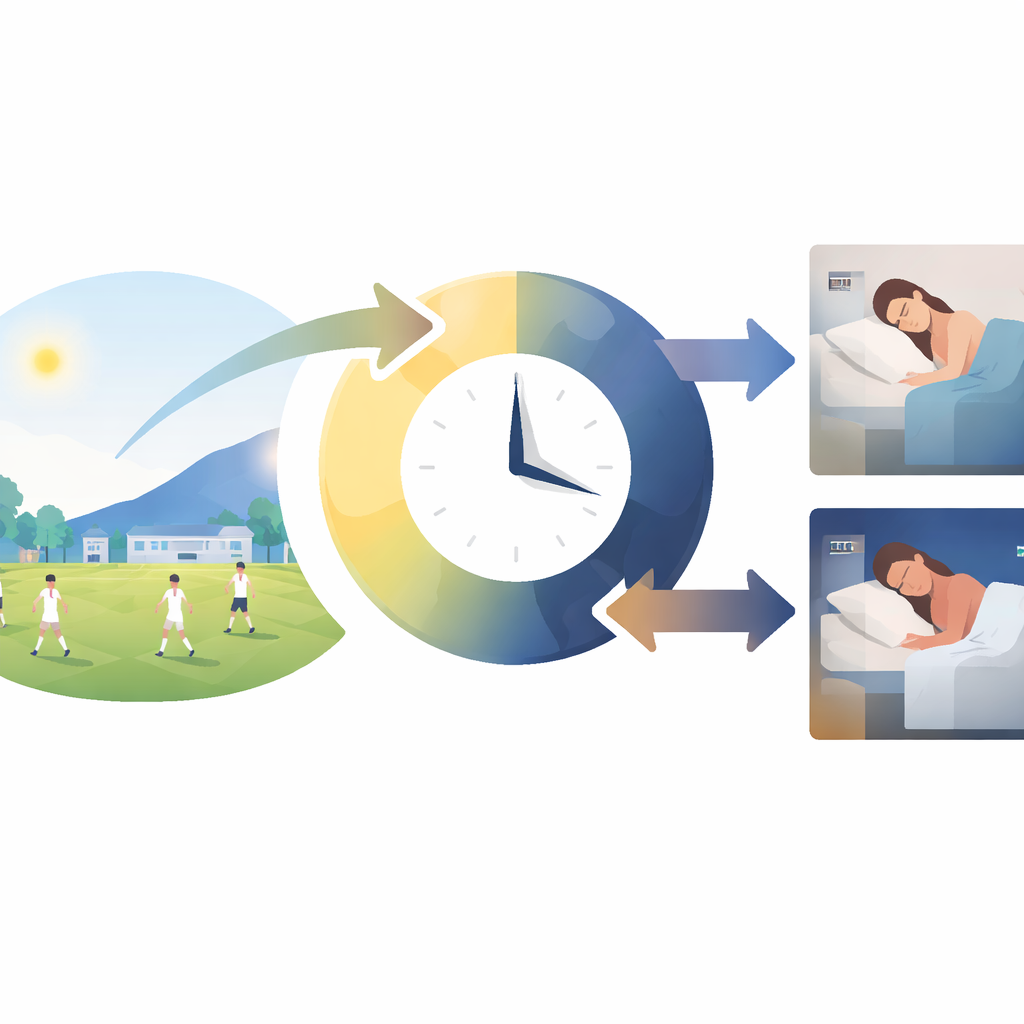
Deep inside the brain, a timing system keeps roughly 24-hour rhythms running, telling the pineal gland when to release melatonin. This hormone rises in the evening, stays high through the night, and falls after waking, marking the body’s true night and day. Twenty-two elite female footballers wore wrist devices to measure sleep and light exposure, filled out daily sleep and well-being diaries, and collected their own saliva at set times around bedtime and wake-up. The saliva samples allowed the team to pinpoint when melatonin first rose in the evening and how much was still circulating after the players got out of bed.
When Morning Comes Too Soon
Despite identical training, meal, and quiet-time schedules, the players’ body clocks were far from synchronized. Using a standard melatonin threshold, the researchers defined each athlete’s “biological night.” For more than half of them, melatonin levels were still high an hour after waking, meaning they had risen from bed while their bodies remained in night mode. This mismatch—called circadian misalignment—did not only affect those who saw themselves as “evening types”; several self-described morning types were also biologically out of sync, showing that personal labels do not always capture what the body is actually doing.
Roommates, Sleep Length, and Hidden Timing
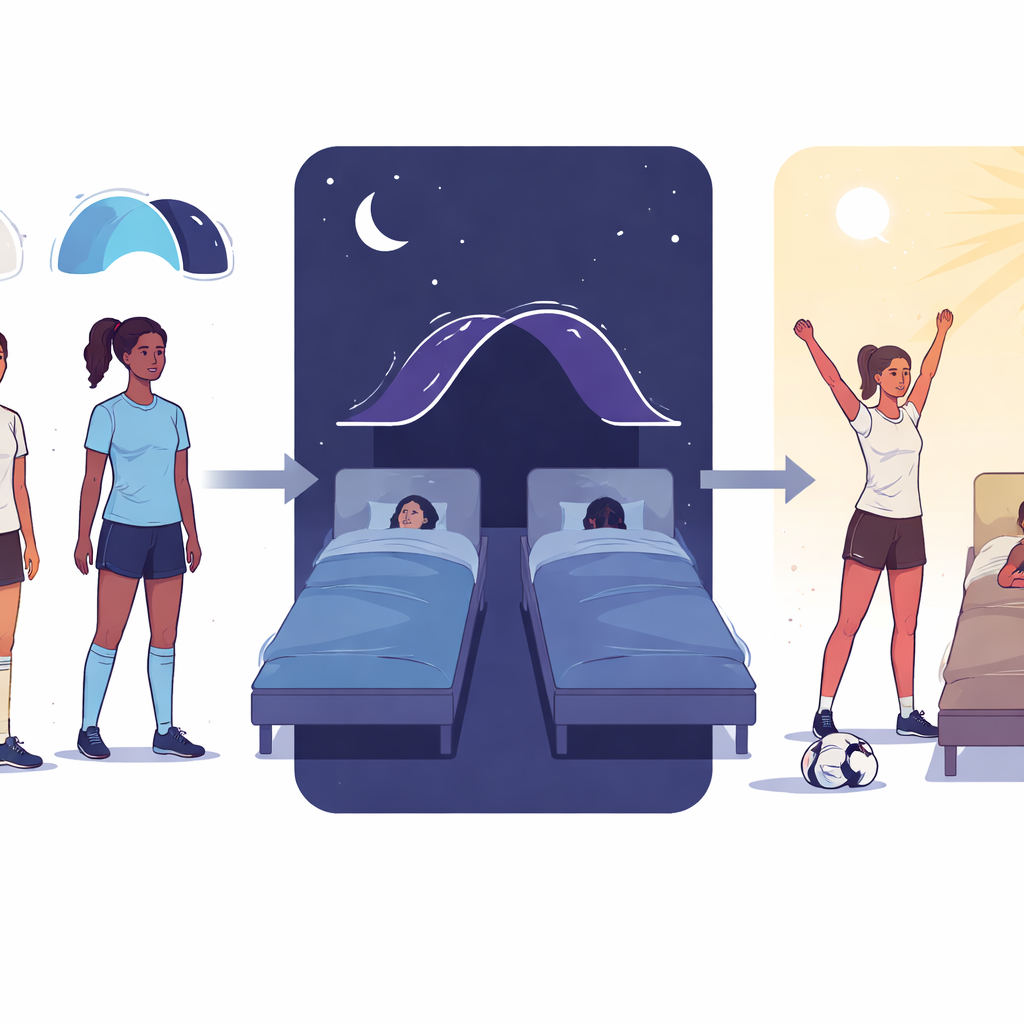
The study also explored how long the players slept and how this related to their body clocks and room-sharing patterns. On average, athletes slept just over seven hours per night. Those whose sleep began further after their melatonin rise tended to sleep longer, suggesting that going to bed too close to the start of the biological night may cut sleep short. Room arrangements mattered as well: players sharing with teammates of mixed morning-evening preferences slept about an hour and a half longer than those rooming with someone of the same preference, and self-described evening types slept roughly an hour less than morning types overall. These patterns highlight how social arrangements and inner timing jointly shape rest.
How Misalignment Affects Feeling
The players also rated how they felt each morning on a simple scale. Here, biological timing told a clearer story than self-identified chronotype. Athletes whose melatonin was still high after waking—those in biological night—reported worse morning well-being than teammates whose bodies had already shifted into day mode. In contrast, there was no meaningful difference in mood between morning and evening types when defined only by preference. This suggests that it is the actual timing of the body’s internal night, rather than how a person describes themselves, that better predicts how they feel when they start their day.
What This Means for Sport and Everyday Life
This work shows that even in a tightly organized, high-performance setting, many athletes are training and living out of sync with their internal clocks. Waking during the biological night can shorten sleep and leave players feeling worse in the morning, with potential knock-on effects for recovery, performance, and decision-making. The authors argue that simple, real-world measurements of melatonin and sleep could help staff design more personalized schedules, light exposure strategies, and room assignments that better respect each athlete’s internal timing. For athletes and non-athletes alike, the message is clear: paying attention to when the body wants to sleep and wake—not just to the clock on the wall—may be key to feeling and performing at our best.
Citation: Reis, C., Tomás, R., Cardoso, V. et al. Field assessment of melatonin timing reveals circadian misalignment beyond chronotype in elite female football players. npj Biol Timing Sleep 3, 13 (2026). https://doi.org/10.1038/s44323-026-00074-4
Keywords: circadian rhythm, melatonin, elite athletes, sleep timing, sports performance