Clear Sky Science · en
Psychometric properties of the two-item Pittsburgh Sleep Quality Index (PSQI-2) in a cohort of community-dwelling older men: the MrOS sleep study
Why a Short Sleep Checkup Matters
Many older adults struggle with sleep, but long medical questionnaires can be tiring and impractical, especially in large studies or busy clinics. This article explores whether a very short, two-question sleep survey can stand in for a much longer, well-established test. If it works, doctors and researchers could quickly spot sleep problems in thousands of people, saving time while still getting reliable information about who is sleeping poorly and how their sleep changes over the years.

Sleep and Healthy Aging
Sleep quality is closely tied to healthy aging. Poor sleep is common—especially in later life—and has been linked to memory problems, heart disease, weaker physical function, and lower quality of life. Yet in big health studies, sleep is sometimes skipped or measured only briefly because every extra question adds to the burden on participants, many of whom are older and may tire easily. The Pittsburgh Sleep Quality Index (PSQI) is one of the most widely used tools to measure how well people sleep, but with 19 questions it can be too long for very large projects or repeated testing.
From Nineteen Questions to Just Two
To tackle this problem, researchers developed a stripped-down version called the PSQI-2. It keeps only two central ideas: how a person feels about their overall sleep, and how many hours they usually sleep per night. Each is scored, then combined into a simple total. In this study, the author tested how well this two-question tool performs compared with the full PSQI in more than 2900 community-dwelling men aged 67 to 90 years from the MrOS Sleep Study. These men completed sleep questionnaires at two points about 4.7 years apart, allowing the researcher to see both how the two tools lined up at a single point in time and how well they tracked changes over the years.
How Well the Short Tool Matches the Full Test
When the two questionnaires were compared at each visit, the PSQI-2 scores closely matched the full PSQI scores. Statistical analyses showed that the two-item version captured about three-quarters of the information in the longer test. When used to pick out men with poor sleep, the PSQI-2 performed very well: with an appropriate cutoff, it correctly identified most poor sleepers while rarely misclassifying good sleepers. In other words, simply asking how good someone thinks their sleep is and how long they sleep was usually enough to tell whether they would have scored poorly on the full, 19-question test.
Following Sleep Over Time
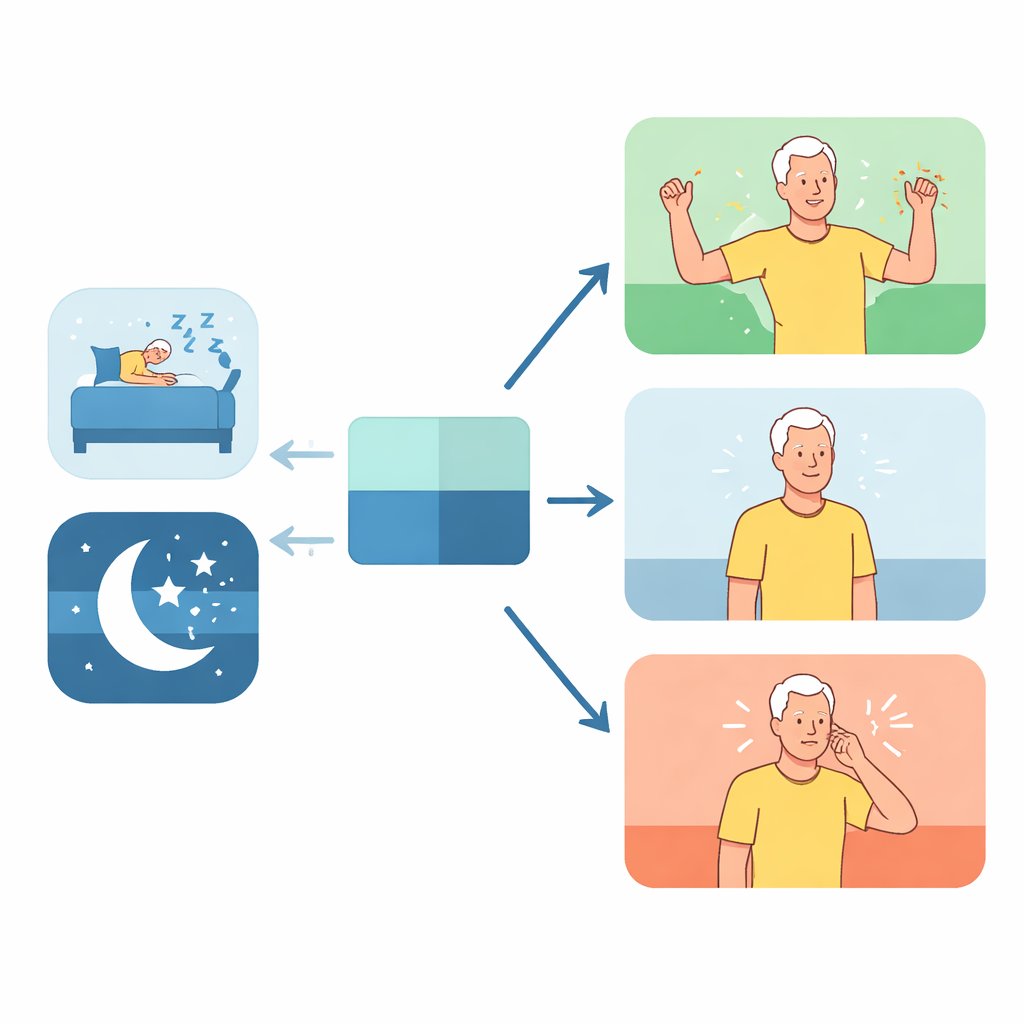
The study also asked whether this short tool could track meaningful changes in sleep across several years. Both the full PSQI and the PSQI-2 showed moderate stability over time, which fits with the idea that people’s sleep naturally shifts somewhat from year to year. Changes in the two-item score tended to move in the same direction as changes in the full score: when the long test suggested that someone’s sleep had clearly worsened or improved, the short test usually shifted the same way. The PSQI-2 was fairly good at flagging people whose sleep had changed enough to be considered clinically important, though it was not perfect and did not capture every subtle detail that the full questionnaire can provide.
Strengths, Limits, and Real-World Use
Because the study focused on older men, mostly White, the results may not apply equally well to women, younger adults, or more diverse populations. The two-item tool also cannot cover every aspect of sleep, such as frequent night awakenings, medication use, or daytime sleepiness, all of which contribute to the full PSQI score. Still, the work drew on a large, carefully studied group with detailed health and sleep information, and used robust statistical methods to test how the short questionnaire behaves both at a single point in time and across years.
What This Means for Patients and Doctors
The findings suggest that the PSQI-2 is a practical and trustworthy way to quickly screen sleep quality in older men. It is not a replacement for the full PSQI when a complete, in-depth picture of sleep is needed, but it can serve as an efficient first step in primary care, geriatric clinics, and large research studies. With just two questions, clinicians and researchers can identify many individuals whose sleep is likely poor or has noticeably changed, and then decide who needs a more detailed evaluation or targeted help to improve their nights—and, potentially, their long-term health.
Citation: Menezes-Júnior, L. Psychometric properties of the two-item Pittsburgh Sleep Quality Index (PSQI-2) in a cohort of community-dwelling older men: the MrOS sleep study. npj Biol Timing Sleep 3, 10 (2026). https://doi.org/10.1038/s44323-025-00069-7
Keywords: sleep quality, older adults, screening tools, questionnaires, healthy aging