Clear Sky Science · en
Spatial heterogeneity in indirect flooding-mitigation benefits of the Three Gorges Project across China
Why a giant dam matters far beyond its river
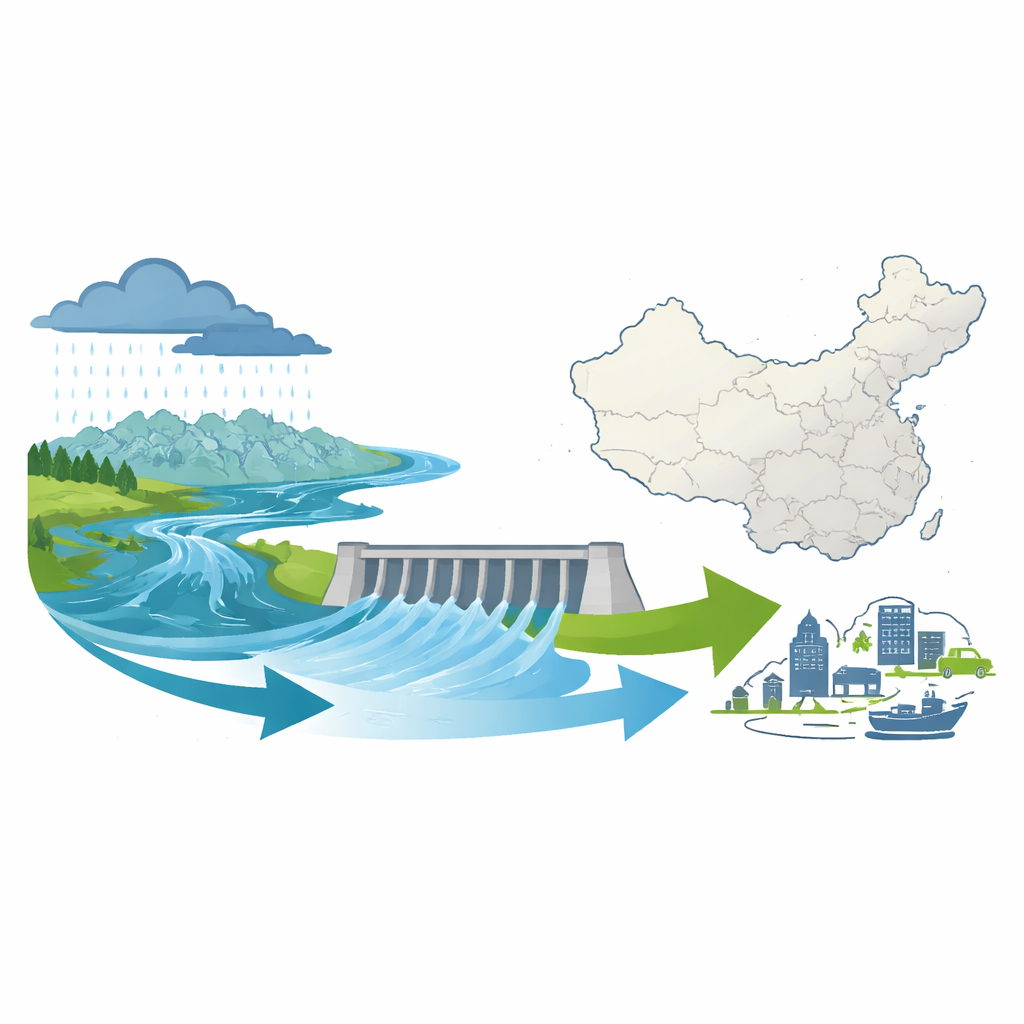
Most people think of a big dam as something that keeps nearby towns safe from floods and generates electricity. This study shows that China’s Three Gorges Project does much more than that. By holding back floodwaters on the Yangtze River, the dam quietly shields factories, jobs, and household budgets across the entire country, including places hundreds of kilometers away that never see the rising water. Understanding these hidden benefits helps explain why large flood‑control projects can reshape national economies, not just local landscapes.
Floods, chains of trade, and hidden ripple effects
Floods are among the world’s most damaging natural disasters, and climate change is making them more frequent and severe. When a major river overflows, the immediate damage is obvious: buildings, roads, and farmland are submerged. Less visible are the ripples that move through supply chains when factories shut down, workers cannot reach their jobs, or prices spike. A factory in one province may depend on parts from another, and a household’s cost of living can change if food and goods become scarce. The authors argue that traditional evaluations of large dams usually count only direct effects like power generation or local flood protection, ignoring these broader economic ripples.
Tracking the dam’s “footprints” across China
To capture these hidden links, the researchers introduce the idea of a “hydraulic project footprint.” In simple terms, this means tracing all the ways a big water project changes the economy, both nearby and far away. They focus on the flood‑retention footprint of the Three Gorges Project, asking how its ability to store floodwater affects production, jobs, prices, and trade in each of China’s 31 provincial‑level regions. Using a detailed computer model of the national economy, they simulate different kinds of flood events, with varying water depths and different levels of damage to the available workforce. They then compare scenarios with and without the dam’s flood‑control role to see how much loss is avoided and where.
Who gains the most when the river is tamed
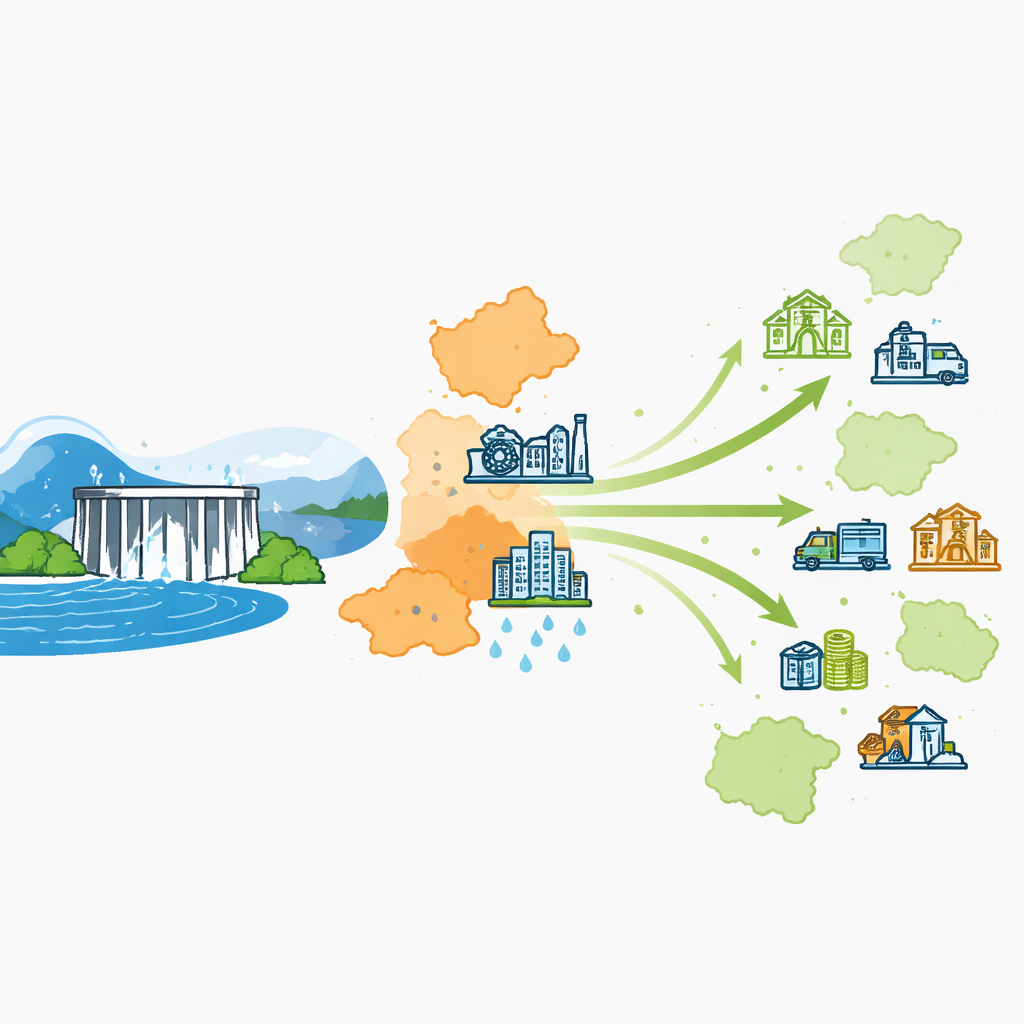
The analysis reveals a striking geographic pattern. Provinces along the middle Yangtze—especially Hubei and Hunan—face some of the largest potential losses during major floods, with tens of billions of yuan in threatened economic output. Because they are closest to the dam, they also reap the biggest direct benefits when the Three Gorges Project holds back water: in severe flood cases, the dam can cut local GDP losses by roughly one‑third to one‑half. Neighboring provinces such as Anhui and Jiangxi see smaller, but still important, reductions. Meanwhile, distant regions like Beijing, Tianjin, Guangdong, and Inner Mongolia often benefit indirectly. By keeping factories and construction sites running in flood‑prone provinces, the dam helps stabilize the flow of goods and materials that these other regions rely on.
Everyday living costs and trade flows
Floods do not just damage buildings; they also raise prices. When supply is disrupted in hard‑hit areas, households can face higher food and consumer costs, reducing their overall well‑being. The study measures these changes in living standards and finds that, without the dam, residents in directly exposed provinces would see sharp drops in welfare and spikes in consumer prices. With the dam in place, those price jumps are greatly reduced—by more than half in Hubei under certain scenarios—making life more affordable during and after floods. At the same time, the model shows that the dam alters trade flows between provinces. Because production in flood‑prone areas can resume more quickly, these regions export more goods to the rest of China, and key industries such as manufacturing, construction, and finance remain more stable than they otherwise would be.
What this means for future flood protection
Overall, the study estimates that the Three Gorges Project’s flood‑retention role has helped China avoid roughly 28–37 billion yuan in flood‑related GDP losses in the modeled cases, while also protecting household welfare and supporting smoother trade between provinces. For a lay reader, the key message is that a large dam’s value cannot be judged only by the electricity it produces or the towns it directly protects. By preventing disruptions that would otherwise cascade through supply chains and push up prices nationwide, such projects can quietly strengthen a country’s economic resilience. The authors suggest that future flood‑control planning—both in China and elsewhere—should consider these wide‑ranging, indirect benefits when weighing the costs and advantages of large hydraulic projects.
Citation: Han, D., Zhu, D.Z., Huang, G. et al. Spatial heterogeneity in indirect flooding-mitigation benefits of the Three Gorges Project across China. npj Nat. Hazards 3, 29 (2026). https://doi.org/10.1038/s44304-026-00187-7
Keywords: flood control, Three Gorges Dam, economic resilience, supply chains, hydropower projects