Clear Sky Science · en
Continental United States direct Atlantic tropical cyclone fatalities: 1963–2024
Why this matters to people living far from the coast
Atlantic hurricanes and tropical storms are often portrayed as wind monsters that batter beaches, but this study shows a more complicated—and more inland—story. By carefully counting thousands of deaths in the continental United States from 1963 to 2024, the authors reveal which storm dangers actually kill people, how often, and where. Their new open database sheds light on patterns that can help communities, from coastal cities to mountain towns, better prepare for future storms in a warming world.
Looking back at six decades of deadly storms
The researchers examined 767 Atlantic tropical storms and hurricanes over 61 years and identified 2642 people who died directly from storm forces in the United States and nearby coastal waters. On average, about three storms per year caused at least one death, adding up to roughly 43 deaths annually, though some years had far more and others very few. Just four storms—Katrina (2005), Camille (1969), Helene (2024), and Agnes (1972)—each killed more than 100 people, with Katrina alone responsible for about twice as many deaths as the next deadliest storm. Importantly, the team focused only on direct deaths, such as drowning or being struck by debris, and did not include indirect deaths like heart attacks or crashes in bad weather. 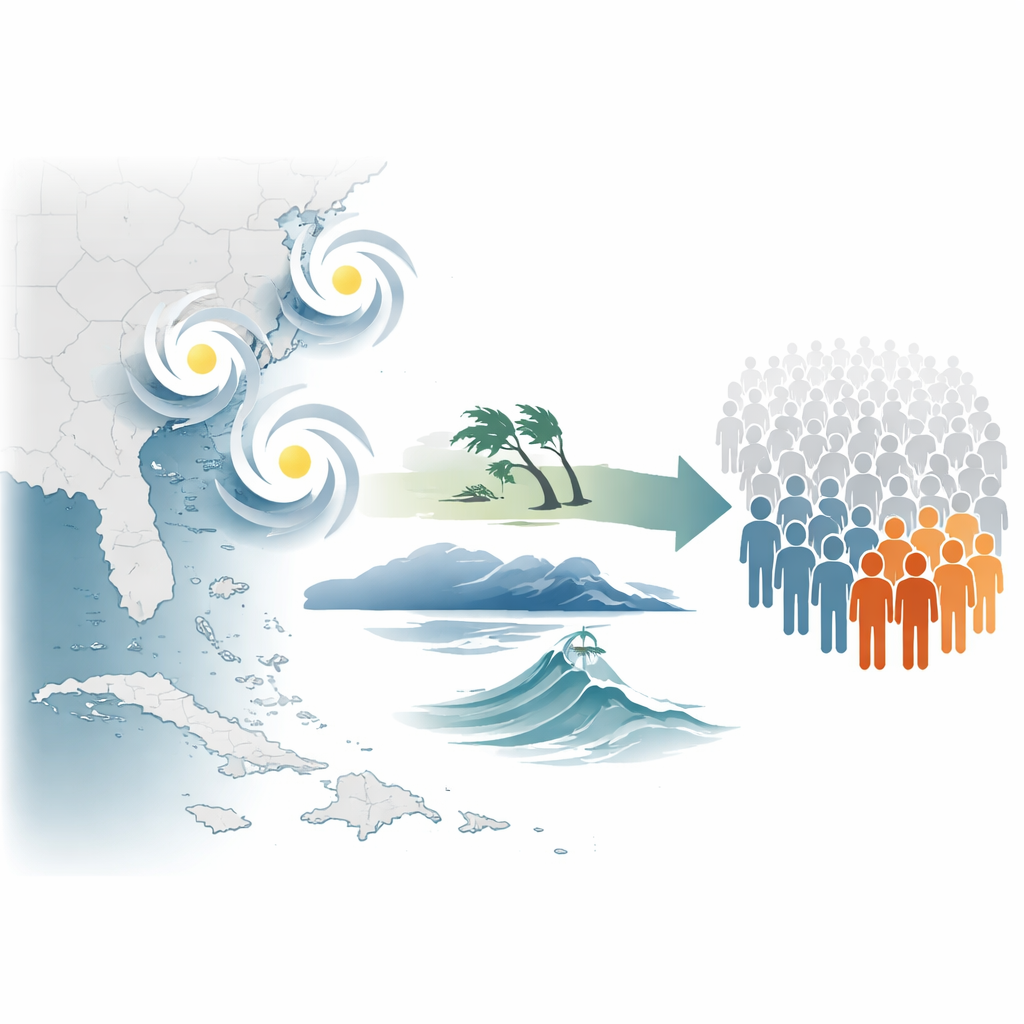
Water, not wind, is the main hidden killer
Contrary to the popular focus on wind speed and storm category, about 80% of direct deaths in this record were caused by water: heavy rain, storm surge, rough seas, and surf. Freshwater flooding from intense rain was the single leading cause, linked to 36% of deaths, followed by storm surge at 33%. Rain-related deaths were also more widespread—about one in ten storms caused at least one fatal freshwater flood—while lethal storm surge tended to cluster in a small number of catastrophic events. Wind and tornadoes together accounted for only about 13% of deaths, though recent storms like Helene produced unusually high numbers of fatalities from falling trees, often after saturated soils weakened roots.
Big seasons raise the odds, but do not seal fate
To understand how seasonal storminess relates to human loss, the authors compared deaths with a standard measure of overall hurricane energy, known as accumulated cyclone energy, or ACE. Years with higher ACE generally had more fatalities, and seasons in the top quarter of ACE values showed both the highest median death counts and the widest swings from year to year. Yet the connection was far from perfect: some very active seasons produced few deaths, while a handful of less energetic years saw unexpectedly high tolls. This mismatch highlights that where storms track, where they make landfall, how quickly they form and approach land, and how prepared communities are can be as important as how strong the overall season is.
Inland communities face rising and often overlooked risk
Maps of the deadliest storms show no single favored track or birthplace; some formed over the open Atlantic, others in the Caribbean or near the Bahamas. Many of the worst floods and deaths occurred far from the coast, in rural and mountainous areas such as Virginia’s Nelson County and the Southern Appalachians. Recent storms like Harvey, Ida, and Helene produced devastating inland deluges, often in areas with low uptake of flood insurance and a poor public sense of flood danger. In some counties hardest hit by Helene, only a tiny fraction of buildings carried flood coverage, and official flood zones missed many of the neighborhoods that ultimately went underwater. 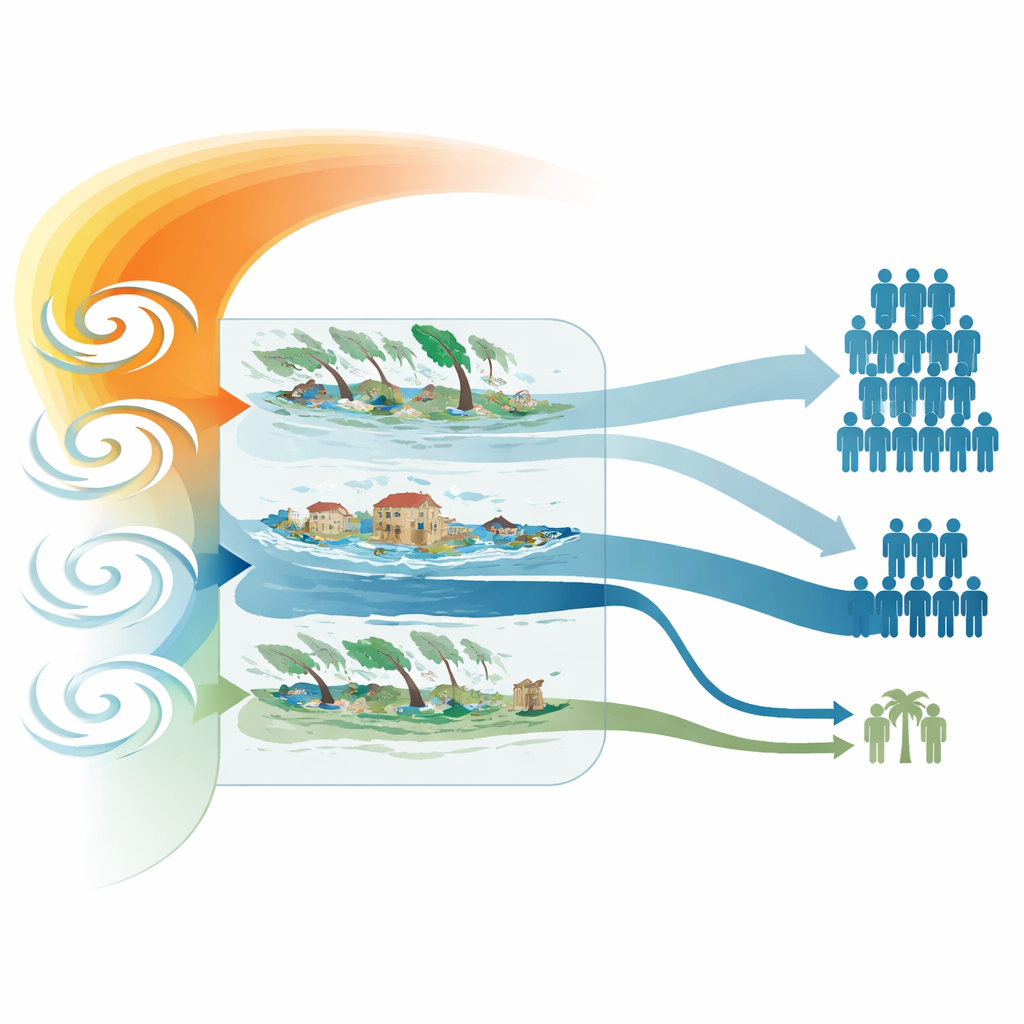
What this means for future storms and safety
Despite rapid growth in hurricane-prone states, the authors find no clear long-term rise or fall in annual direct deaths since 1963, suggesting that better forecasting, building codes, and evacuation planning have helped offset increased exposure. Still, the concentration of deaths in a few rainfall and surge catastrophes—and signs from other research that tropical cyclones may be bringing heavier rains—point to a future where inland and coastal flooding remain the chief threats. By making a detailed, public fatality database available, this work provides a foundation for smarter warnings, more realistic flood maps, and risk communication that emphasizes not just wind at landfall, but the deadly water that can arrive hours or days later, sometimes hundreds of miles inland.
Citation: Muller, J., Idzik, A.M., Benzi, D. et al. Continental United States direct Atlantic tropical cyclone fatalities: 1963–2024. npj Nat. Hazards 3, 38 (2026). https://doi.org/10.1038/s44304-026-00178-8
Keywords: hurricane fatalities, flood risk, storm surge, tropical cyclones, disaster preparedness