Clear Sky Science · en
Beyond warnings and shelters: local institutions and trust build cyclone resilience in Bangladesh
Why Cyclone Resilience in Bangladesh Matters to Everyone
Along the low-lying coast of Bangladesh, millions of people live with the constant threat of powerful tropical cyclones. These storms can kill, destroy homes and boats, wipe out harvests, and pollute scarce drinking water. Yet the difference between survival and tragedy often comes down not just to weather forecasts, but to something more human: whether people trust local messengers, shelters, and institutions enough to act on warnings. This study looks closely at how that trust is built or broken—and what it means for families trying to stay safe in a warming world.
The Coastal Edge of Climate Risk
Bangladesh’s southwest and south-central coast sits at the mouth of the world’s largest river delta, facing the Bay of Bengal. This landscape of islands, riverbanks, and villages has endured some of the deadliest cyclones in history, including the 1970 Bhola Cyclone and Cyclone Gorky in 1991, as well as more recent storms like Sidr, Aila, Amphan, and Remal. Rising seas, saltier soils, and repeated storm surges are steadily eroding livelihoods based on farming and fishing. Despite nearly 6000 cyclone shelters and a national warning system, many communities still experience severe damage and slow recovery. The researchers focused on fourteen of the most exposed local areas in seven coastal districts to understand why risk remains so high, and what actually works on the ground.
How Warnings Travel from Loudspeakers to Living Rooms
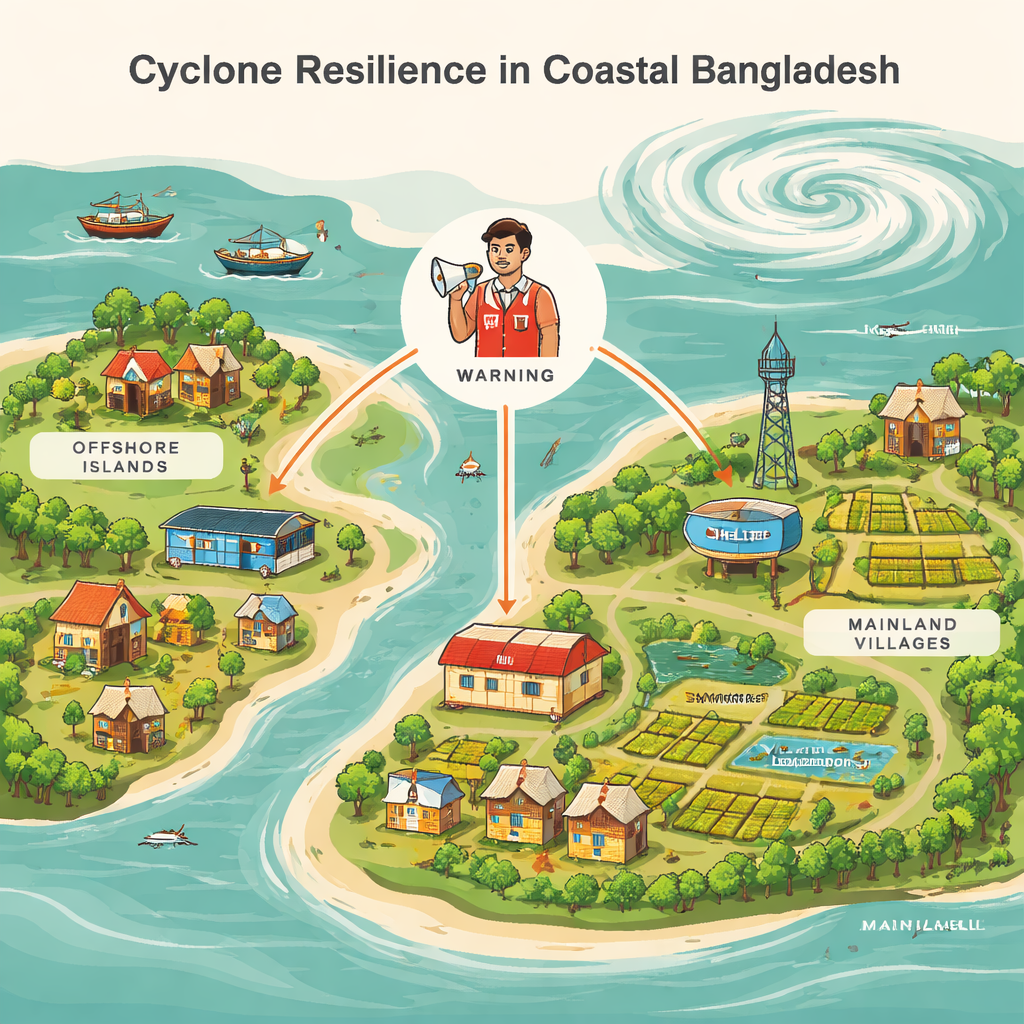
To uncover the human side of cyclone response, the study combined 279 household surveys with 28 group discussions and 30 interviews with local officials, volunteers, and community leaders. People almost everywhere reported very high exposure to recent storms, especially on offshore islands. When it comes to warnings, traditional, face-to-face channels still work best. The Cyclone Preparedness Program (CPP)—a volunteer network that spreads alerts by megaphone and door-to-door visits—reached more than 72% of households and up to 90% in one district. Mosques and other religious institutions also proved surprisingly powerful as information hubs; loudspeaker announcements after prayers were widely trusted. In contrast, television, radio, mobile phone messages, and social media showed large gaps, especially in poorer or more remote areas where electricity and network coverage are unreliable. Crucially, not everyone is reached equally: male-headed and farming households receive warnings far more often than female-headed and fishing households, and island communities are still at a disadvantage.
Storm Damage, Difficult Choices, and Uneven Help
When cyclones hit, the damage does not fall evenly. Some districts lost over 90% of their crops, others saw similar losses of fishing boats and nets, and in several places as many as four out of five houses were damaged. These losses tend to cluster geographically: fishing communities along certain coasts are hit hardest for boats and gear, while low-lying farm areas are plagued by saltwater flooding and ruined fields. After storms, people’s most urgent needs vary from place to place—clean drinking water in some unions, housing repairs in others, or farm seeds and fishing nets where livelihoods have collapsed. Yet many say these needs are not met. Aid coverage ranges widely between districts, and households with the greatest crop losses do not necessarily receive more support. Women, in particular, are less likely to get warnings and help, even though they often shoulder responsibility for children, elderly relatives, and small livestock.
Shelters, Security, and the Power of Trust
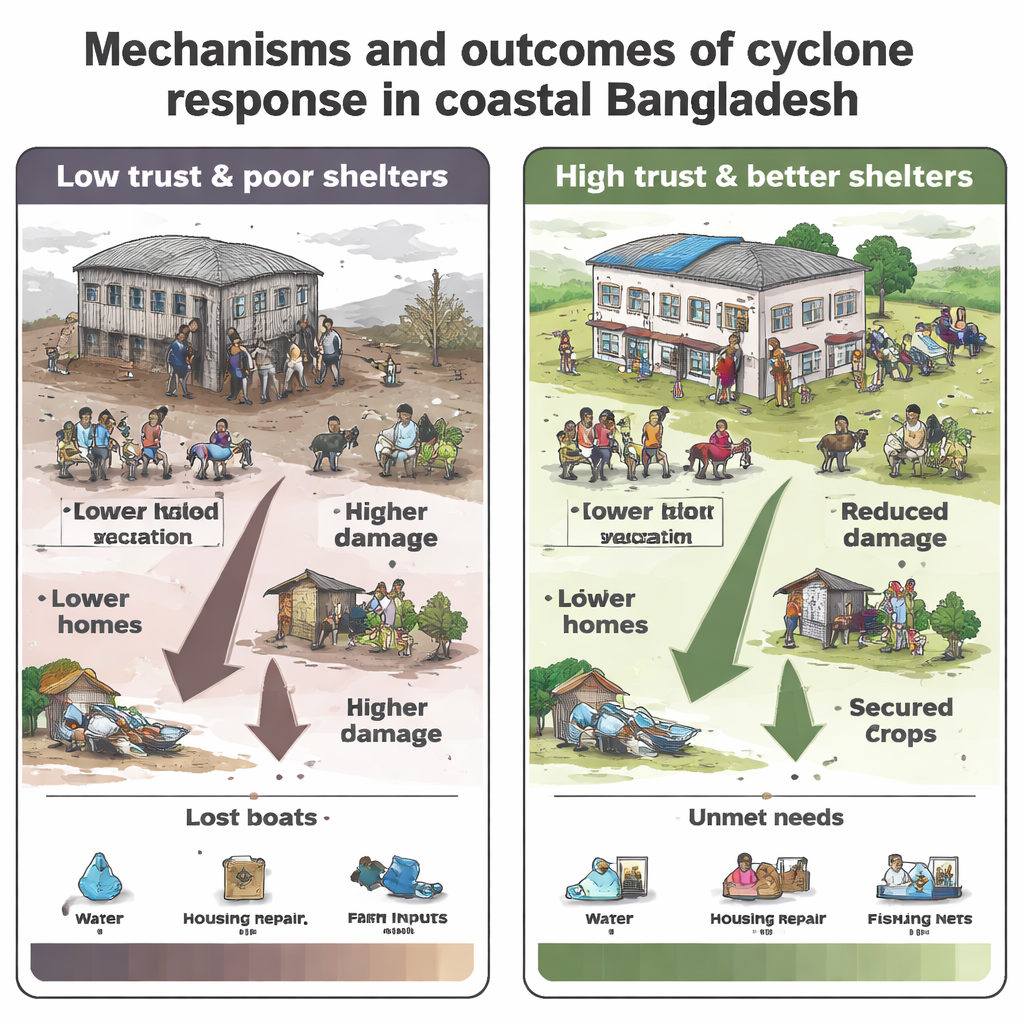
One of the clearest findings is that people are more likely to evacuate when they trust that shelters are safe, dignified, and reasonably comfortable. Where shelters are solid, reasonably clean, and offer separate spaces and basic toilets, evacuation rates are much higher. Where buildings are old, crowded, or lack privacy and working facilities, many choose to stay home despite the danger. Families also worry about theft if they leave their houses, about harassment or discomfort for women in crowded rooms, and about how to protect their livestock, fishing nets, and boats that represent their only income. In some areas, repeated “false alarms” have also eroded faith in official warnings. All of these factors weave together into deeply personal calculations—people weigh the chance of a deadly flood against the near-certain risk of losing property, dignity, or future income.
Beyond Sirens: What Real Resilience Looks Like
The study concludes that saving lives and livelihoods during cyclones is about more than better forecasts or more concrete buildings. It depends on whether local institutions—from volunteer networks and religious leaders to village councils and disaster committees—are trusted, responsive, and fair. Where volunteers are well trained and close to the community, and where shelters are upgraded with clean water, toilets, privacy for women, and some provision for belongings and small animals, evacuation becomes a realistic choice instead of a last resort. Where aid after the storm is transparent and tailored—providing seeds and tools for farmers, nets and repairs for fishers, and safe water and housing materials for all—trust grows, and people are more willing to follow future warnings. In simple terms, the path to cyclone resilience in Bangladesh runs not only through technology and infrastructure, but through everyday relationships of trust, inclusion, and accountability.
Citation: Hossain, M.L. Beyond warnings and shelters: local institutions and trust build cyclone resilience in Bangladesh. npj Nat. Hazards 3, 17 (2026). https://doi.org/10.1038/s44304-026-00177-9
Keywords: cyclone resilience, Bangladesh coast, early warning systems, disaster shelters, community trust