Clear Sky Science · en
Hydrological drought projections across Europe under climate change
Why future droughts in Europe matter to you
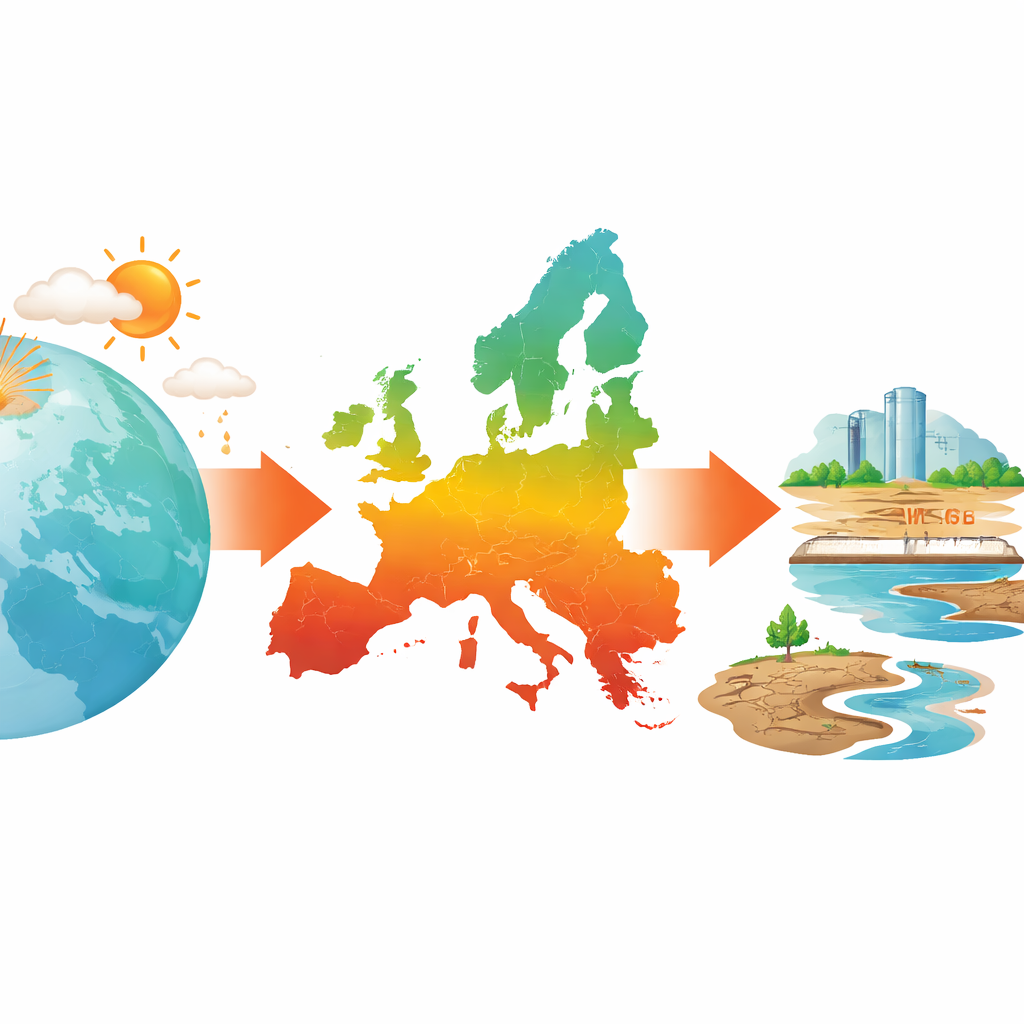
Across Europe, rivers, reservoirs, and groundwater quietly support everything from drinking water and farming to energy and ecosystems. This study asks a simple but pressing question: as the climate warms, how will the continent’s water supplies behave during dry spells? By looking specifically at how much water is actually flowing over the land and through rivers, the authors paint a detailed picture of where and when hydrological droughts — shortages in rivers, lakes, and surface water — are likely to intensify in the coming decades.
Looking beneath the rain to the running water
Drought is often described in terms of missing rainfall, but for people, farms, and power plants, what ultimately matters is how much water reaches rivers, reservoirs, and soils. This study focuses on “hydrological drought,” when rivers and surface waters fall below normal for long periods. To track this, the researchers used the Standardized Runoff Index, which converts raw runoff (how much water flows off the land) into a simple measure of how unusually wet or dry conditions are. They combined high-resolution climate simulations from 13 global models with a trusted European reference dataset and carefully corrected systematic model errors. This allowed them to produce continent-wide maps of surface water stress at monthly and seasonal scales from the recent past into the mid‑21st century under both low‑ and high‑emissions futures.
How Europe’s water cycle shifts with the seasons
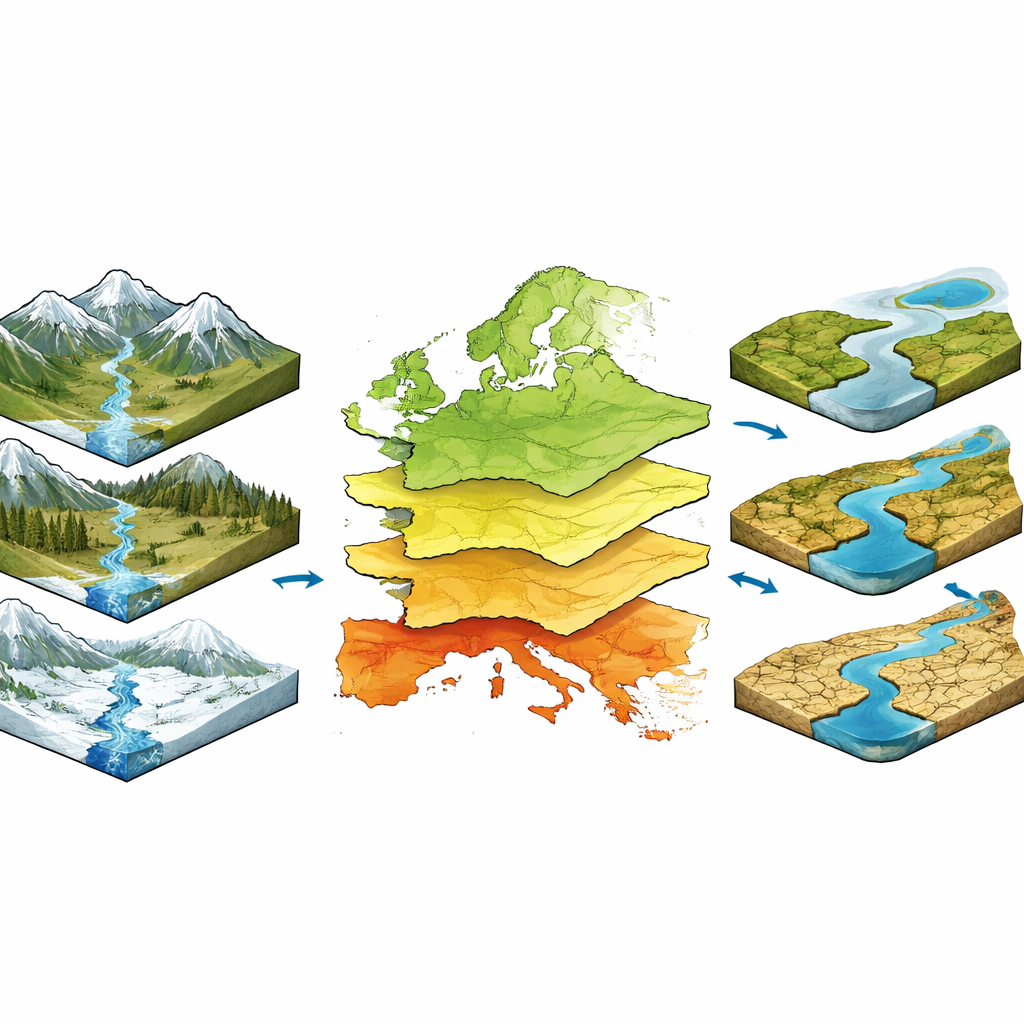
The team found that Europe’s water story is strongly seasonal. Historically, spring has brought the most surface runoff, especially in mountain regions like the Alps, Carpathians, and Balkans, as snow melts and swells rivers. Summer and autumn, by contrast, tend to be drier as higher temperatures drive more evaporation and many areas receive less rain. Under future climates, this seasonal rhythm changes. In a low‑emissions world, surface runoff generally declines across the year, especially in winter. In a high‑emissions world, patterns are more uneven: spring runoff drops sharply, while some areas see more water in autumn, hinting at shifted rainfall patterns and earlier snowmelt. When translated into the runoff index, spring consistently emerges as the season with the strongest and most widespread drying signal across the continent.
Emerging hot spots and growing dry zones
By examining where and how often the runoff index dips below drought thresholds, the authors show that hydrological droughts are projected to become more frequent, longer, and more intense in many parts of Europe between 2015 and 2049. Southern and southeastern regions — including Spain, Portugal, Italy, Greece, Turkey, and the western Balkans — stand out as persistent hot spots, facing more episodes of low river flow, higher overall drought severity, and longer-lasting events. Parts of eastern Europe also see higher frequency and intensity. Interestingly, even under a lower‑emission pathway, the share of European land affected by drought grows steadily over time, mainly through increases in moderate to severe events. Northern and some western regions, such as Scandinavia, the UK, and Ireland, tend to see stable or slightly wetter conditions in winter and autumn, highlighting a north–south contrast in future water stress.
What this means for cities, farms, and rivers
Zooming into example cities such as Paris, Lisbon, Konya, and Warsaw, the study reveals that even places relatively close together can experience very different drought futures. Paris and Lisbon follow a clear drying path, with more frequent and harsher low‑flow periods, especially in summer for Lisbon. Semi‑arid Konya starts from an already water‑scarce baseline, so even small changes matter greatly, while Warsaw remains comparatively stable but still faces more drought episodes. Across Europe, the analysis shows that by mid‑century, droughts are not just more common but also more variable from year to year, making planning more difficult for water managers, farmers, and energy producers who rely on predictable river flows and reservoir levels.
Preparing for a drier, less predictable Europe
In plain terms, the study concludes that many European regions — particularly in the south and southeast — should brace for more frequent, longer, and harsher shortages in rivers and surface water, with spring emerging as the most critical season for water scarcity. Even if global emissions are curbed, these trends do not disappear. Instead, they underline the need for smarter, season‑aware water management: adjusting reservoir operations, planning irrigation around shifting runoff, and preparing cities and ecosystems for longer low‑flow periods. While the authors focus on one key index tied to river flow, they argue that future work combining runoff with rainfall, soil moisture, and groundwater will be essential to build a full picture of water risk — and to help Europe adapt before the next record‑breaking drought arrives.
Citation: Sonny, F.Z., Moradian, S. & Olbert, A.I. Hydrological drought projections across Europe under climate change. npj Nat. Hazards 3, 37 (2026). https://doi.org/10.1038/s44304-025-00152-w
Keywords: hydrological drought, Europe climate change, surface runoff, water scarcity, seasonal drought patterns