Clear Sky Science · en
COVID-19 boosters restore virus-specific immune responses in kidney transplant recipients unresponsive to primary vaccination
Why this matters for people with kidney transplants
People who have received a kidney transplant must take lifelong medicines that calm their immune system so the new kidney is not rejected. A downside is that vaccines, including COVID-19 shots, often work less well in this group. This study asks a very practical question: if kidney transplant recipients do not respond to their first COVID-19 shots, can extra booster doses still give them solid immune protection, or is their immune system too weakened to catch up?
Two paths to protection
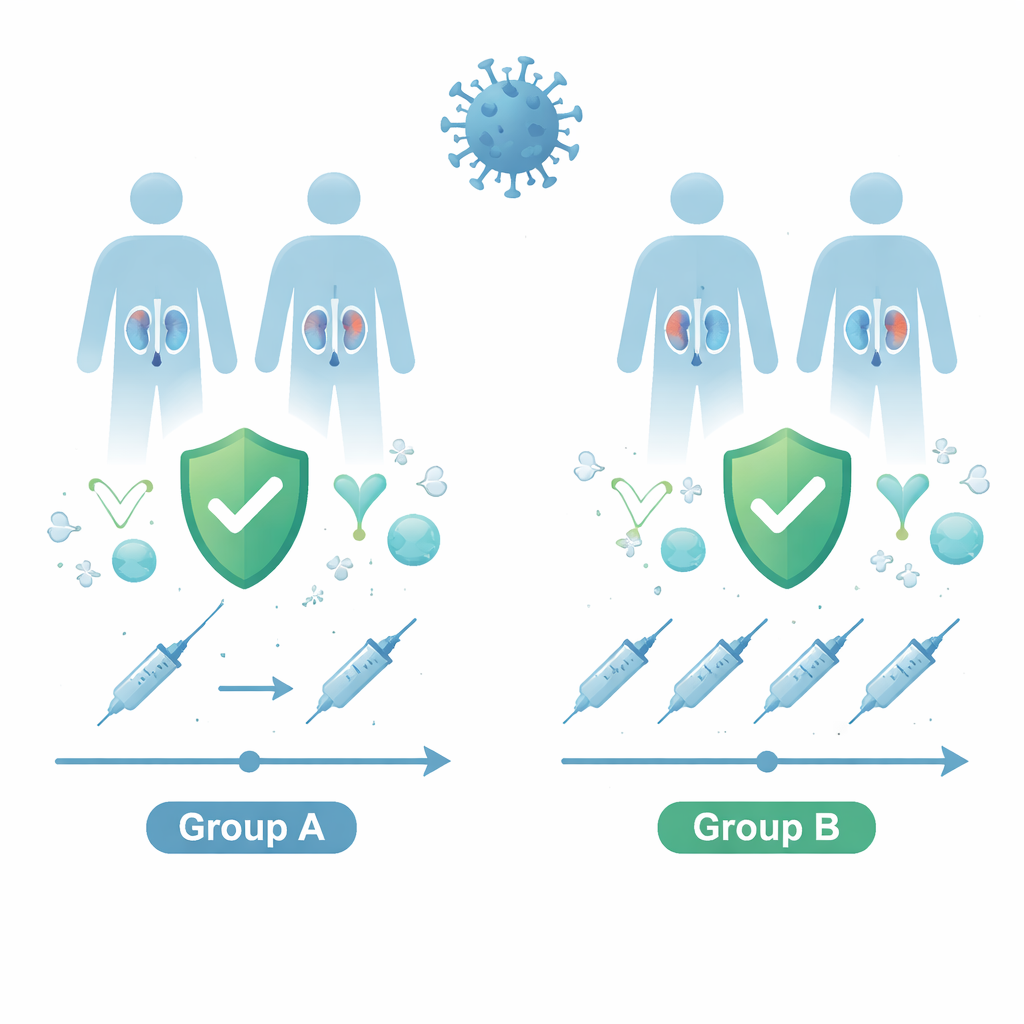
The researchers followed 80 kidney transplant recipients who had received COVID-19 vaccines. Half of them made antibodies after the standard two-dose series; these were called primary responders. The other half only developed antibodies after receiving a third or even fourth dose; these were called booster responders. Importantly, the two groups were very similar in age, health problems, kidney function and anti-rejection drugs. The main difference was simply how many doses it took before their blood tests turned positive.
Checking the quality, not just the quantity
To find out whether late responders were somehow “second rate,” the team examined their immune responses in detail about a month after the dose that finally triggered antibodies. They measured ordinary antibody levels against the virus, the ability of those antibodies to block infection in the lab, and additional “backup” functions such as flagging infected cells for destruction or helping immune cells swallow virus particles. They also looked at virus-specific T cells, the white blood cells that recognize infected cells and coordinate longer-term protection.
Similar defenses after enough doses
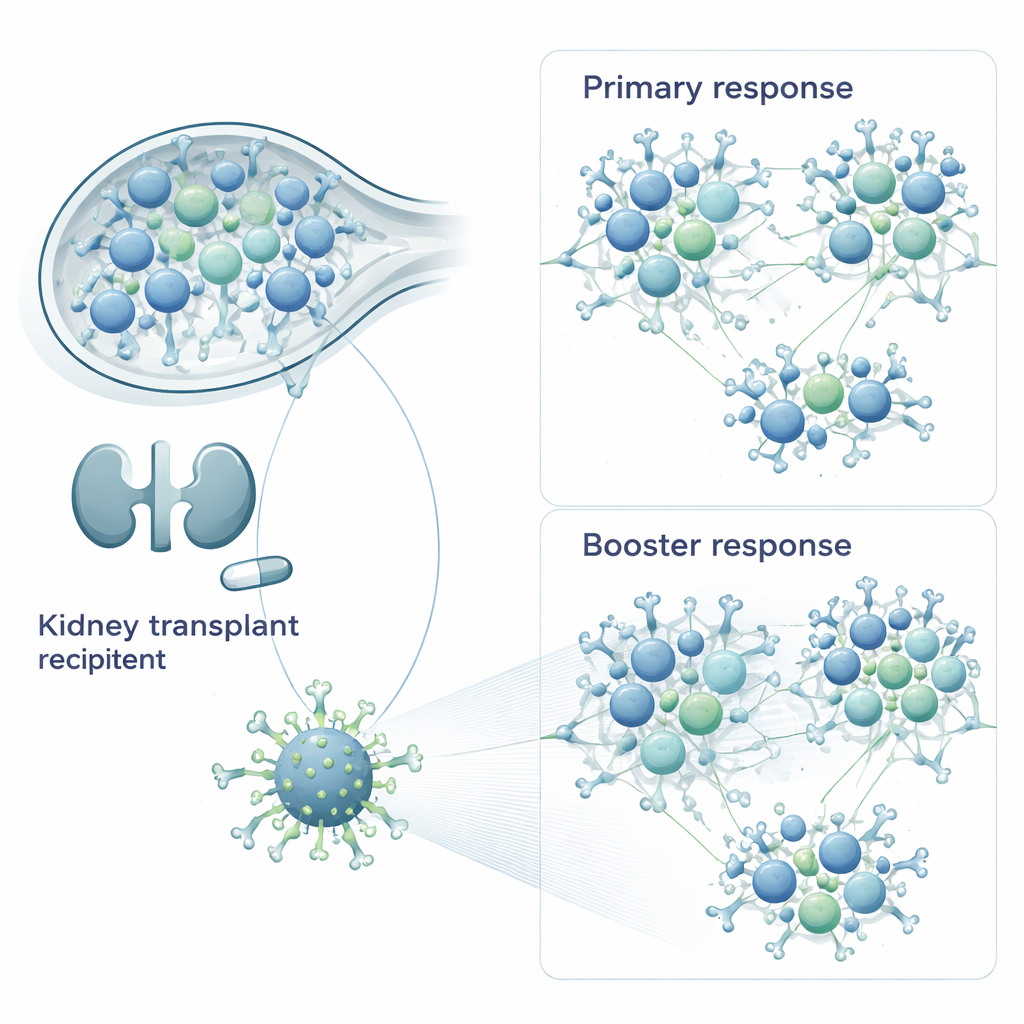
Overall, the two groups ended up with very similar defenses once they had responded. Antibody levels and most antibody functions were alike in primary and booster responders. Both groups also showed increases in virus-specific T cells that released helpful signaling molecules after vaccination. When the researchers summarized all antibody and T-cell measurements together, late responders did not look weaker. In some ways, they even showed a more tightly linked immune network, with stronger connections between their T-cell signals and antibody responses, suggesting their immune system components were working in better concert after boosting.
Subtle differences under the surface
Beneath this overall similarity, there were small but interesting differences. Booster responders had a slightly larger pool of memory B cells, the cells that can quickly make antibodies during future encounters with the virus, and they showed somewhat stronger blocking of the Omicron BA.1 variant. Primary responders, in contrast, had more T cells that made a messenger molecule called IL-21, which is known to help B cells mature and fine-tune antibodies. Detailed analysis of T-cell types also found distinct patterns in some memory cells and in a subset of highly experienced CD8 T cells, hinting that the two groups may reach similar protection through somewhat different cellular routes.
What this means for patients and doctors
For people living with a kidney transplant, the key message is reassuring: needing extra COVID-19 booster shots does not mean the immune system is permanently unable to build good protection. In this study, patients who only responded after a third or fourth dose still achieved immune responses that were broadly comparable in strength and quality to those who responded right away. For doctors and public health planners, the results support continued use of repeated vaccination in this vulnerable group, and they suggest that future vaccine strategies for transplant recipients should consider both how strong the response is and how well different arms of the immune system work together.
Citation: den Hartog, Y., van Sleen, Y., Gommers, L. et al. COVID-19 boosters restore virus-specific immune responses in kidney transplant recipients unresponsive to primary vaccination. npj Viruses 4, 14 (2026). https://doi.org/10.1038/s44298-026-00178-5
Keywords: kidney transplant, COVID-19 vaccination, booster doses, immune response, SARS-CoV-2 antibodies