Clear Sky Science · en
Lassa virus circumvents macrophage and dendritic cell antiviral defences in its natural reservoir, the Natal multimammate mouse (Mastomys natalensis)
Why a quiet virus in mice matters to people
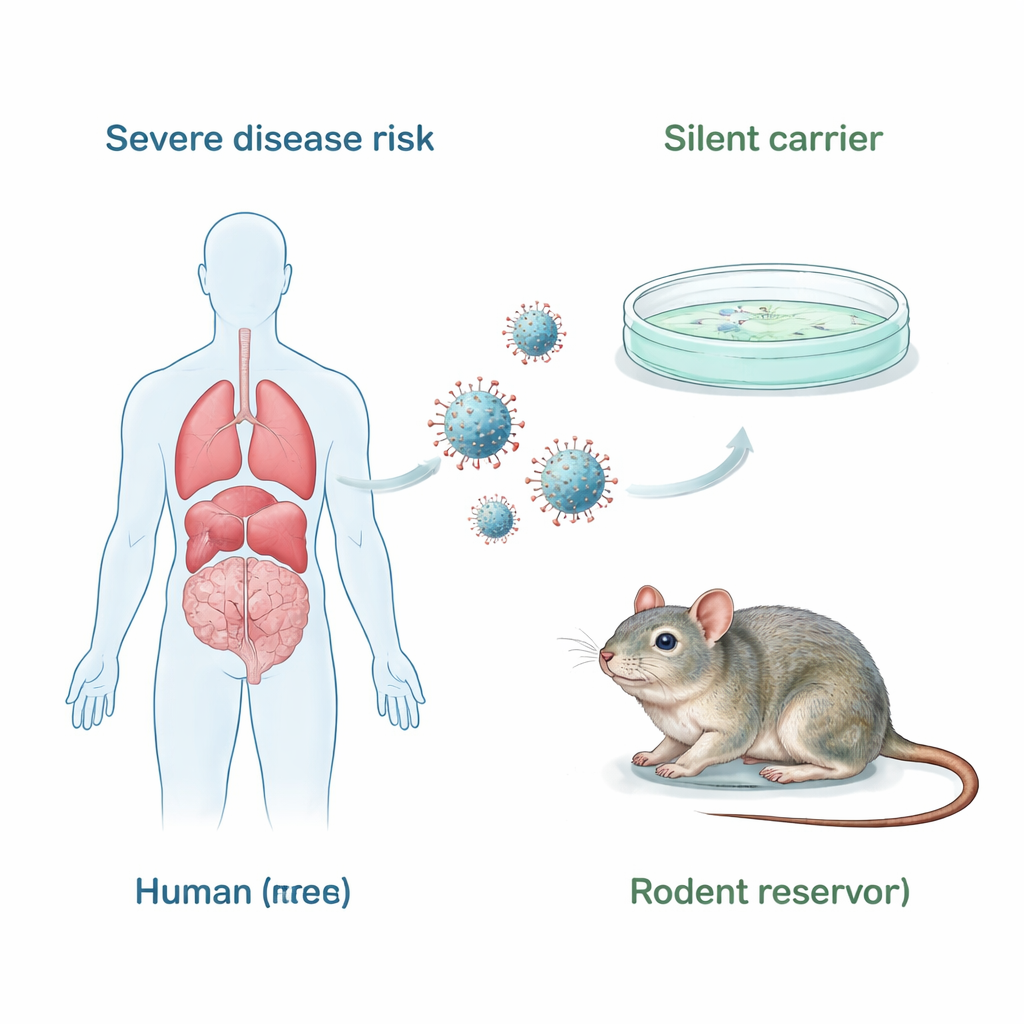
Lassa virus causes deadly hemorrhagic fever in thousands of people each year in West Africa, yet its main animal host—the Natal multimammate mouse—carries the virus without getting sick. Understanding how this small rodent tolerates the infection may reveal why humans become severely ill and could point the way to better treatments and vaccines. This study looks closely at how key immune cells from these mice react when they meet Lassa virus in the lab.
The everyday host behind a dangerous disease
Lassa virus is spread to humans mainly from the Natal multimammate mouse, a common rodent that lives in and around homes and food stores. In people, infection can lead to high fever, organ failure, and death, and there are no widely available vaccines. Yet the same virus can spread through the mouse’s body and linger in organs like the liver and spleen without causing obvious damage. This curious contrast suggests that, over a long shared history, virus and rodent have reached a fragile peace that limits disease while allowing the virus to persist.
Building the mouse’s immune cells in a dish
To explore this peace pact, the researchers first had to grow in the lab the two types of immune cells that Lassa virus targets early in infection: macrophages, which swallow and digest invaders, and dendritic cells, which act as scouts to alert the rest of the immune system. Using bone marrow from the mice, they successfully coaxed cells to become fully functional macrophages and dendritic cells. These lab-grown cells could ingest particles, respond strongly to standard bacterial and viral mimics, and showed the right surface markers and shapes, confirming that they behaved like real infection-fighting cells.
Virus growth without setting off alarms
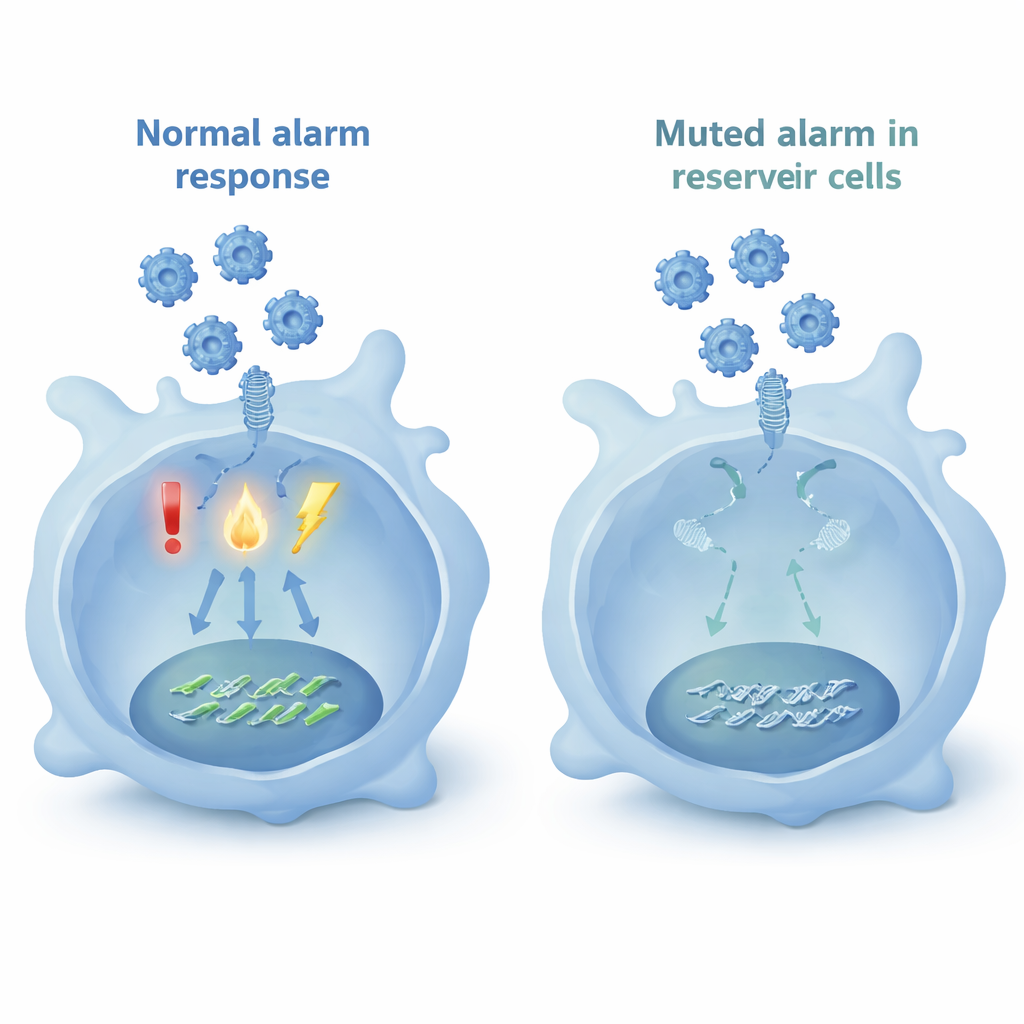
When the team infected these mouse cells with Lassa virus, the virus replicated efficiently. Viral genetic material and infectious particles built up over several days, and most cells became infected, yet they stayed alive and showed no obvious damage. Crucially, the usual alarm signals that cells send out when they detect a virus—strong activation of antiviral genes and inflammatory molecules—were almost completely absent. In contrast, when the same cells were exposed to harmless stimuli that mimic infection, they switched on those genes vigorously and in stimulus-specific patterns. This showed that the cells were fully capable of mounting a defense; they simply did not do so against Lassa virus.
A muted switch on key immune markers
The scientists looked in detail at a surface molecule called CD80, which helps immune cells talk to T cells and start a broader immune response. In mouse macrophages, Lassa virus did not raise CD80 levels at all. In dendritic cells, the virus caused only a modest, delayed increase in CD80 on the cell surface—and this happened only in cells that were clearly infected. Intriguingly, the corresponding gene’s activity in the nucleus did not rise, suggesting that the virus might be tweaking how existing CD80 protein is moved or displayed rather than how it is made. Broader gene-expression profiling of more than a hundred immune-related genes confirmed the pattern: classical stimuli produced broad, strong shifts in gene activity, while Lassa-infected cells looked almost indistinguishable from uninfected controls.
What this means for disease and for protection
For a lay reader, the takeaway is that Lassa virus can quietly occupy crucial immune cells in its rodent host without triggering the usual cellular alarms. The virus grows well, but the mouse’s early immune sensors appear to be switched off or bypassed, avoiding damaging inflammation. In adult mice, later T cell responses can still clear the virus, but in young animals, where these responses are weaker, the infection can persist without obvious illness. In humans, the same early stealth tactics may instead help set up a harmful, poorly controlled immune reaction and severe disease. By revealing how the virus tiptoes around the mouse immune system, this work helps clarify the fine line between peaceful coexistence in animals and deadly infection in people.
Citation: Corrales, N., Wozniak, D.M., Yordanova, I.A. et al. Lassa virus circumvents macrophage and dendritic cell antiviral defences in its natural reservoir, the Natal multimammate mouse (Mastomys natalensis). npj Viruses 4, 9 (2026). https://doi.org/10.1038/s44298-026-00177-6
Keywords: Lassa virus, rodent reservoir, innate immunity, immune evasion, hemorrhagic fever