Clear Sky Science · en
Collection and reporting of waste data to support waste management policies
Why Waste Numbers Matter to Everyone
Every day, enormous amounts of rubbish and leftover materials move through our cities and countryside. How we count and track this waste quietly shapes decisions about new recycling plants, landfill bans, climate targets and even local jobs. This article looks at how England collects data on waste from construction and demolition, compares it with other European systems, and asks a simple but crucial question: are our waste numbers good enough to support smart, fair and climate‑friendly decisions?
How England Tracks Its Building Waste
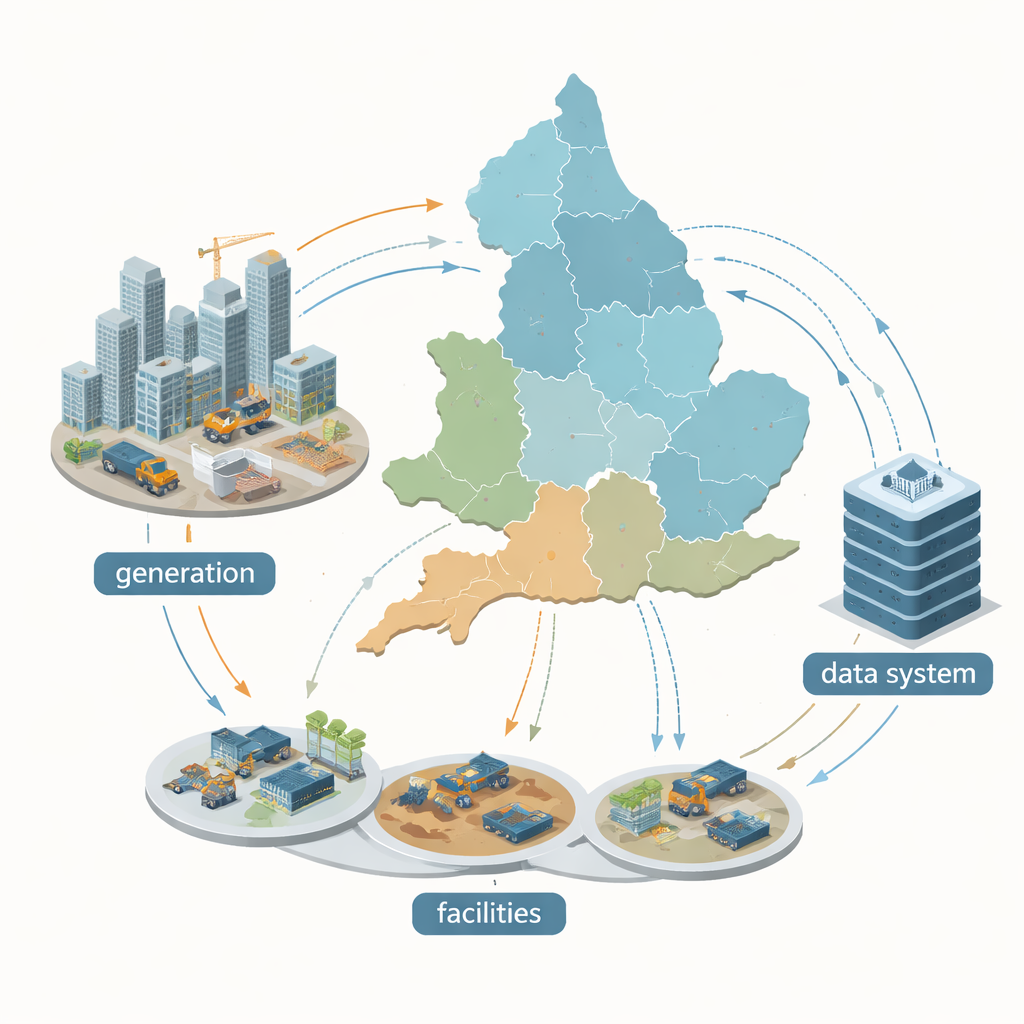
England’s Environment Agency runs a central database called the Waste Data Interrogator (WDI). It gathers reports from thousands of licensed waste sites that receive and send on materials such as concrete, soil, metals and timber from construction, demolition and excavation. Each record notes what kind of waste it is, how much there is, where it came from, where it is going next, and whether it is meant for recycling, energy recovery or disposal. The authors focus on this system because it is relatively detailed, similar in structure to many other European databases, and heavily used by government to check compliance and to plan waste infrastructure. They concentrate on construction and demolition waste, which makes up about two‑thirds of all waste generated in the UK and is central to “zero avoidable waste” and circular‑economy goals.
Hidden Gaps and Double Counting
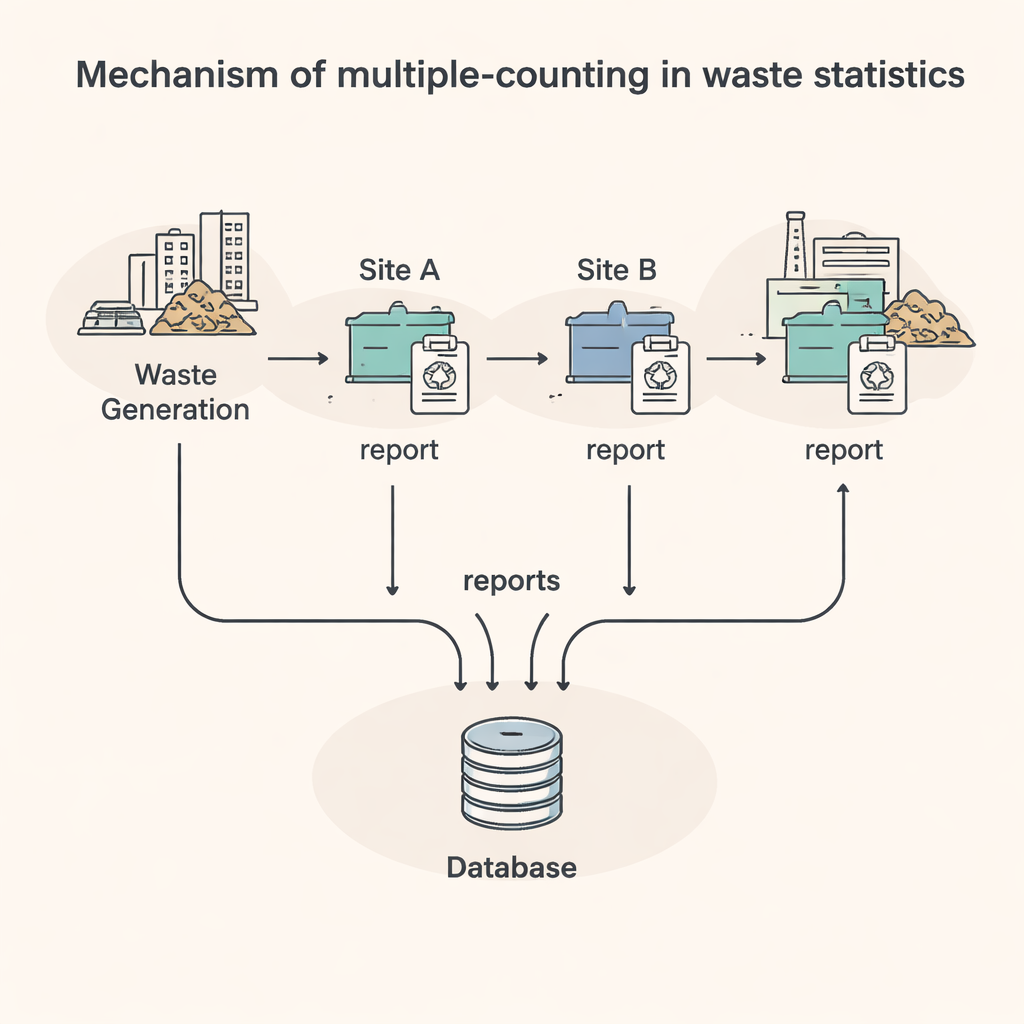
Although the WDI looks comprehensive, it does not actually record how much waste is generated in the first place. Instead, it records movements of waste between permitted sites. This leads to two big problems. First, the same tonne of waste can appear several times as it travels from one facility to another for sorting, storage and final treatment, so simple totals can exaggerate how much waste there really is. Second, large chunks of activity are missing altogether: materials reused directly on a building site, waste handled under regulatory exemptions, and illegal dumping or burning are poorly captured, if at all. As a result, the quantities of construction waste derived from the database fall far short of official national estimates, and researchers have struggled—often unsuccessfully—to correct for multiple counting.
Plenty of Detail, But Not the Right Kind
On paper, the WDI uses sophisticated European coding systems to describe waste types, hazards and treatment methods. In practice, the study finds that much of this detail does little to answer the questions that matter for a circular economy, such as: can this material be safely reused, at what quality, and in which sector? Most construction waste is simply recorded as solid, non‑hazardous material, and important information on quality, contamination and realistic reuse options is missing. Treatment codes say whether something was recovered or disposed of, but not whether it was, for example, high‑quality recycled aggregate or low‑grade backfill. The authors argue for adding new kinds of information around “use potential”—how easily and valuably a waste can be turned back into a resource—alongside clearer descriptions of where and how the waste originally arose.
Where the Waste Goes – And What We Cannot See
Because each facility in England is linked to a location, the WDI can show how construction waste moves between regions and within city areas, such as Greater Manchester. Most waste stays within its home region, and maps derived from the data can highlight local hotspots of activity. This is useful for planning collection routes and siting treatment plants. Yet key pieces are still missing for serious planning and climate analysis. The database says little about how far or by what means waste is transported, offers limited information on cross‑border movements, and omits the treatment capacity of sites. Nor does it directly track the creation and use of secondary materials that might replace newly mined resources, making it hard to link waste management to carbon reduction and pollution targets.
Digital Fixes and Policy Implications
The authors conclude that England’s system, like many others in Europe, was built mainly for regulatory oversight rather than as a tool for steering society towards less waste and lower emissions. They recommend several improvements: collect data on waste generation at the source, not just at treatment sites; track individual waste streams with unique identifiers as they move through the system; add richer information on material quality and realistic reuse options; strengthen location data; and provide clearer documentation so users do not misinterpret the numbers. A forthcoming Mandatory Digital Waste Tracking service in the UK, which will link producers, carriers and sites in a single digital chain of custody, could make these changes possible. For the general public, the message is that better waste data are not just an accounting exercise: they are a foundation for policies that cut illegal dumping, reduce the need for new raw materials, and move us closer to a truly circular, low‑carbon economy.
Citation: Zhang, C., Noumbissié, L.T., Zhang, J. et al. Collection and reporting of waste data to support waste management policies. npj Mater. Sustain. 4, 6 (2026). https://doi.org/10.1038/s44296-025-00092-6
Keywords: construction waste, waste data, circular economy, recycling policy, digital waste tracking