Clear Sky Science · en
Feasibility and acceptability of menstrual underwear among women in displacement-prone Kalehe, Democratic Republic of Congo
Why Period Care in Crisis Zones Matters
For millions of women and girls living through war, displacement, and poverty, managing a monthly period can be a serious challenge. In parts of the Democratic Republic of Congo (DRC), access to clean water, private washing spaces, and affordable menstrual products is limited. This study explores whether reusable menstrual underwear could offer a safer, more comfortable, and more sustainable way for women in a conflict-affected rural area to manage their periods—and what it would take to make such a solution work in real life.
Testing a New Kind of Period Protection
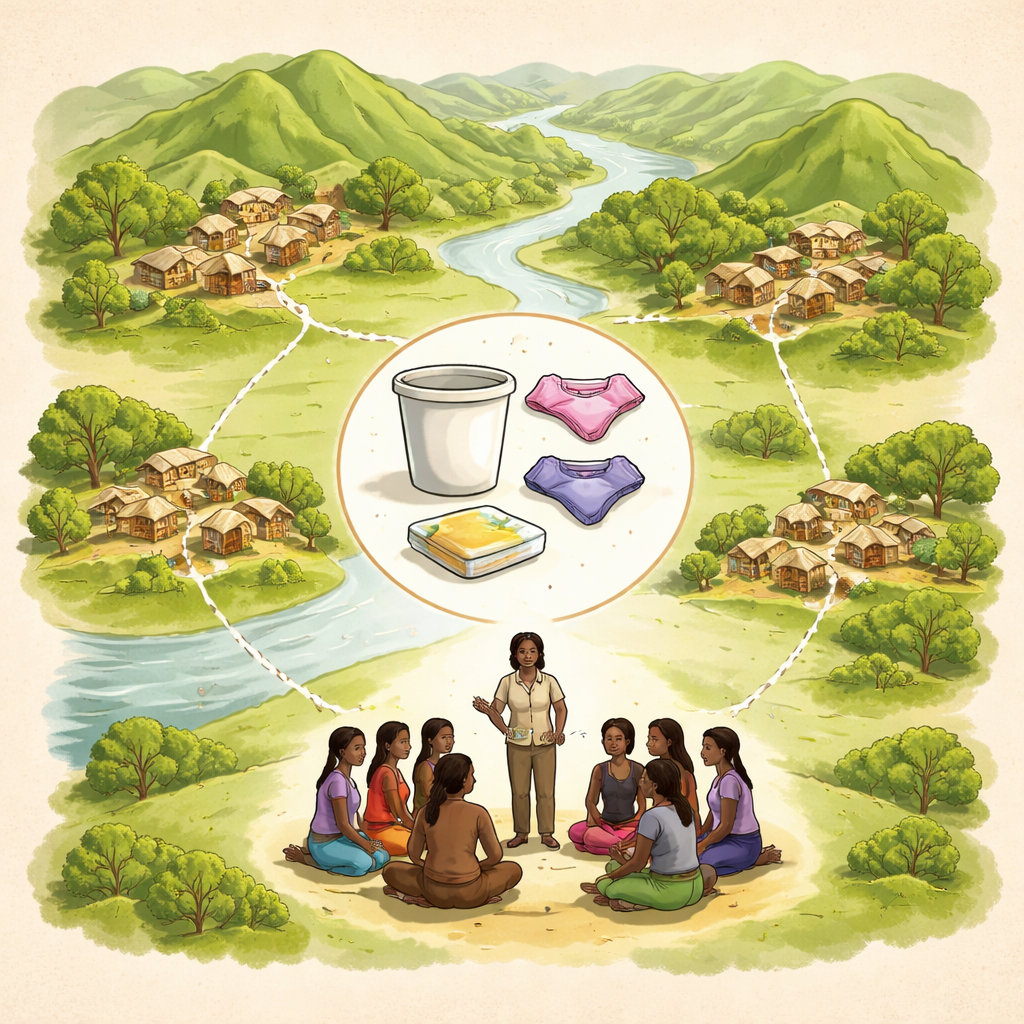
The research took place in Kalehe, a rural territory in eastern DRC that has endured years of conflict, epidemics, and repeated displacement. Médecins Sans Frontières (Doctors Without Borders) works there to provide basic health care. As part of a broader effort to improve menstrual health, the team invited local women to small group sessions to talk openly about menstruation—often a taboo topic—and to introduce reusable menstrual underwear. Women aged 18 to 50 who were interested and met simple health criteria received four pairs of menstrual underwear, along with a basic hygiene kit containing a bucket, soap, and a plastic bag for transporting used items. Clear verbal explanations and picture-based instructions in local languages guided women on how to use, wash, and dry the underwear.
What Women Liked—and What Fell Short
After several months, 124 women completed a survey and 87 joined in-depth group discussions. Almost all had previously relied on a cloth-wrapped loincloth during their periods. In contrast, they described the new underwear as more comfortable, more discreet, and more hygienic. Over 94% said they were satisfied overall, and nearly every participant preferred the underwear to her usual method. Women particularly appreciated that the product did not cause irritation, controlled leaks better than their old cloths for many flows, and allowed them to continue daily activities with greater confidence.
However, users were also frank about the drawbacks. Many found that the underwear did not absorb enough for heavier bleeding, forcing them to change roughly every three hours to avoid leaks. Because each pair could take a full day to dry in the humid climate, four pairs were not enough to rely on exclusively. Some women also received sizes that did not fit well, which increased the risk of leakage. A few noticed that the fabric stretched out or faded after repeated washing, raising concerns about durability. These details, while small on their own, mattered greatly in a community where replacing items is difficult and water is scarce.
Living, Washing, and Drying in a Difficult Environment
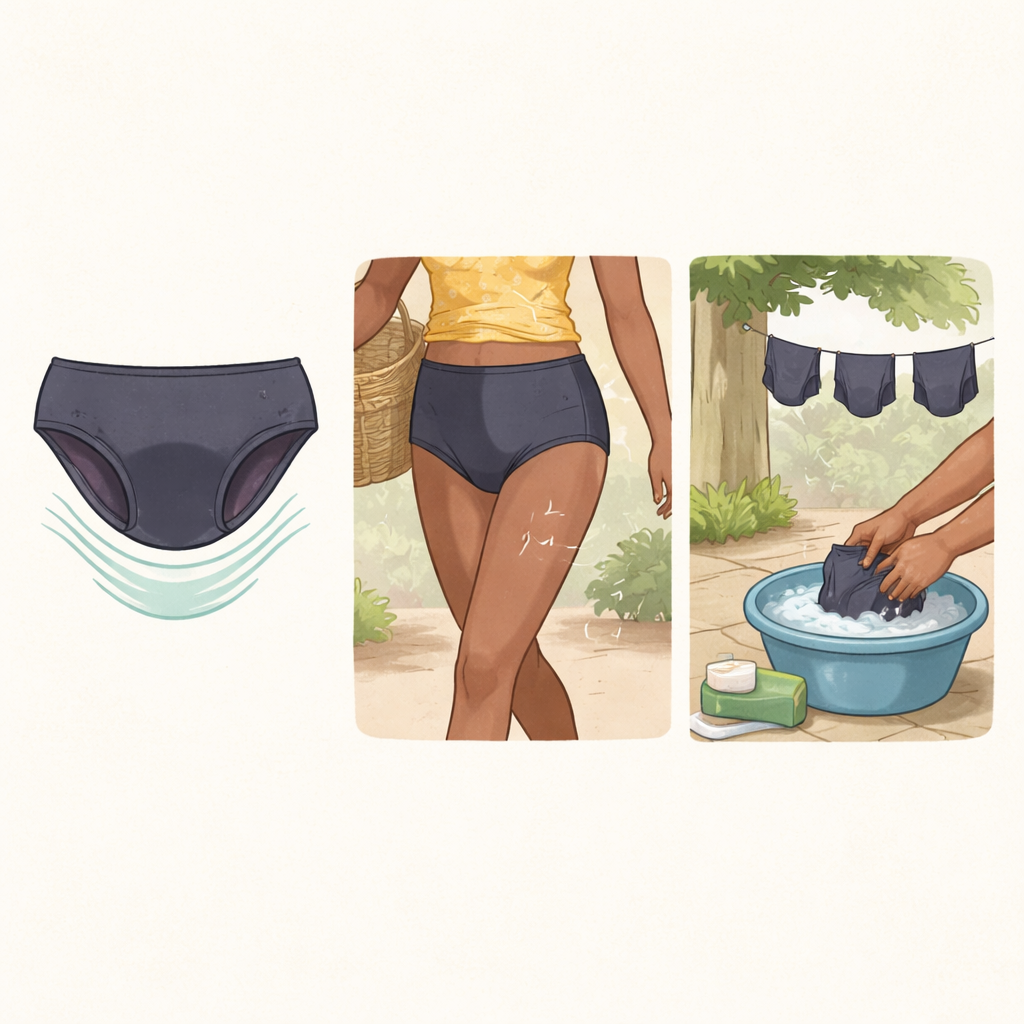
Using reusable menstrual products assumes access to water, soap, and private space—conditions that are not guaranteed in humanitarian settings. While women generally found the underwear easy to wash, they struggled with the time and water required to clean them several times a day. Drying posed an even greater challenge. Some women were comfortable hanging the underwear outside when it was sunny; others dried them indoors to avoid theft or judgment from neighbors. The need for privacy and the fear of stigma meant that women did not always dry the underwear in the most hygienic way. Participants therefore suggested practical improvements such as larger buckets, more soap, and a simple clothesline to make washing and drying more manageable.
Rumors, Trust, and the Power of Communication
Because menstrual underwear was new and unfamiliar, rumors spread quickly in the community. Some people claimed the product could cause infertility, miscarriage, or even infections like COVID-19, and a few described it as linked to evil forces. These worries came mainly from people who were not part of the project, including some elders and religious leaders. Women who used the underwear, however, tended to trust it—especially because it was provided by Médecins Sans Frontières, an organization already known for medical care. The team’s discussion sessions and clear instructions helped counter false beliefs, but the experience underscored how vital open, culturally sensitive communication is whenever a new health product is introduced.
What This Means for Future Emergency Aid
Overall, the study shows that reusable menstrual underwear can be a highly acceptable and practical option for women living in low-resource, crisis-affected areas—if it is designed and delivered with their realities in mind. Women in Kalehe said they wanted more pairs per person, better absorbency, improved sizing for local body types, and stronger materials, along with better access to water, soap, and private drying spaces. With these adjustments, menstrual underwear could become a standard part of emergency kits for displaced people, helping protect women’s health and dignity during one of the most basic and recurring aspects of life.
Citation: Bisimirwe, C., Maombi, S., Nabuki, S. et al. Feasibility and acceptability of menstrual underwear among women in displacement-prone Kalehe, Democratic Republic of Congo. npj Womens Health 4, 13 (2026). https://doi.org/10.1038/s44294-026-00136-9
Keywords: menstrual health, humanitarian settings, reusable menstrual products, Democratic Republic of Congo, women’s hygiene