Clear Sky Science · en
Childhood health through matrescence empowers women to sustain life-course brain health
Why Mothers and Children’s Brains Matter to Everyone
From school readiness to resilience in old age, our brains shape nearly every part of our lives. This article argues that brain health across the entire lifespan is deeply influenced by what happens to women before and during pregnancy, and in a child’s first thousand days of life. By recognizing pregnancy and early parenthood (“matrescence”) as a critical window, societies can prevent many later neurological and mental health problems, reduce healthcare costs, and build a healthier, more productive population.
The Hidden Story of Brain Health Across a Lifetime
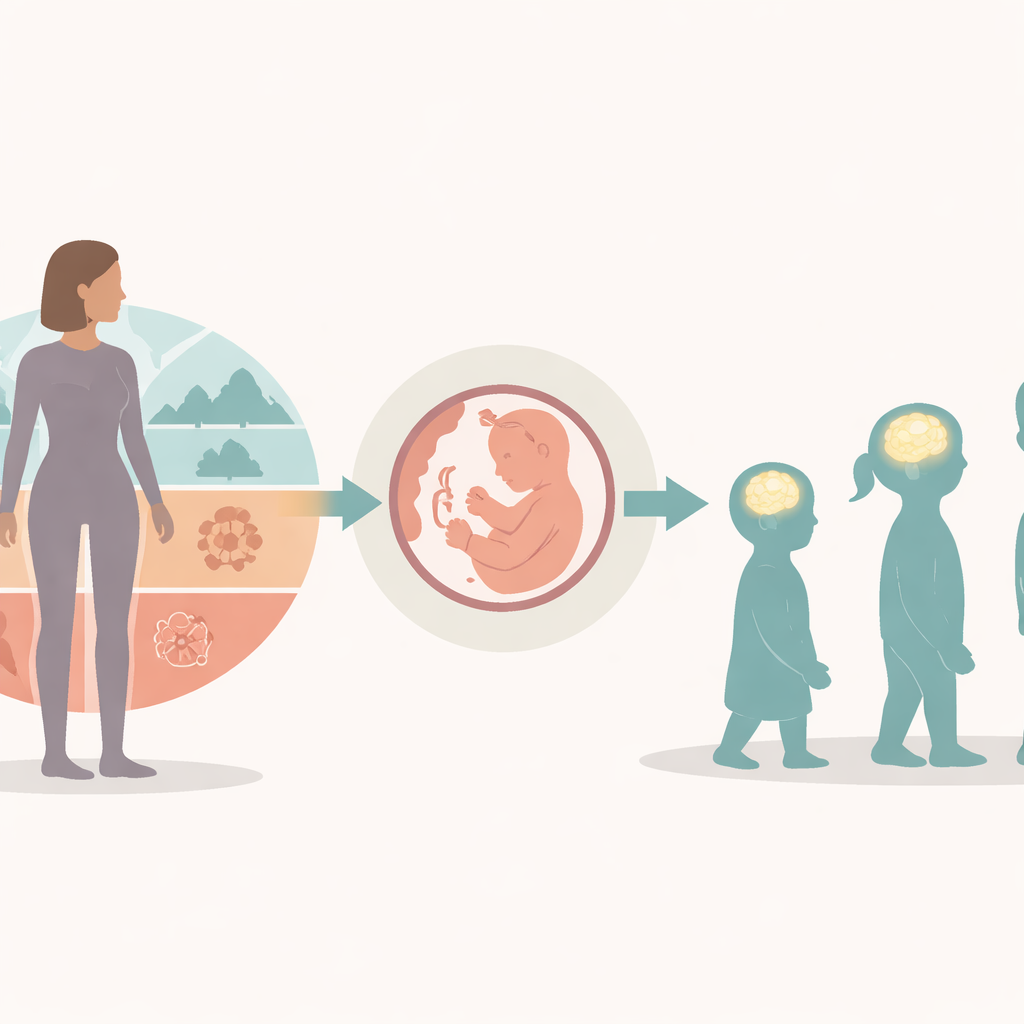
The authors introduce the idea of the “neural exposome” – the sum of all internal and external influences on the brain over time, from genes and nutrition to pollution and stress. Brain health is not fixed at birth; it is shaped continuously by this mix of influences. Still, some periods are far more sensitive than others. The article emphasizes that the journey to brain health begins even before conception, flows through pregnancy, and is especially powerful during the first 1000 days after fertilization, when the brain’s basic circuits are being wired. Experiences in these early years set trajectories that can either protect against or predispose people to conditions like epilepsy, learning difficulties, depression, stroke, and dementia later in life.
How a Mother’s World Reaches the Baby’s Brain
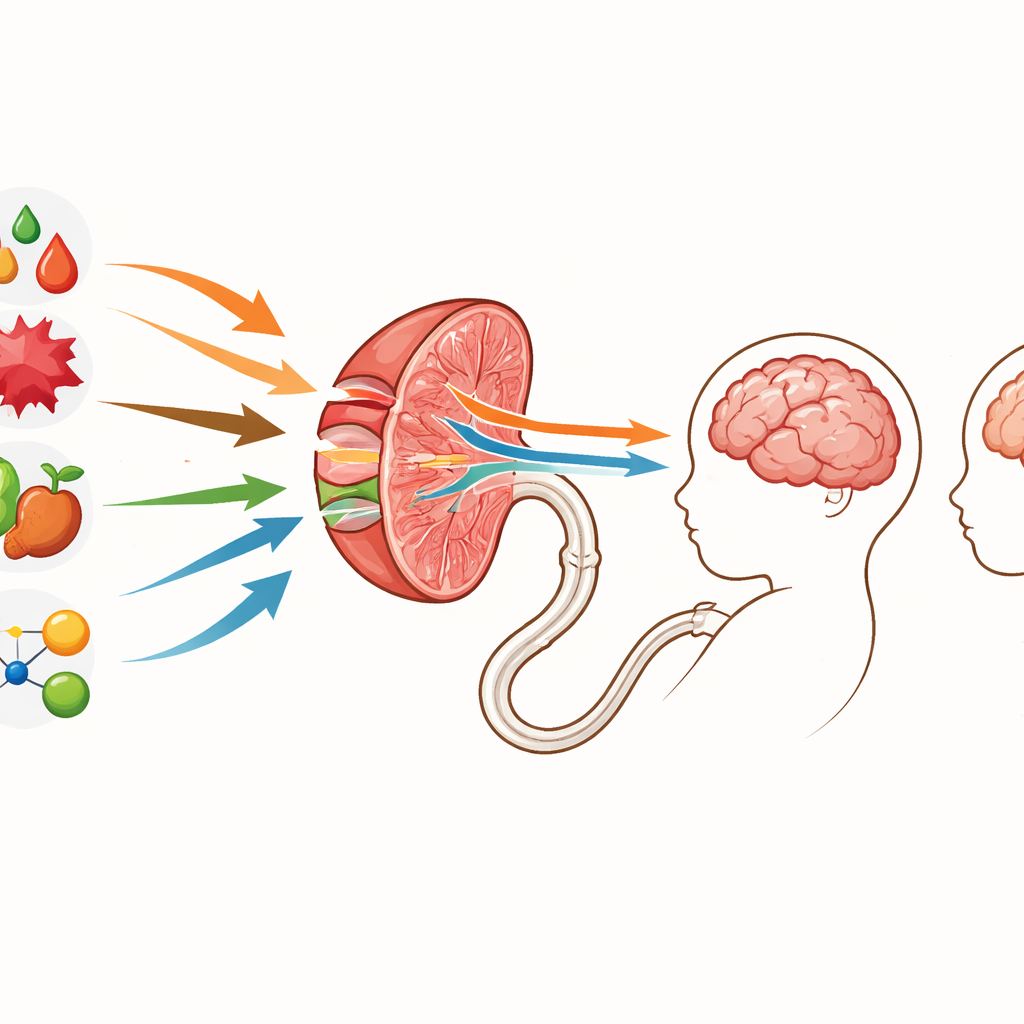
A central focus is the “maternal–placental–fetal triad,” the biological partnership between mother, placenta, and fetus. Parents’ own childhood experiences, including toxic stress and poor health, can shape their egg and sperm. Once pregnancy begins, the placenta becomes a hub that translates a woman’s environment into signals to the developing brain. Nutrition, infections, pollution, inflammation, and chronic stress can all influence how brain cells grow, connect, and adapt. These changes can be helpful (building resilience) or harmful (creating vulnerabilities). Because many of these influences act during specific weeks or months, the timing of stress or illness can matter just as much as the type or dose.
From Childhood Experiences to Adult Brain Diseases
The review pulls together evidence from long-term studies that follow people from before birth into adulthood. These studies show that early growth restriction, prenatal stress, and other adversities can leave lasting marks on brain structure and function, detectable with modern brain scans and cognitive tests. These “signatures” of early life conditions are linked to mental health disorders, poorer thinking skills, and increased risk of major conditions like Alzheimer’s disease and Parkinson’s disease decades later. At the same time, positive experiences—good nutrition, safe and stimulating home and school environments, and social support—can buffer risks and improve outcomes. The message is that early disadvantages are powerful but not destiny; smart interventions can change the path.
Empowering Women With Tools, Teamwork, and Technology
The authors argue that closing gaps in women’s healthcare is one of the strongest levers for improving global brain health. Many women face barriers such as anemia, domestic violence, poor access to prenatal care, and “healthcare deserts” with few services. The article describes how preventive neurology can shift care from reacting to problems in sick children or older adults to acting early with mothers and infants. This includes coordinated care teams (physicians, nurses, midwives, doulas), better surveillance of fetal and infant brain development, and tailored support based on sex and gender differences. New digital tools and artificial intelligence can extend this care: smartphone-based tests for anemia, home glucose and blood pressure monitoring, and app-based programs for postpartum depression can help women manage risks even in resource-limited settings.
Building Brain Health for Future Generations
In closing, the article makes a clear case: investing in women’s health before, during, and after pregnancy is not only about preventing illness in mothers and children; it is a long-term strategy to safeguard brain health across whole populations and generations. By supporting women’s education, reducing harmful exposures, and providing proactive, team-based care, societies can lessen the burden of neurological and mental disorders, increase productivity, and enhance well-being into old age. In simple terms, when we care for mothers and their young children early, we are quietly building stronger brains—and stronger communities—for decades to come.
Citation: Scher, M.S., Eyre, H.A., Adalat, S. et al. Childhood health through matrescence empowers women to sustain life-course brain health. npj Womens Health 4, 16 (2026). https://doi.org/10.1038/s44294-026-00135-w
Keywords: maternal health, early brain development, neural exposome, preventive neurology, women’s health equity