Clear Sky Science · en
Implementation of brief stop smoking advice at cervical cancer screening in general practice: a process evaluation
Why this matters for everyday health
Cervical cancer screening is already a powerful way to catch disease early, but it may also be a perfect moment to talk about another major health threat: smoking. This study from the Netherlands asked a simple question with big implications for women’s health services everywhere: if clinics routinely offer brief help to quit smoking right after a cervical screening test, will women accept it, and can busy practices actually make it work?

A checkup that can do double duty
Across Europe, smoking remains the leading preventable cause of cancer in women. At the same time, many women regularly attend cervical cancer screening, which in the Netherlands is usually done in general practice. The research team saw an opportunity to turn this routine visit into a “teachable moment”—a time when women may be especially open to talking about cancer prevention and their own habits. Because smoking increases the risk of persistent high-risk HPV infections and cervical abnormalities, connecting the smear test with a conversation about smoking could feel relevant rather than random.
A short conversation built into routine care
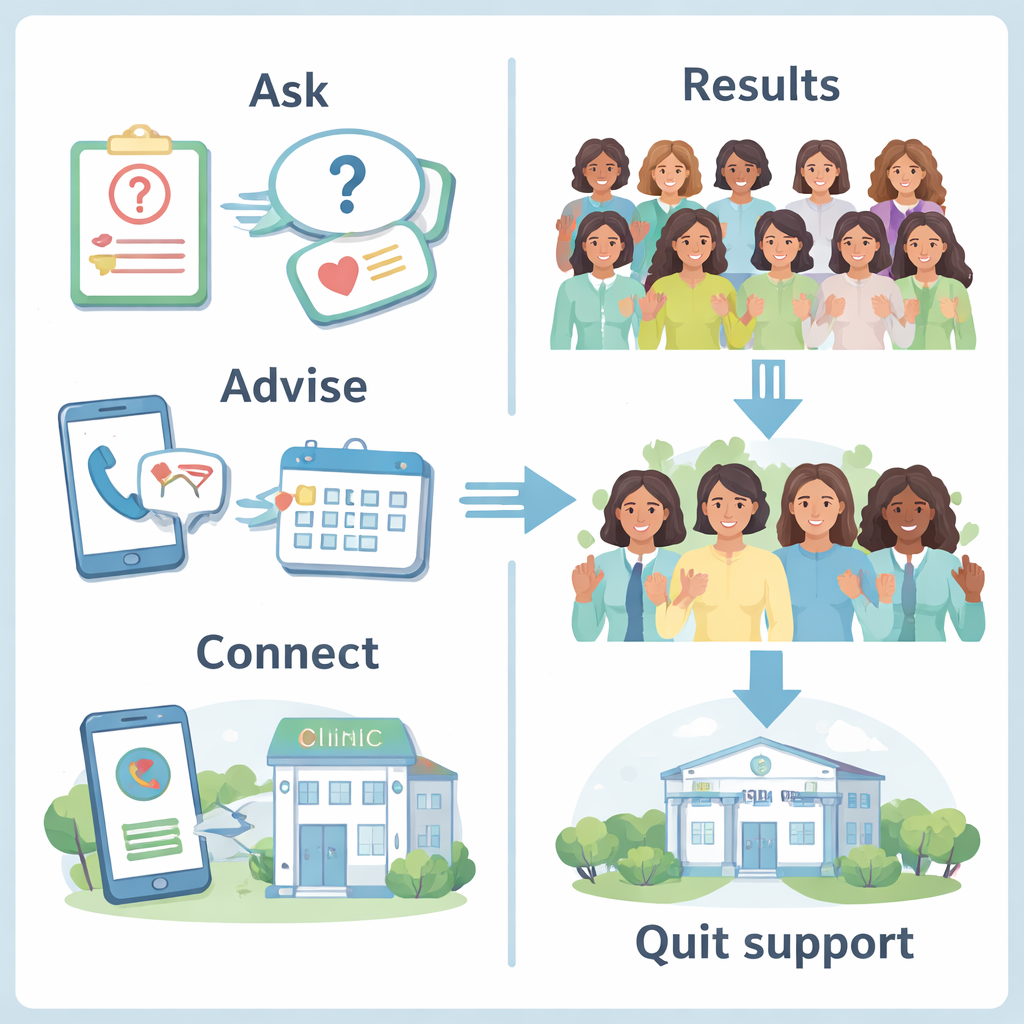
The SUCCESS trial trained practice assistants—the staff members who usually perform the cervical smear—to use a brief three-step approach called Ask–Advise–Connect. They were taught to ask women whether they smoke, advise them in simple terms about health risks and benefits of quitting, and then actively connect smokers who were interested with in-practice cessation support, such as an appointment with a nurse or counselor. The process evaluation described in this paper ran alongside the main trial and used questionnaires and in-depth interviews to explore three things: did women find the new approach acceptable, was it feasible for practice assistants to deliver, and under what conditions did it work best in real-world clinics?
How women and staff experienced the approach
Among women who smoked, roughly three quarters described the advice as acceptable or neither positive nor negative, and fewer than one in eight disliked it. Many women said it felt logical to talk about smoking during a cancer-related visit, especially when the assistant calmly explained how smoking and cervical health are linked. Some did feel confronted or surprised, but even several of these women appreciated being offered concrete help, such as an easy referral for quit support. Importantly, their intention to return for future cervical screening stayed very high—around 98 percent—whether or not they had received stop-smoking advice.
What makes it work in busy clinics
Most practice assistants reported that asking about smoking and offering a connection to quit support fit into their appointments, especially when smoking status was added to standard forms. They were less confident about giving detailed advice, often citing time pressure or feeling it was not fully their role. Clinics that implemented the strategy most successfully tended to be smaller practices where all assistants were on board, had more time per smear consultation, and had some prior training or experience in smoking cessation or preventive care. Team support from general practitioners, clear task division, and integrating smoking questions into routine workflows all helped. On the other hand, low local smoking rates and disruptions from the COVID-19 pandemic reduced how often assistants could practice and maintain the new routine.
What this means for women and health services
For women, the study’s message is reassuring: brief, respectful conversations about smoking during cervical screening visits are generally well received and do not scare people away from future tests. For health systems, the findings suggest that cervical screening can safely be used as a platform to offer practical help with quitting smoking, provided that practice assistants are properly trained, supported by their teams, and given a simple way to weave the questions into their everyday workflow. In short, a quick extra question and an offer of help during a routine smear test can open the door for more women to get the support they need to stop smoking—without undermining the essential goal of regular cancer screening.
Citation: Mansour, M.B.L., Crone, M.R., van Weert, H.C. et al. Implementation of brief stop smoking advice at cervical cancer screening in general practice: a process evaluation. npj Womens Health 4, 9 (2026). https://doi.org/10.1038/s44294-026-00131-0
Keywords: smoking cessation, cervical cancer screening, primary care, women’s health, behavior change