Clear Sky Science · en
Understanding the preferences of younger women for the delivery of a service to predict breast cancer risk: a discrete choice experiment
Why this matters for younger women
Younger women often hear that breast cancer is something to worry about later in life, yet a substantial number of cases occur before age 50, when routine screening usually begins. This study asks a simple but vital question: if the health service offered women in their 30s a way to find out their personal risk of breast cancer, how would they want that service to look, and would they actually use it? The answers could shape future programs that aim to catch cancer earlier and even prevent it.
Looking beyond family history
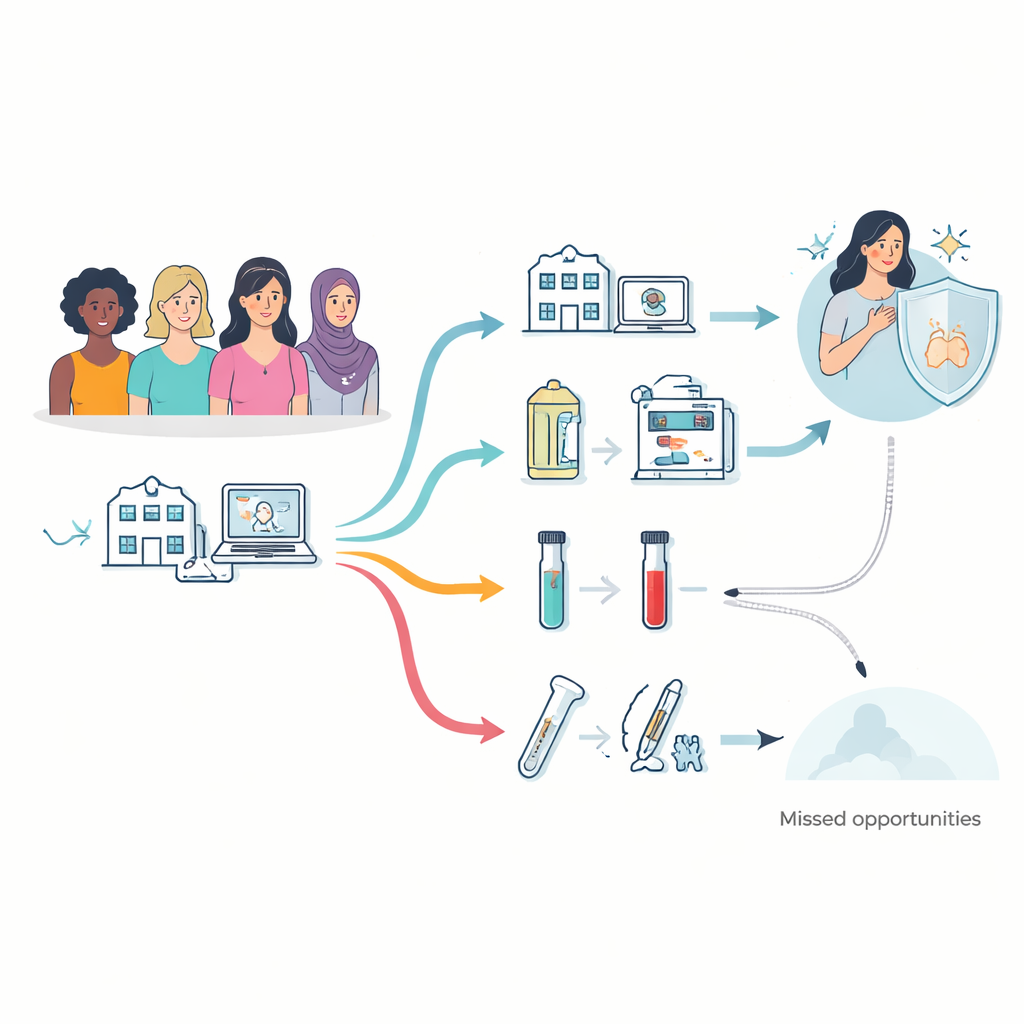
In the UK, regular breast screening currently begins at age 50, and earlier checks are mainly offered to women with a strong family history of the disease. But many younger women who develop breast cancer have no close relatives affected, meaning today’s rules can miss a large share of those at higher risk. Researchers involved in the BCAN-RAY project designed a new type of service for women aged 30 to 39, where a combination of simple tools—such as a questionnaire about health and lifestyle, breast imaging, and genetic tests—could be used to estimate a woman’s chance of developing breast cancer in the future. If higher risk is found, women might start screening earlier, consider risk-reducing medicines, or make targeted lifestyle changes.
Asking women to choose between different service designs
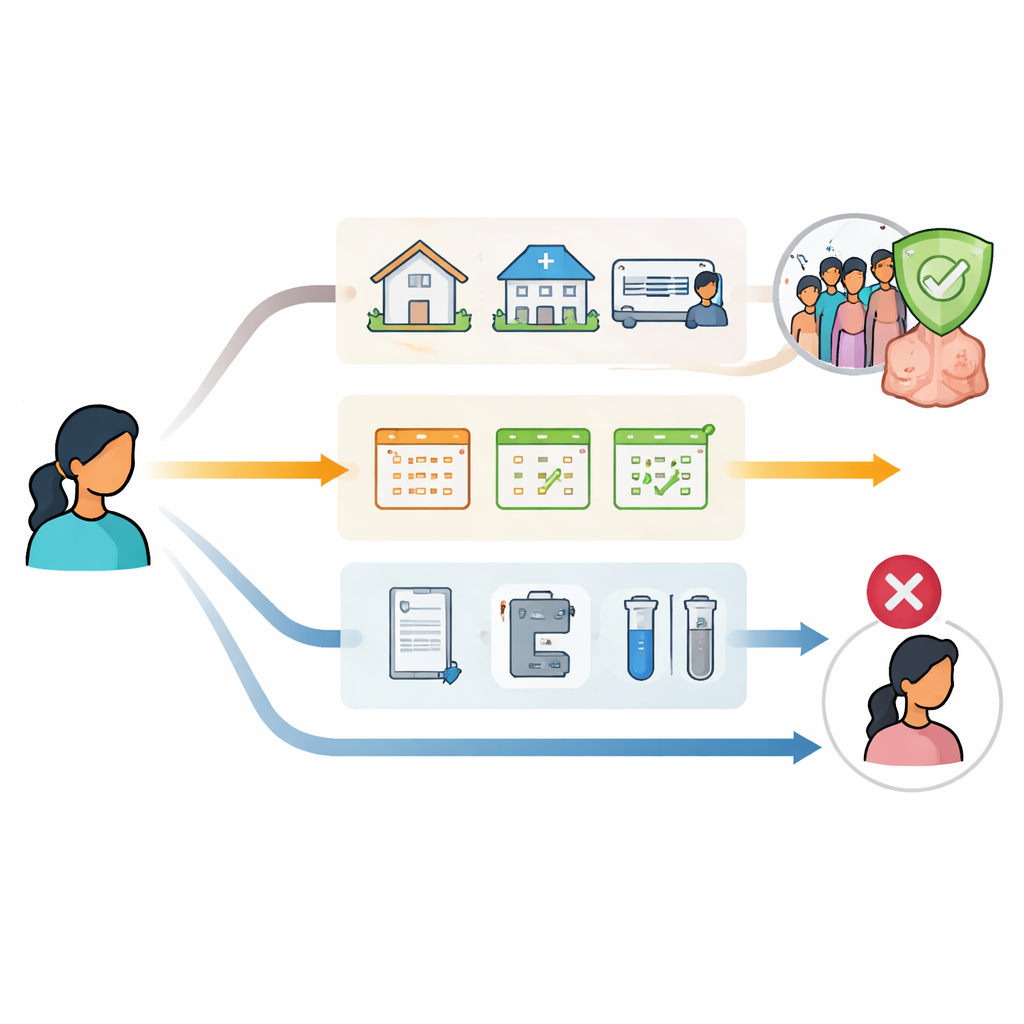
Because this type of service does not yet exist in everyday care, the team could not simply measure who uses it in real life. Instead, they used a survey method that presents people with hypothetical but realistic choices. A large online panel of 936 women aged 30 to 39, who did not already know themselves to be at high risk, were shown a series of choice questions. Each question described two possible versions of a risk-prediction service plus the option to decline and carry on with standard care. The versions differed in key features: how risk was measured (from questionnaire alone to combinations including imaging and genetic testing), how many appointments were needed, where the appointment would take place (home, GP surgery, mobile van, hospital, or community centre), when appointments were available, and whether women could book their own times or received a fixed appointment.
What younger women said they want
Across the whole group, interest in having breast cancer risk predicted was strikingly high. Statistical models estimated that, depending on how the service was set up, between 77% and 89% of women would choose to take part. Women tended to prefer services that offered flexible appointment times, especially evenings or weekends, and the ability to book their own slots rather than being sent a fixed time. Being able to take part from home was attractive, but not if this meant completing only a questionnaire with no additional testing. Services that involved hospitals were less popular, and a newer technology called radiofrequency breast scanning was also less favoured than more familiar options. Importantly, women were more willing to use services that included genetic testing alongside other methods, even beyond the added medical accuracy that such tests can provide.
Different groups, different needs
The researchers also looked for patterns that might reveal distinct groups of women with similar views. They identified four broad groups. The largest, nearly 60% of the sample, were very positive about having their risk predicted almost regardless of the details. A second group showed weak and somewhat inconsistent preferences, suggesting they might not have engaged deeply with the choices. A third group, about 15%, cared less about whether prediction was offered and more about how it was delivered: they strongly preferred flexible timing and self-booking and disliked mobile vans, even though these were popular overall. A final, smaller group—around 7%—appeared highly unlikely to use any risk-prediction service, no matter how it was designed. Demographic factors such as age, ethnicity, or education did not clearly explain who fell into which group.
What this could mean for future care
The study suggests that most younger women in the UK would welcome a well-designed service to predict their risk of breast cancer. For many, the promise of earlier detection and prevention outweighs the inconvenience of extra appointments. Still, the findings highlight that details matter: offering flexible times, letting women book their own appointments, avoiding unnecessary hospital visits, and clearly explaining the role of genetic testing could all boost participation. At the same time, a small but important minority may never choose risk prediction, and another sizeable group may need services tailored to their practical needs and preferences. Thoughtfully designing such services could help ensure that more cancers are prevented or caught early, when treatment is most effective.
Citation: Wright, S.J., Thapa, S., Salisbury, A. et al. Understanding the preferences of younger women for the delivery of a service to predict breast cancer risk: a discrete choice experiment. BJC Rep 4, 10 (2026). https://doi.org/10.1038/s44276-026-00209-x
Keywords: breast cancer risk, younger women, health service design, genetic testing, screening preferences