Clear Sky Science · en
The COVID-19 pandemic has not influenced survival outcomes of head and neck cancer squamous cell carcinomas in the West of Scotland: a retrospective cohort study
Why this research matters now
The COVID-19 pandemic disrupted health services across the world, raising fears that people with cancer would be diagnosed later and have worse chances of survival. This study asks a pressing question with real-world importance: did these disruptions actually shorten lives for people with head and neck cancers in one large region of Scotland, or did cancer services manage to protect outcomes despite the chaos?
Looking at cancer care across three pandemic eras
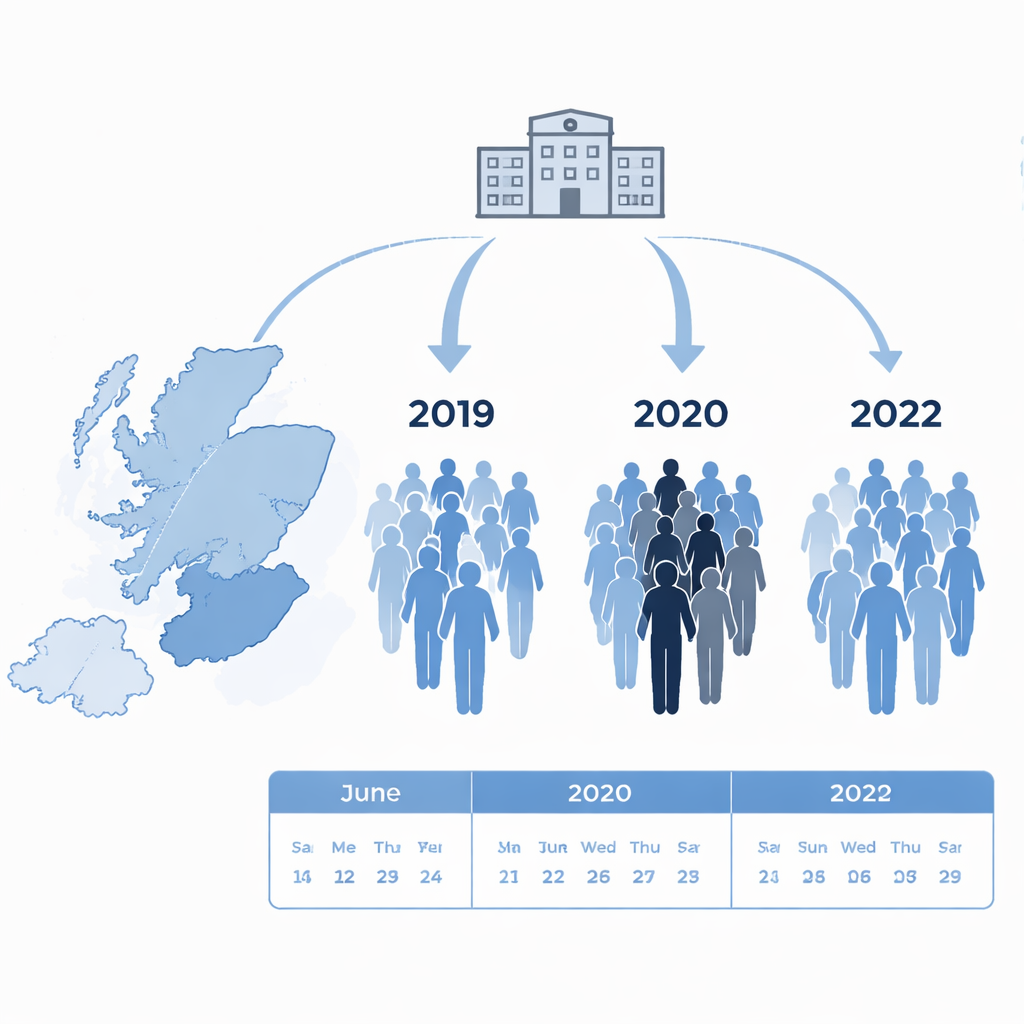
Researchers examined medical records for 707 people diagnosed with head and neck squamous cell carcinoma in the West of Scotland. These cancers affect areas such as the mouth, throat and voice box, and are often aggressive when found late. The team compared three six‑month windows: before the pandemic (June–October 2019), during the height of restrictions (June–October 2020), and after most public health rules had eased (June–October 2022). For each group, they gathered details on age, sex, lifestyle factors like smoking and alcohol, cancer stage, and treatments given, then followed patients forward in time to see who survived and for how long.
Later diagnoses, but steady chances of survival
One of the clearest signals was that more people in 2020 arrived with advanced cancer. About two‑thirds of patients that year had stage III or IV disease, compared with roughly three‑fifths in 2019 and 2022. This suggests that delays in seeing doctors or dentists, or in being referred to specialists, did allow tumours more time to grow. Yet when the researchers plotted survival curves and used statistical models that account for age, tumour site, and other factors, they found no meaningful difference in overall survival between the three years. Two‑year survival hovered in the mid‑50% range for 2019 and 2020 and was slightly above 60% in 2022, differences that were not statistically significant.
Who fares better and worse with these cancers
Even though the pandemic period did not change survival between years, the study highlights who is most at risk. Older people, those in poorer general health, and those with more advanced tumours all had much higher chances of dying within the follow‑up period. Patients with throat cancers linked to human papillomavirus (HPV), identified by a laboratory marker called p16, did noticeably better than most other groups, underscoring how biologically distinct these tumours are. Smoking and heavy drinking were common in the study population and were tied to worse outcomes in simple comparisons, although their impact faded once other factors were taken into account.
The heavy footprint of social disadvantage
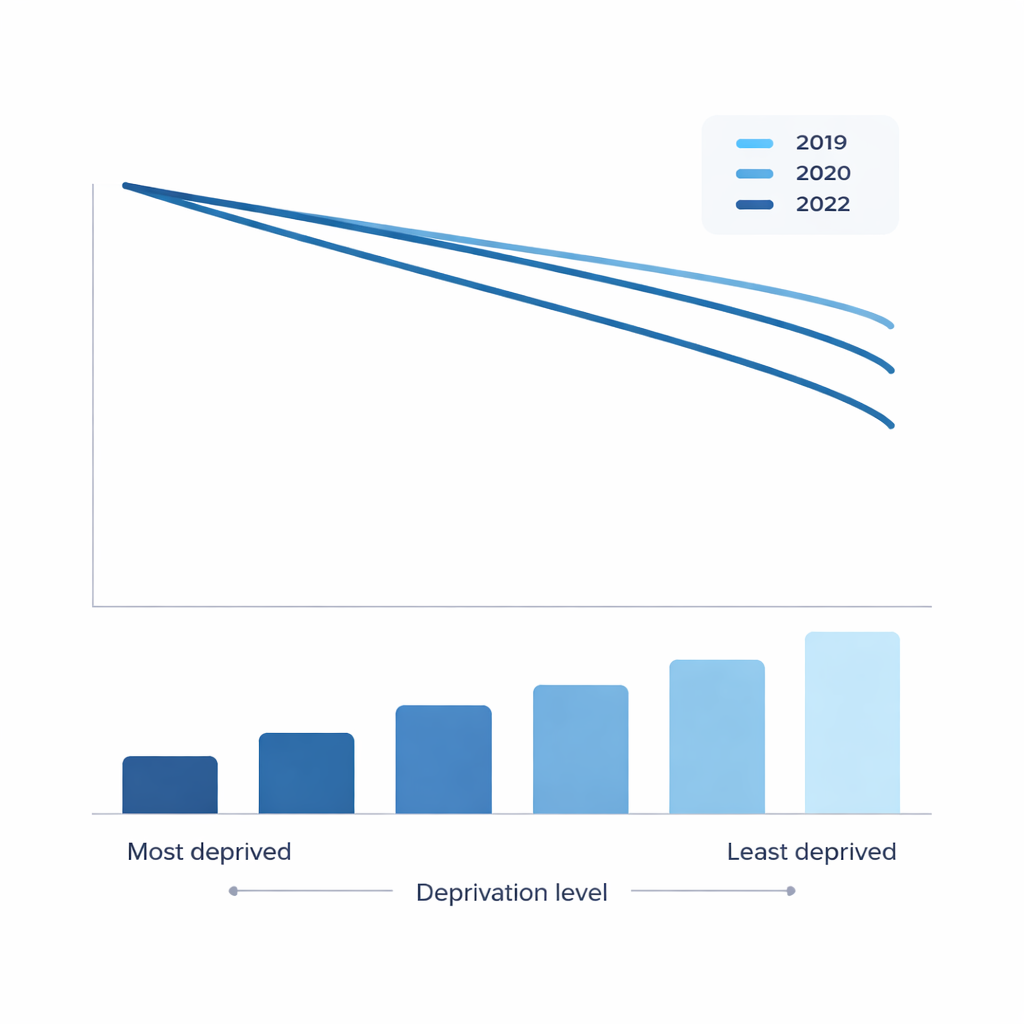
A striking and worrying pattern ran through the data: people from the most deprived neighbourhoods consistently had the worst survival. Using Scotland’s national measure of area‑level deprivation, the researchers showed a clear survival gradient, with patients from the wealthiest areas doing best. In 2020 in particular, the gap between the most and least deprived groups widened. This suggests that, while cancer services as a whole held up under pandemic pressure, existing social inequalities in health may have deepened, possibly because disadvantaged groups faced more barriers in seeking help or navigating disrupted services.
What this means for patients and health services
For people in the West of Scotland living with or at risk of head and neck cancer, the key takeaway is cautiously reassuring. Despite real disruptions to healthcare and an uptick in late‑stage diagnoses during 2020, short‑term survival for these cancers remained broadly similar before, during and after the peak of the pandemic. The study suggests that rapid adaptations by cancer teams—such as maintaining urgent referrals and continuing complex treatments—helped prevent a feared collapse in outcomes. At the same time, the work shines a light on ongoing problems: too many patients are still diagnosed only once disease is advanced, and those in poorer communities bear a heavier burden and worse survival. Tackling late diagnosis and social inequality remains essential if future crises are to be weathered without leaving the most vulnerable further behind.
Citation: Smith, C.D.L., McMahon, A.D., Inman, G.J. et al. The COVID-19 pandemic has not influenced survival outcomes of head and neck cancer squamous cell carcinomas in the West of Scotland: a retrospective cohort study. BJC Rep 4, 8 (2026). https://doi.org/10.1038/s44276-026-00203-3
Keywords: head and neck cancer, COVID-19 pandemic, cancer survival, health inequalities, Scotland