Clear Sky Science · en
Self-serving biases shape the relationship between future thinking and remembering of elections
Why How We Remember Elections Matters
Elections do more than decide who runs a country; they also shape how we see ourselves and our political tribes. Many of us vividly recall where we were when big results came in, and we also spend weeks beforehand picturing how we will feel if our side wins or loses. This study asks a deceptively simple question with big consequences: when we imagine a coming election and later remember it, do those two mental pictures really match, or do we quietly rewrite both our memories and our earlier predictions to suit how things turned out?
Looking Ahead and Looking Back at the Same Event
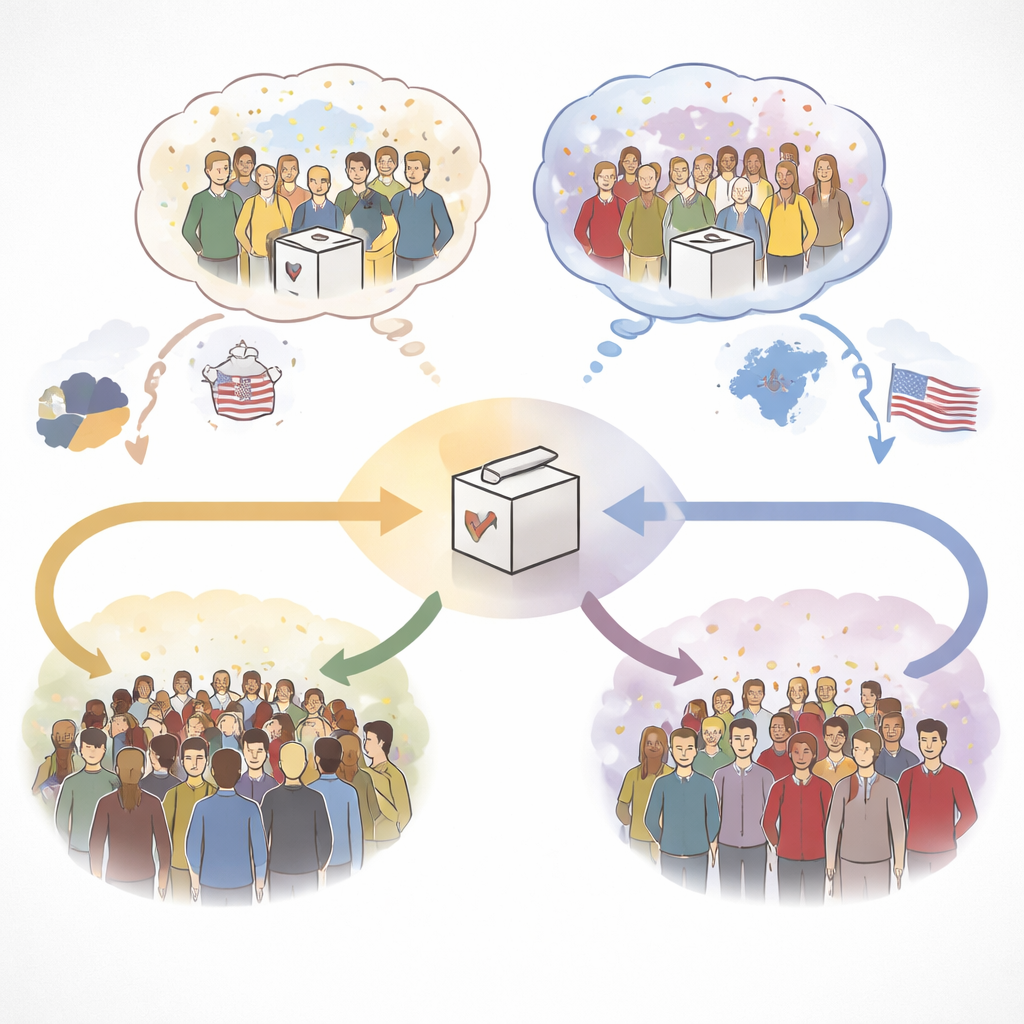
Most previous research compared memories of past events with imagined future events that people chose freely, such as a pleasant vacation or an awkward meeting. That makes it hard to know whether differences between past and future thinking come from the mental processes themselves or just from the kinds of events people pick. In this work, the researchers solved that problem by locking everyone onto the same real-world event: major 2024 elections in Germany, the United Kingdom, and the United States. Before each vote, participants imagined the election outcome and rated how positive they expected to feel, how clearly they could picture it, and how important it seemed. After the results were known, the same people rated the actual election on the very same scales. In the U.S. sample, they also tried to recall what they had said before, allowing the team to test whether people remember their own earlier predictions accurately.
When Winners and Losers See Different Stories
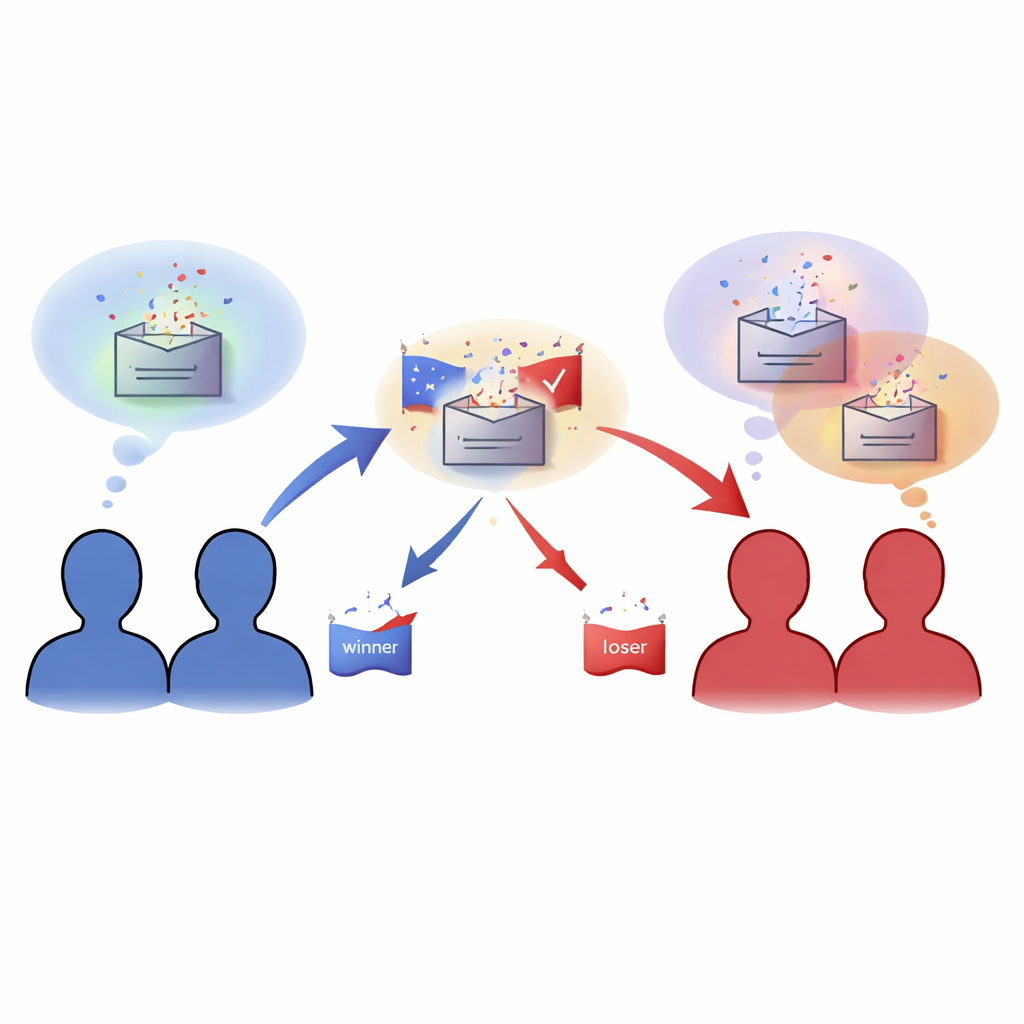
Across all three countries, people’s mental images of the election grew clearer after the fact: memories were more vivid than pre-election imaginings. But changes in mood and importance depended strongly on who effectively “won” from each person’s point of view. In left-leaning German and British samples, the German EU result was disappointing, while the UK general election brought the hoped-for change in government. In Germany and the U.S., people generally felt less positive about the election afterwards than they had expected; in the UK, feelings became more positive. Crucially, supporters of winning parties tended to remember the election as more important and, in some cases, more positive and more vivid than they had anticipated, whereas supporters of losing parties often downgraded its importance and remembered it more negatively.
How Minds Quietly Rewrite Predictions
The U.S. presidential election allowed a closer look at how these shifts are reconciled with our desire to see ourselves as consistent over time. American participants had reported before the vote who they thought would win, who they wanted to win, how fair they expected the election to be, and how they expected to feel. After the election, they not only rated the actual result; they also tried to remember those earlier forecasts. Here, subtle but telling distortions emerged. On average, people misremembered having been more optimistic and more certain than they really were. Supporters of the winning candidate tended to recall that they had expected a fairer election than their original answers showed. Supporters of the losing candidate, by contrast, tended to remember themselves as having been more hopeful and upbeat than they actually were, making their present disappointment easier to explain.
From Private Biases to Public Polarization
These patterns reveal a set of self-serving mental habits at work. When an election turns out well for us, we come to see it as more important and more clearly remembered. When it goes badly, we may downplay its importance or recall our earlier expectations as more cautious. On top of that, we often misremember what we once predicted, bending those “memories of the future” to fit how we feel now. Because elections are shared national events, such biased remembering and forecasting do not just shape private stories; they can harden group divisions. People on each side may feel their view of history is both vivid and obviously correct, and may believe they “always knew” things would play out the way they prefer. By showing how imagination, memory, and group identity intertwine around elections, this study highlights one quiet psychological mechanism that can deepen political polarization—while also pointing to the importance of finding ways to nudge people toward more balanced future thinking and more accurate remembering.
Citation: Boeltzig, M., Schubotz, R.I., Cole, S. et al. Self-serving biases shape the relationship between future thinking and remembering of elections. Commun Psychol 4, 47 (2026). https://doi.org/10.1038/s44271-026-00423-w
Keywords: political memory, future thinking, self-serving bias, election psychology, political polarization