Clear Sky Science · en
Associations of genetic variants for educational success with risk and time preferences vary by childhood environment
Why Our Early Years Shape Life’s Big Choices
Why do some people feel comfortable taking chances and planning decades ahead, while others focus on getting by today and avoiding risk? This article explores how our inborn traits related to learning and problem-solving combine with the kind of childhood we experience to shape these basic preferences about risk and time. The findings suggest that even when people have similar genetic potential for educational success, growing up in hardship or comfort can steer that potential toward very different patterns of decision-making in adulthood.
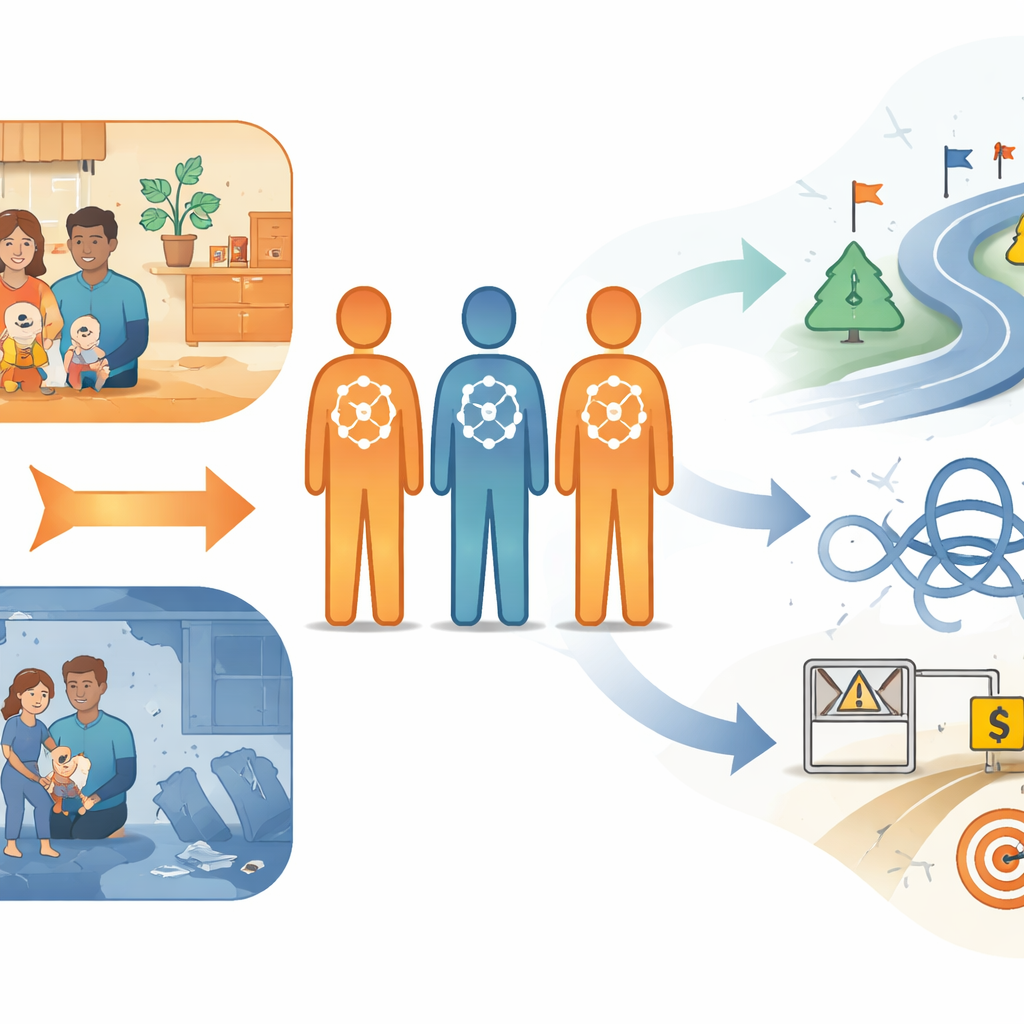
Two Hidden Forces Behind Everyday Decisions
Economists and psychologists have long known that two big forces influence how we deal with risk and the future. One is our ability to think through complex problems, spot patterns, and learn quickly. People who score higher on such measures tend, on average, to be more patient and less fearful of reasonable risks. The other force is the environment we grow up in. A stable, well-resourced childhood often encourages long-term planning, while early stress and scarcity can push people toward short-term survival strategies. Yet most research has looked at these influences separately rather than asking how they interact.
Genes Meet Childhood Environment
This study brings these strands together using data from thousands of adults in England. The researcher drew on a genetic index linked to how far people typically go in school, a measure that also captures many brain-related traits connected to learning and attention. Participants completed tasks and surveys that revealed how willing they were to take financial risks and how strongly they favored smaller, sooner rewards over larger, later ones. The key question was whether the link between this genetic index and people’s preferences looked different for those who grew up in relatively comfortable homes versus those who faced multiple kinds of disadvantage, such as low parental education, limited household resources, poor housing, or family instability.
Different Paths From the Same Starting Point
The results show a striking pattern. Among people who did not experience major childhood disadvantage, higher scores on the educational genetic index were tied to lower fear of risk and greater willingness to wait for larger future rewards. In other words, when early life was relatively secure, more genetic potential for educational success went hand in hand with the classic profile of a patient, thoughtful decision-maker who can tolerate some risk in pursuit of better outcomes. 
For those who faced significant hardship growing up, however, the story looked very different. In this group, higher scores on the same genetic index predicted greater caution toward risk and only weak or reduced links with patience and long-term planning. People with lower scores and disadvantaged backgrounds tended to be both more willing to take chances and more focused on the short term—a combination that other work has linked to behaviors like gambling and heavy smoking. By contrast, those with higher scores from disadvantaged homes were more timid about risk and less future-oriented than similarly gifted peers from comfortable backgrounds.
How Hardship Can Redirect Potential
These patterns fit with ideas from developmental science about how the brain adjusts to its surroundings. Under stable, resource-rich conditions, cognitive resources can be used to think ahead, compare options, and resist snap reactions driven by fear or impulse. Under harsh or unpredictable conditions, the same resources may be channeled toward scanning for danger, avoiding loss, and coping with stress in the moment. The study suggests that early adversity does not simply “turn off” helpful genetic tendencies. Instead, it may canalize or redirect them into strategies that feel safer in an uncertain world, even if they limit opportunities for mobility later on.
What This Means for Opportunity
To a lay reader, the main message is that potential is not destiny. The same underlying traits that help people succeed in school can lead to very different decision styles depending on the childhood environment. In more advantaged settings, they support the kind of patience and calculated risk-taking that often pays off in education, careers, and wealth-building. In disadvantaged settings, they may instead reinforce cautious, short-horizon choices that are understandable responses to instability but can trap people in patterns linked to lower mobility. The work underscores that efforts to promote opportunity cannot focus on genetics or talent alone; creating safe, supportive early environments is crucial for allowing those traits to express themselves in ways that expand, rather than constrain, people’s life chances.
Citation: Dawson, C. Associations of genetic variants for educational success with risk and time preferences vary by childhood environment. Commun Psychol 4, 50 (2026). https://doi.org/10.1038/s44271-026-00421-y
Keywords: economic preferences, childhood disadvantage, genetics and education, risk and time attitudes, social mobility