Clear Sky Science · en
Infants make moral character inferences in multi-agent social interactions
Babies as Tiny People Watchers
From the moment they are born, babies are surrounded by people who help, hurt, share, and ignore. Parents often wonder: are infants just soaking in sights and sounds, or are they already forming opinions about who is "good" and who is "bad"? This study asked whether 12- to 24‑month‑old infants can read moral character from what they see and then use that understanding to predict how someone will act later, even toward brand‑new people.
Watching a Little Drama Unfold
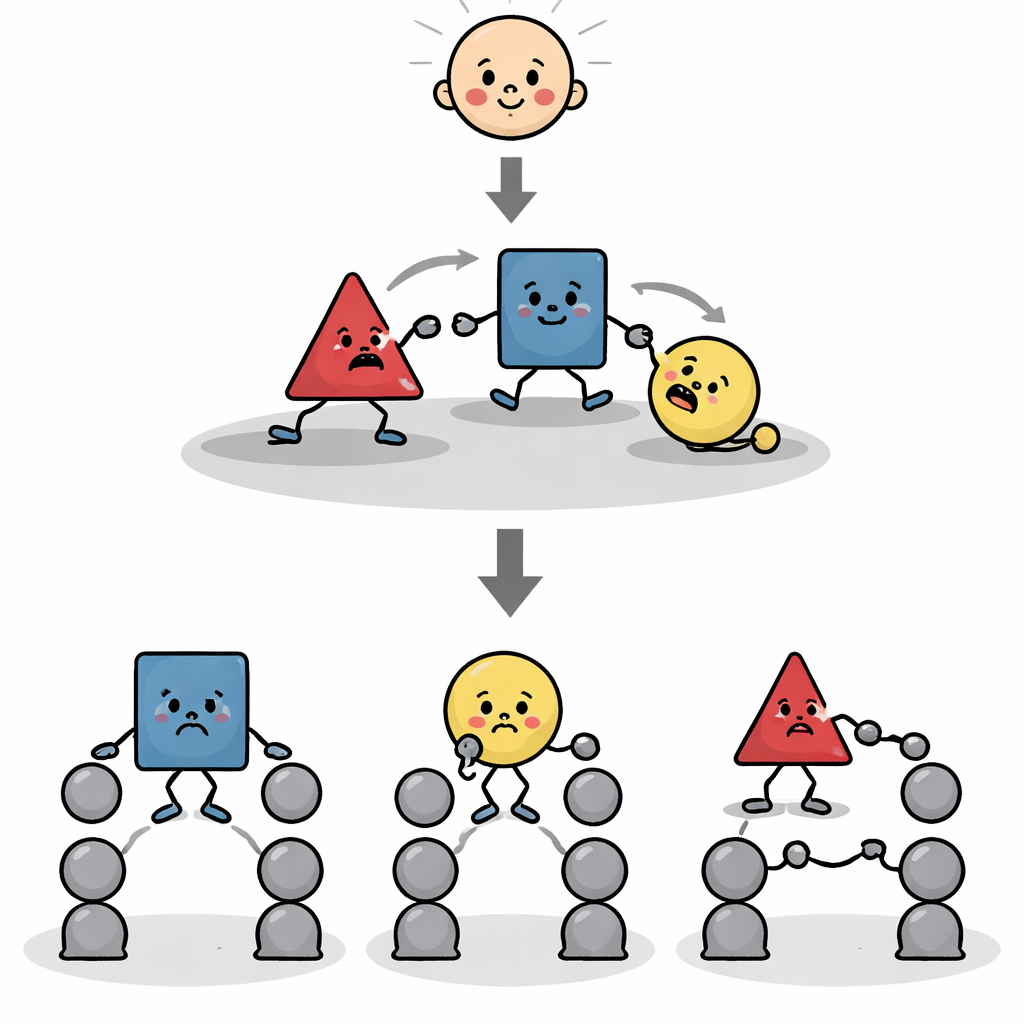
To probe babies’ social minds, the researchers showed infants short animated cartoons instead of real people. In these videos, simple shapes with eyes played three main roles in a small drama: an aggressor repeatedly chased and hit a victim, a protector stepped in to block the aggressor, and sometimes a bystander stayed out of the conflict. In a comparison condition, the same shapes simply moved around at random without touching one another. While the infants watched, their eye movements and how long they stared at each scene were carefully recorded over video calls conducted with families at home.
From Past Behavior to Future Fairness
After the drama, one of the shapes returned in a new situation where it had to share four cartoon strawberries between two neutral recipients. Sometimes the sharing was fair (an equal split), and sometimes it was unfair (one recipient got more). The key idea is that babies tend to look longer when something violates their expectations. If they had formed a sense of an agent’s character from the earlier scene, then fair or unfair sharing by that agent should surprise them differently depending on its previous role as aggressor, protector, victim, or bystander.
Babies Sort Helpers, Hurters, and the Hurt
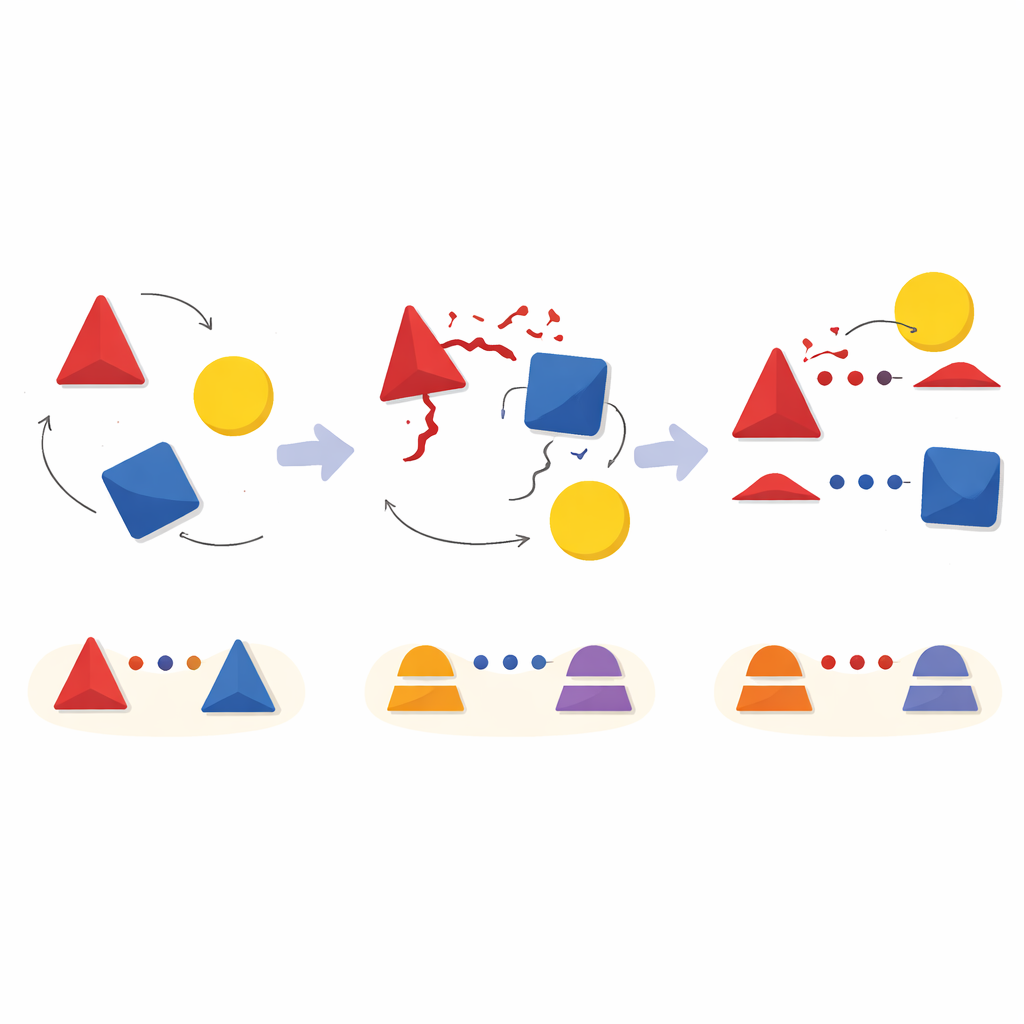
The results showed a clear pattern. Across two experiments, infants expected protectors—the shapes that stepped in to block harm—to share fairly. They looked longer when protectors shared unevenly, as if something felt off. Infants also treated victims—the shapes that had been chased and hit—as more likely to be fair sharers. By contrast, when shapes had moved randomly before sharing, infants showed only weak or no expectations about fairness. This suggests that it is the earlier moral role, not just movement or color, that drives babies’ expectations about later behavior.
Uncertain About Bystanders and Bullies
Not all roles were as clear‑cut in infants’ eyes. Bystanders, who avoided getting involved in the conflict, did not trigger strong expectations: babies did not reliably look longer at fair or unfair sharing by them. For aggressors, the story was mixed. In one experiment, infants seemed to expect them to be unfair sharers, looking longer when aggressors actually shared fairly. In a second, larger follow‑up experiment, infants no longer showed a strong bias either way. When the researchers looked more closely, they found that infants with more social experience—such as those with siblings and daycare exposure—were better at distinguishing between the protector and aggressor roles in their fairness expectations.
Social Experience Shapes Early Moral Insight
Putting the pieces together, the study suggests that even before they can talk, infants use what they see others do to form broad impressions of moral character. They treat protectors and victims as "good" in the sense of being likely to share fairly, and they separate these roles from aggressors and bystanders. Moreover, this ability seems to grow with everyday social contact, such as time spent with siblings or in daycare, rather than simply with age. In other words, babies are not just passive observers—they are active moral learners, already building simple, big‑picture judgments about who is likely to treat others kindly in the future.
Citation: Zeng, N.J., Gill, I.K. & Sommerville, J.A. Infants make moral character inferences in multi-agent social interactions. Commun Psychol 4, 51 (2026). https://doi.org/10.1038/s44271-026-00417-8
Keywords: infant moral development, fairness expectations, social evaluation, third-party aggression, sibling and daycare experience