Clear Sky Science · en
Increased generalisation in trait anxiety is driven by aversive value transfer
Why our minds sometimes see danger everywhere
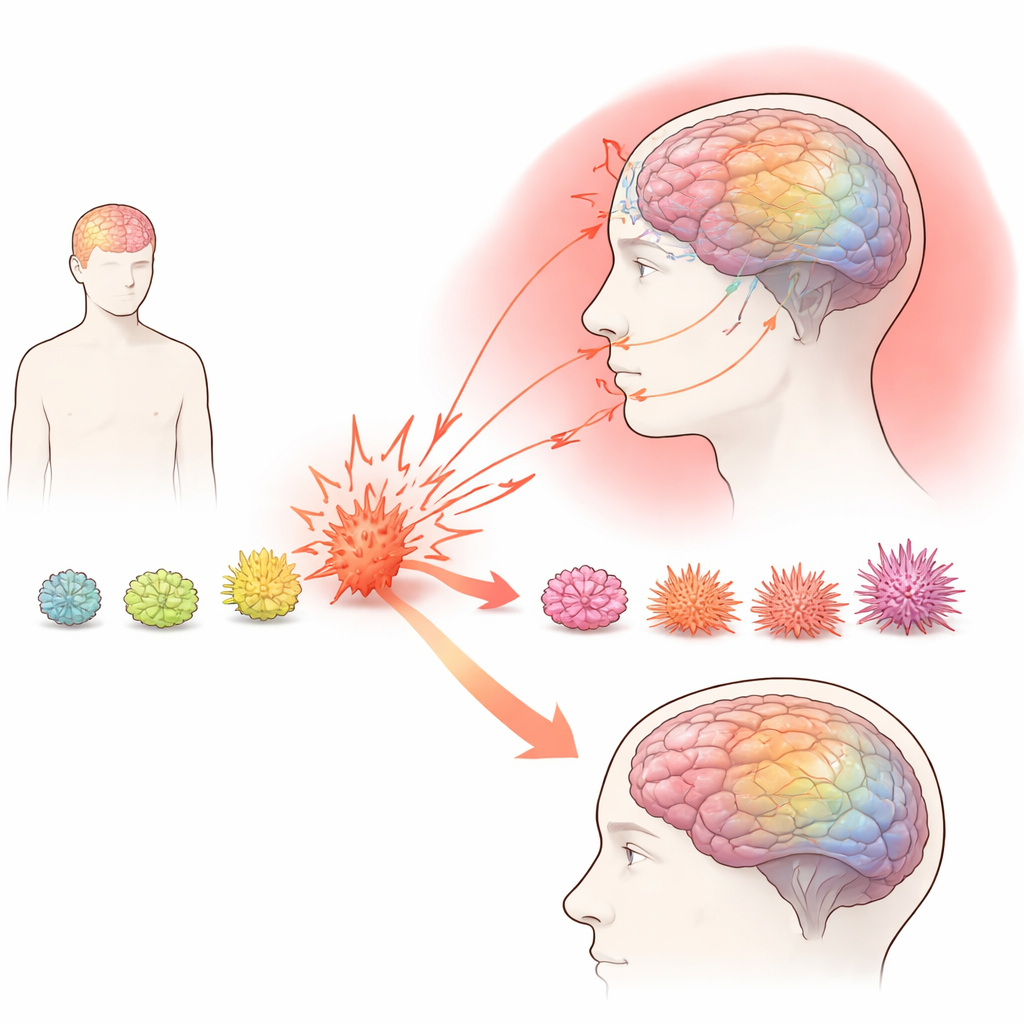
Most people know the feeling of becoming jumpy after a bad scare: one nasty dog bite, and suddenly every similar-looking dog seems threatening. This study asks why that happens and why it is especially common in people who tend to be anxious. The researchers set out to disentangle two possibilities: are anxious people less able to tell safe and unsafe situations apart, or are they more likely to mentally “spread” the bad experience to other, similar situations?
From screaming space flowers to real-world fear
To probe these questions, the team ran an online experiment with 140 adults. Participants played a game about strange “space flowers.” One particular flower shape was sometimes followed by a loud, unpleasant scream through headphones. Later, people saw a whole line-up of flowers that gradually changed from very round to very spiky. They had to rate how likely each flower was to “scream,” even though most of these shapes had never actually been paired with a scream. Crucially, the researchers first measured how easily each person could tell similar shapes apart and adjusted the shapes so that they were equally hard to discriminate for everyone.
Two ways fear can spread
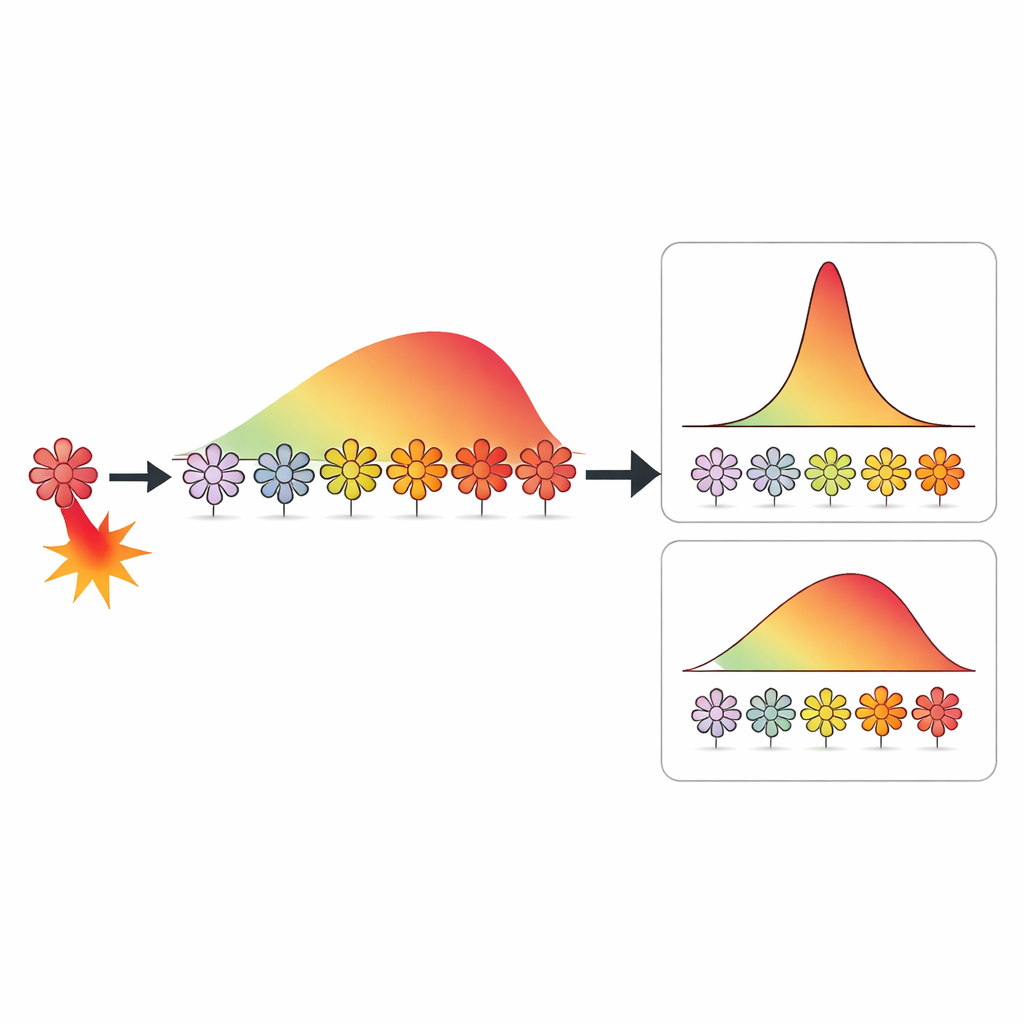
The scientists focused on two distinct mechanisms. In a perception-driven pathway, people simply confuse similar stimuli: a new flower looks so much like the original “screaming” one that the brain treats it as the same thing. In a value-driven pathway, people know the new flower is different, but assume that “things that look more like this are probably more dangerous too,” and transfer their fear expectations along the line of shapes. Using computational models, the team showed that only a minority of response patterns (about 15%) could be explained by confusion alone. For most participants, their ratings fit better with a process where the “badness” of the original flower was actively spread to its neighbors along the shape continuum.
Different shapes of generalization
People did not all generalize in the same way. Some showed a bell-shaped pattern: the flowers most similar to the original one were rated most likely to scream, and ratings fell off for shapes that were more different. Others showed a monotonic pattern: as flowers became more extreme in one direction (for example, very spiky), their ratings of threat kept rising, sometimes even above the original flower. This second pattern suggests an internal rule like “the pointier it is, the more dangerous.” By carefully comparing trial-by-trial responses to model predictions, the researchers could tell when a smooth spread of value was at work versus simple all-or-nothing confusion between shapes.
Anxiety and the tendency to assume the worst
Participants also completed a questionnaire measuring trait anxiety—that is, how prone they are in general to anxious thoughts and bodily tension. Higher trait anxiety was linked to stronger generalization: anxious individuals gave higher threat ratings not just to the conditioned flower, but especially to flowers that were more different and more ambiguous. Crucially, this broader spread of fear was best explained by greater reliance on value transfer, not by poorer visual discrimination. Anxious participants were more consistently described by the value-based model across different task conditions, suggesting a stable tendency to extend bad expectations to a wider range of similar situations.
What this means for everyday fear and worry
To a layperson, the key takeaway is that anxious people do not simply “see worse”; their senses are not especially blurrier. Instead, their minds are more likely to carry over the meaning of a bad experience to new but related situations. After one frightening episode, many more things can start to feel potentially dangerous, particularly the ones that are harder to categorize as clearly safe or unsafe. This work suggests that therapies for anxiety might benefit from focusing on how people learn and revise their expectations—helping them to contain where a bad experience “spills over,” rather than only trying to sharpen their perception of differences in the world.
Citation: Verra, L., Spitzer, B., Schuck, N.W. et al. Increased generalisation in trait anxiety is driven by aversive value transfer. Commun Psychol 4, 46 (2026). https://doi.org/10.1038/s44271-026-00415-w
Keywords: anxiety, fear generalization, value-based learning, perception, threat expectation