Clear Sky Science · en
Loneliness modulates social threat detection in daily life
Why everyday loneliness matters
Feeling lonely from time to time is nearly universal, but for many people, especially in midlife and later life, loneliness can become a stubborn companion. This study looks closely at how loneliness behaves in the flow of everyday life—how it rises and falls across the day, how it colors the way people interpret social encounters, and how it quietly shapes their choices to connect with others or pull away. Understanding these patterns helps explain why loneliness can be so hard to shake, even when our lives are full of potential social contact.
The daily ups and downs of feeling alone
The researchers followed 157 adults aged 46 to 74 for 20 days, pinging their smartphones five times a day. At each check-in, people reported how lonely they felt since the last prompt, whether recent interactions felt rejecting or critical, whether they had interacted with anyone, and how open they had been during their last conversation. This close-up approach captured loneliness not as a single score, but as a moving picture across hours and days, revealing when it appears, how long it lingers, and what tends to follow it in real time. 
When lonely feelings feed social threat
Analyses showed that brief spikes of loneliness and feelings of being rejected move together in a tight loop. Moments when people felt more lonely than usual were soon followed by stronger impressions that others were dismissive or critical. The reverse was also true: when interactions felt more rejecting, people were more likely to feel lonely at the next check-in. Both the simple presence of these states and their intensity showed this back-and-forth pattern. Loneliness itself tended to persist from one moment to the next, like an emotional echo, with rejection perceptions showing a milder but still noticeable carryover.
How lonely moments change behavior
These inner experiences had real consequences for social behavior. When participants felt lonelier than their own usual level, they were less likely to engage in a social interaction later and, when they did interact, they tended to share less personal information. Self-disclosure—telling someone about one’s thoughts and feelings—is a key way people build closeness and feel understood. By dampening both the likelihood of contact and the depth of conversation, lonely moments reduced the very opportunities that might otherwise help relieve those feelings, creating a subtle but powerful pattern of withdrawal.
Why chronic loneliness makes the cycle harder to break
Not everyone was affected in the same way. People who scored higher on a standard measure of long-term, or trait, loneliness showed stronger links between momentary loneliness and perceived rejection. For them, even small bouts of loneliness were more likely to be accompanied by a sense that others were against them, and those lonely moments were more likely to last. They were also especially prone to cutting back on self-disclosure when they felt lonely. In contrast, individuals with lower trait loneliness sometimes maintained or even increased social engagement when they felt a bit more alone, suggesting that occasional loneliness can still function as a healthy nudge toward connection.
Emotional rhythms and shifting interpretations
The study also examined how much people’s loneliness and rejection feelings swung around over time. Those whose loneliness fluctuated more widely from one moment to the next also showed more unstable views of how accepting or rejecting others were. This suggests that for some, emotional turbulence goes hand-in-hand with a less reliable read on social situations. Rather than serving as a clear signal to seek support, loneliness may arrive in sudden surges that distort how safe or welcoming others seem, making it harder to trust positive interactions when they occur. 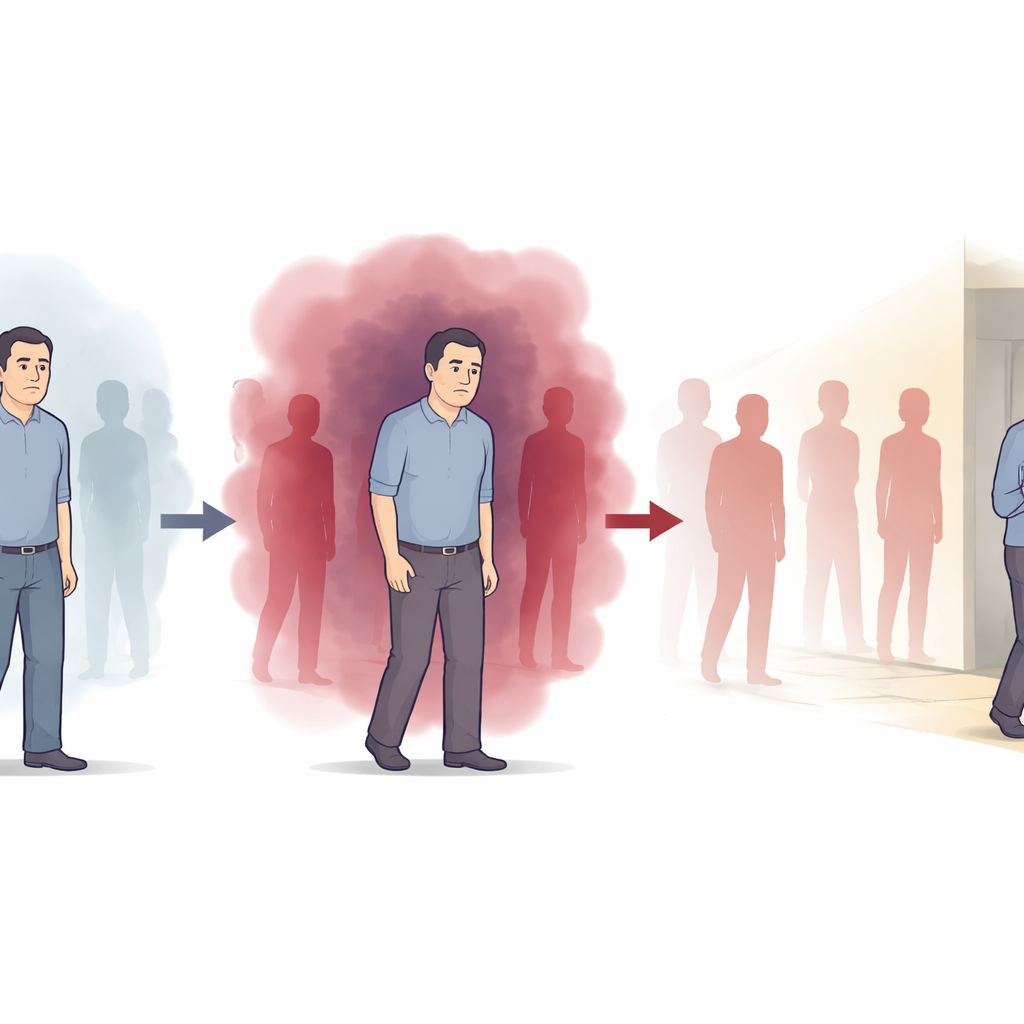
What this means for easing loneliness
Taken together, the findings portray loneliness as a moving process rather than a fixed label. In everyday life, bouts of loneliness and feelings of rejection fuel each other, and in people who are chronically lonely, these loops are tighter and more persistent. Lonely moments tend to be followed by fewer interactions and shallower conversations, making it less likely that social life will naturally repair the sense of disconnection. For a layperson, the message is that breaking loneliness likely requires more than simply “getting out more.” Helpful approaches may need to target the timing and pattern of these cycles—supporting people during lonely moments to interpret social cues more accurately, stay open in conversation, and gently resist the pull toward withdrawal so new, more connection-promoting habits can take hold.
Citation: Shao, S., Beck, E.D., Hawks, Z. et al. Loneliness modulates social threat detection in daily life. Commun Psychol 4, 44 (2026). https://doi.org/10.1038/s44271-026-00410-1
Keywords: loneliness, social rejection, self-disclosure, social withdrawal, ecological momentary assessment