Clear Sky Science · en
Task, person, and experiential characteristics drive the transfer of learning
Why this matters for everyday learning
We often assume that if we practice something long enough—whether it’s driving, playing an instrument, or learning a new software tool—those skills will automatically carry over to new situations. This study challenges that simple view. It shows that how well we transfer what we have learned depends not only on the task itself, but also on our emotional habits, our stress responses, and how our practice is structured. Understanding this mix can help educators, trainers, and learners design practice that actually works in the real world.
Two types of worlds: predictable and unpredictable
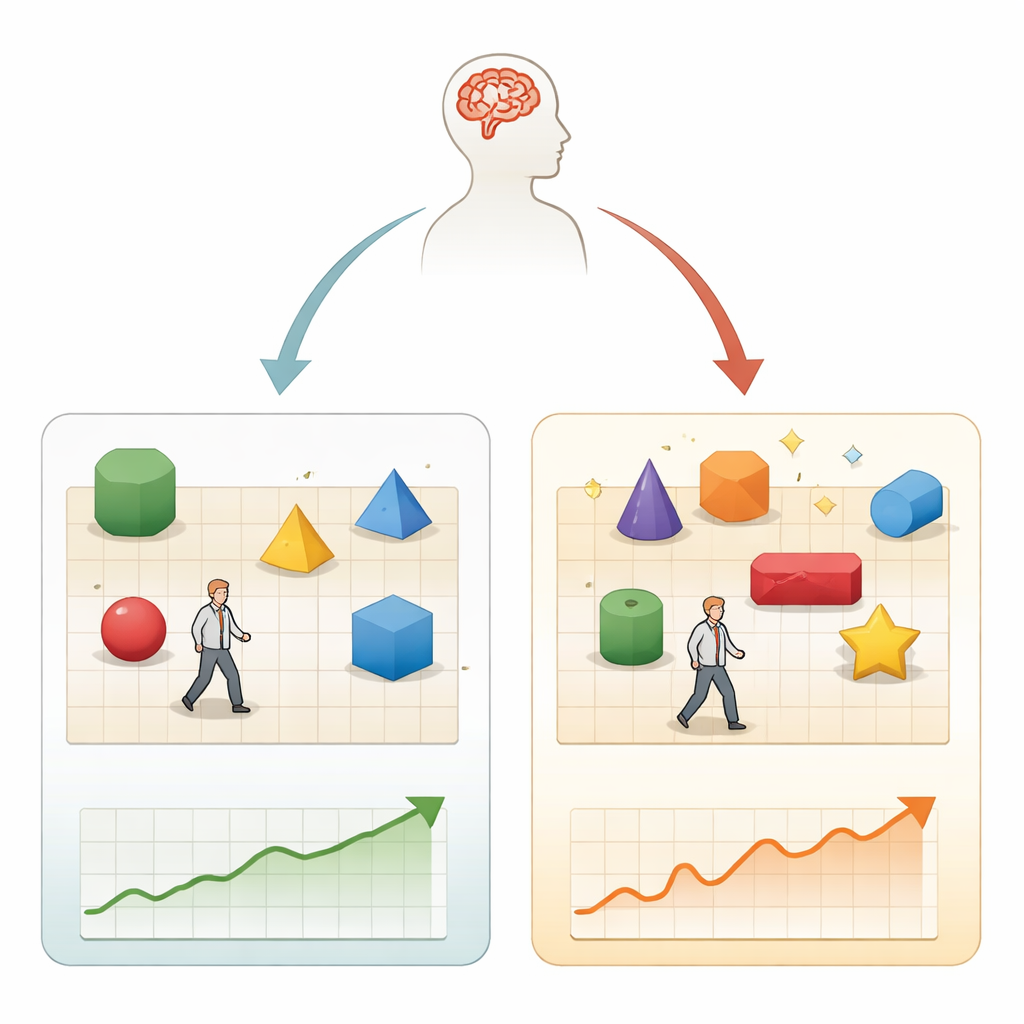
The researchers used a video‑game‑style computer task in which adults guided an on‑screen character through two missions: collecting moving "energy" objects and defending a town from approaching "invaders." In one version of the game, the rules were predictable—certain colors and sizes always meant the same thing. In the other version, those rules kept changing, so players had to stay alert and adjust. Over five rounds, people practiced in either the predictable or changing version, sometimes under a stressful cold‑water challenge and sometimes under a mild, non‑stressful version.
A surprise twist to test real transfer
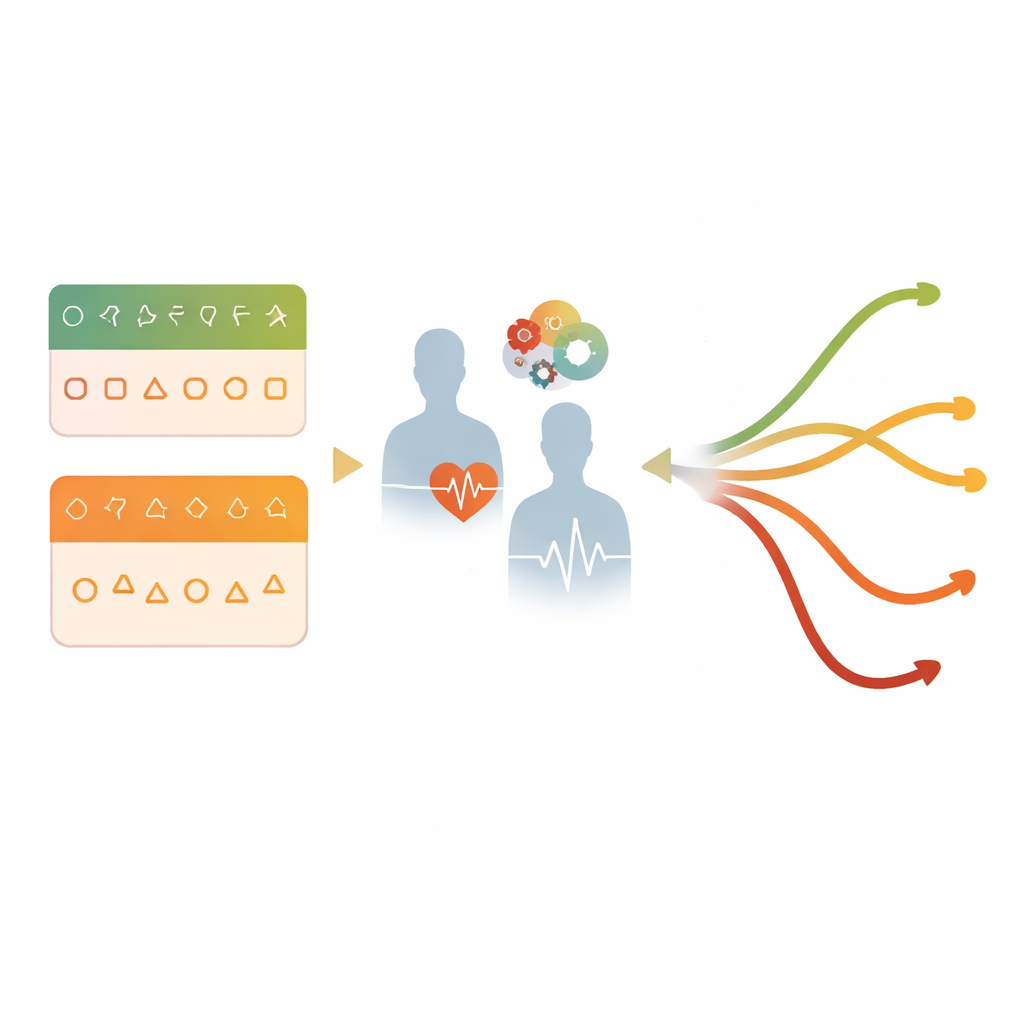
After those five rounds, the study introduced a key twist: a surprise sixth round. Half of the players stayed in the version they had practiced, while the other half were suddenly switched—either from predictable to changing rules or from changing to predictable. The researchers tracked not only how well people scored, but also how quickly they finished. This setup mimicked real life, where we are often asked to use familiar skills in new, less familiar settings, and where success can show up as both accuracy and speed.
Practice helps—but the new setting can trip you up
Across the first five rounds, nearly everyone improved: scores rose and completion times dropped, forming classic learning curves. Surprisingly, the overall stress condition (stressful vs. calm) did not, on average, make people perform better or worse during learning. When the environment suddenly changed, however, the story became more interesting. Players who moved from the predictable to the changing version saw their scores drop—they struggled to adapt to the new, unstable rules. Those who moved from the changing to the predictable version tended to do better, suggesting that practicing in a tougher, more variable setting can sometimes make it easier to handle a simpler one later on. Yet by the final round, most players’ completion times had converged, indicating that many found ways to work efficiently even if their scores suffered.
How your body and emotions tilt the playing field
The study did more than look at behavior. It measured heart activity and blood pressure as people went through repeated stress or control tasks, and it collected questionnaires about how they usually handle emotions and uncertainty. People whose bodies showed certain patterns of heart‑rate variability—often linked to flexible emotional control—tended to adjust their pace in helpful ways when the task changed, even if it meant slowing down to stay accurate. Emotional habits mattered, too. Those who frequently reframe upsetting situations ("cognitive reappraisers") and those who dislike uncertainty showed distinct patterns: some excelled in steady, predictable worlds but stumbled when rules started shifting, while others accepted some loss in accuracy to stay quick and adaptable. These differences were hidden if one looked only at group averages.
What this means for training in the real world
To a layperson, the main message is that transfer of learning is not guaranteed and not one‑size‑fits‑all. Practicing only under neat, predictable conditions can make you fast and efficient but may leave you exposed when life gets messy. Training that includes controlled variability and occasional rule changes can better prepare you for surprises—but it will feel harder and will not help everyone equally. Our built‑in ways of handling stress and uncertainty, and our emotional habits, shape whether we thrive or struggle when the context shifts. Effective teaching and training, the authors argue, should therefore do two things at once: tune the environment (by mixing stable and changing practice) and tailor it to the person (by considering emotional and physiological tendencies) so that the skills we build have the best chance of holding up when it really counts.
Citation: LaFollette, K.J., Frank, D.J., Burgoyne, A.P. et al. Task, person, and experiential characteristics drive the transfer of learning. Commun Psychol 4, 42 (2026). https://doi.org/10.1038/s44271-026-00408-9
Keywords: learning transfer, training under stress, individual differences, emotion regulation, skill adaptation