Clear Sky Science · en
Interoceptive ability is uncorrelated across respiratory and cardiac axes in a large scale psychophysical study
Listening to Your Body
Many of us have had moments when a racing heart or tight chest seemed to signal stress, fear or excitement. Scientists call this sense of our inner bodily signals “interoception,” and it is thought to shape how we feel and make decisions. This study asked a simple but important question: if you are good at noticing what your heart is doing, are you also good at sensing your breathing—and does this inner sensitivity reflect a single, general skill or several separate ones?
Why Inner Senses Matter
Interoception has become a central idea in psychology and neuroscience because it links the body to the mind. How accurately and consistently we pick up signals like heartbeats or changes in breathing may influence emotional regulation, anxiety, and even some psychiatric disorders. Many earlier experiments focused on the heart alone, using tasks where people tried to count or detect their own heartbeats. But those methods have been criticized for mixing true bodily sensitivity with guesswork and beliefs about the body. And very few studies have carefully compared different internal systems—such as heart and lungs—in the same people, using tools designed to separate raw sensitivity from confidence and decision bias.
How the Study Tested Heart and Breath
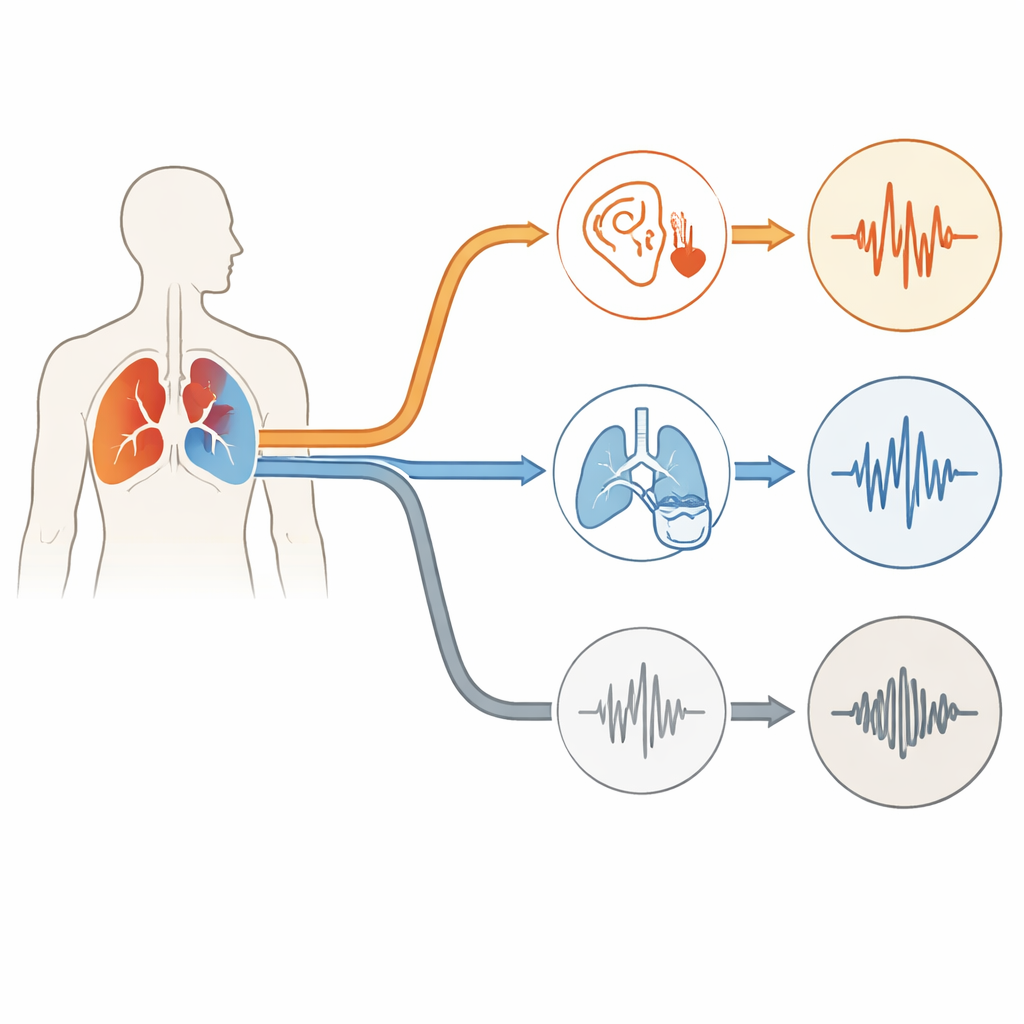
To tackle this, the researchers ran a large experiment with 241 healthy volunteers. Each person completed a battery of tasks that probed different senses. In one task, they silently focused on their heartbeat while a sensor measured it in real time; afterward they heard tones that were slightly faster or slower and had to decide whether the sounds beat faster or slower than their own heart, then rate how confident they felt. In another task, they took two breaths through a special mouthpiece, one of which subtly increased the effort needed to inhale; they had to pick which breath felt more difficult and again report their confidence. A third, purely external hearing task asked people to compare two series of tones without involving bodily signals. Sophisticated psychophysical modeling then converted each person’s choices and confidence ratings into measures of sensitivity (how small a change they could detect), precision (how consistent their judgments were), and metacognition (how well confidence tracked actual performance).
What the Researchers Found
Contrary to the idea of a single, general “interoceptive ability,” people’s performance on the heart and breathing tasks was mostly unrelated. Someone who was highly sensitive or precise when judging changes in breathing was not necessarily better at judging changes related to their own heartbeat, and vice versa. Careful statistical tests, including Bayesian analyses that can weigh evidence for the absence of a link, supported the conclusion that heart and lung interoception behave largely as separate skills. The same held for more reflective aspects of performance: how efficiently people’s confidence matched their actual accuracy did not line up across the two bodily systems. In other words, the brain seems to treat the heart and the lungs as distinct channels of internal information, at least under calm, resting conditions.
The One Shared Thread: Confidence
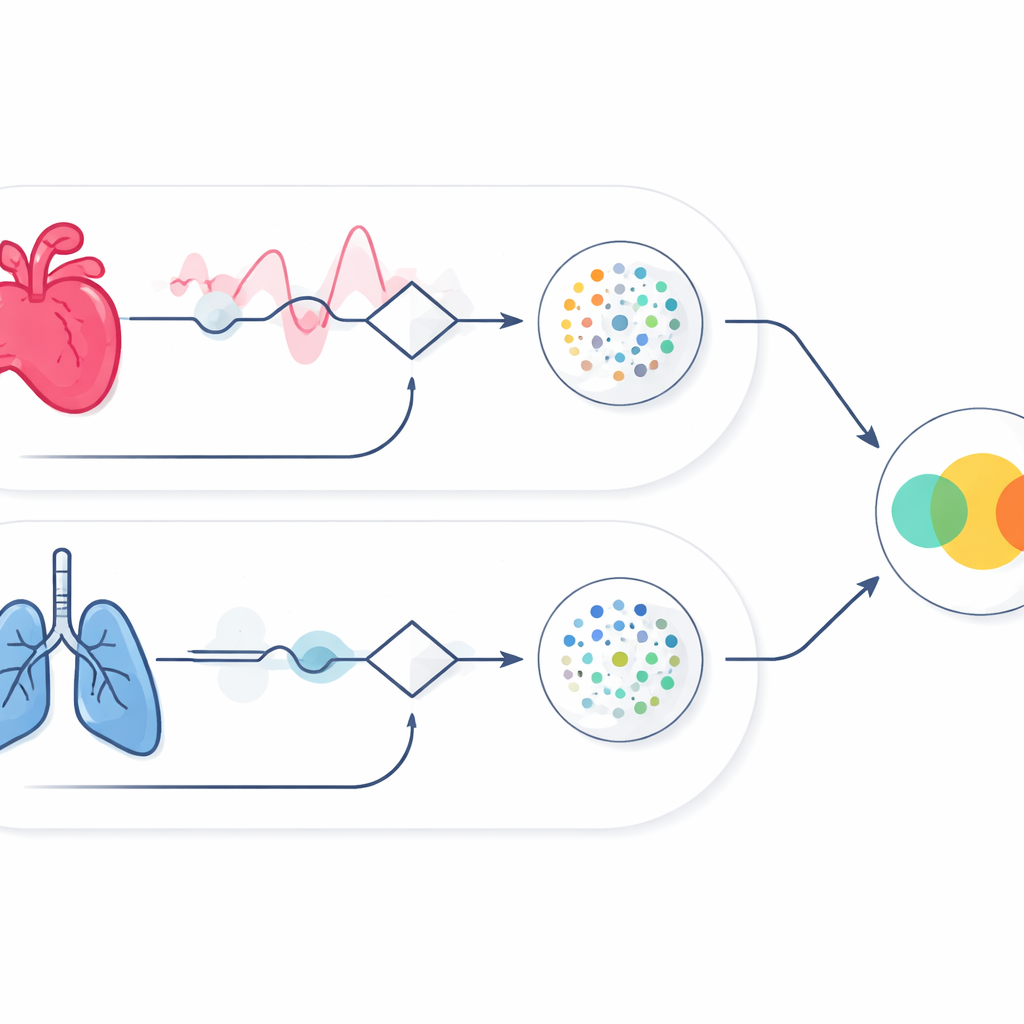
The one clear commonality across heart, lungs, and the external hearing task was overall confidence. People who tended to feel more sure of their answers in one task also tended to feel more sure in the others, even when their objective performance differed. This “confidence style” appears to be a more general feature of how individuals evaluate their own decisions, rather than a direct reflection of how accurately they sense any particular signal. The researchers argue that this fits with other work in psychology showing that some people are globally more liberal or conservative in assigning high confidence, across many kinds of tasks and senses.
What It Means for Health and Mind
The findings suggest that interoception is not a single, unified sense but a collection of partly independent abilities tied to specific organs. This challenges the common assumption that measuring heart-based interoception alone can stand in for “body awareness” more broadly, especially in research on anxiety, depression, or panic where breathing sensations often play a key role. For clinicians and scientists, it implies that future studies—and potential treatments—should pay attention to multiple bodily systems and consider how they behave under stress or heightened arousal, not just at rest. For lay readers, the takeaway is that being tuned in to one aspect of your body does not guarantee equal insight into all the others, though your general level of confidence about your judgments may carry over from one domain to another.
Citation: Banellis, L., Nikolova, N., Ehmsen, J.F. et al. Interoceptive ability is uncorrelated across respiratory and cardiac axes in a large scale psychophysical study. Commun Psychol 4, 43 (2026). https://doi.org/10.1038/s44271-026-00404-z
Keywords: interoception, heartbeat perception, breathing sensations, metacognition, psychophysics