Clear Sky Science · en
Personality moderates associations between personal time and parental well-being
Why a little “me time” matters
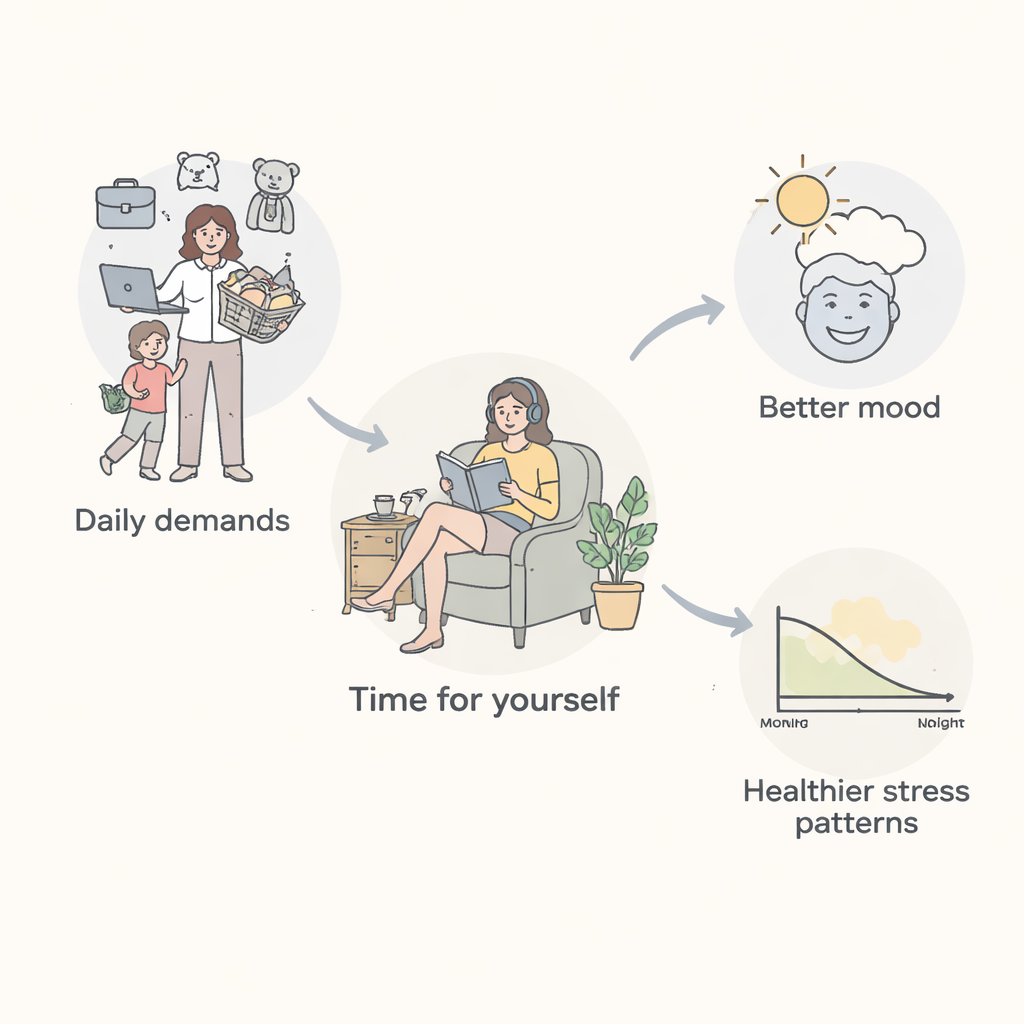
Many parents feel there is never enough time for themselves. This study asks a simple but powerful question: when busy parents do manage some personal time in their day, does it actually improve their mood and help their bodies recover from stress? Using data from hundreds of parents across the United States, the research tracks both feelings and a biological stress marker to find out how everyday “me time” shapes health.
What counts as time for yourself
The researcher defined personal time as moments free from outside demands—no work tasks, childcare duties, or household chores—when people can choose what they do. That might mean reading, going for a walk, listening to music, or simply resting. Unlike earlier studies that asked people once how much free time they have, this project followed 318 midlife parents (average age about 40) for eight days in a row. Each evening, parents reported whether they had an opportunity to take time for themselves, what their moods were like, and whether they had faced stressful events such as arguments or work problems.
A window into the body’s stress clock
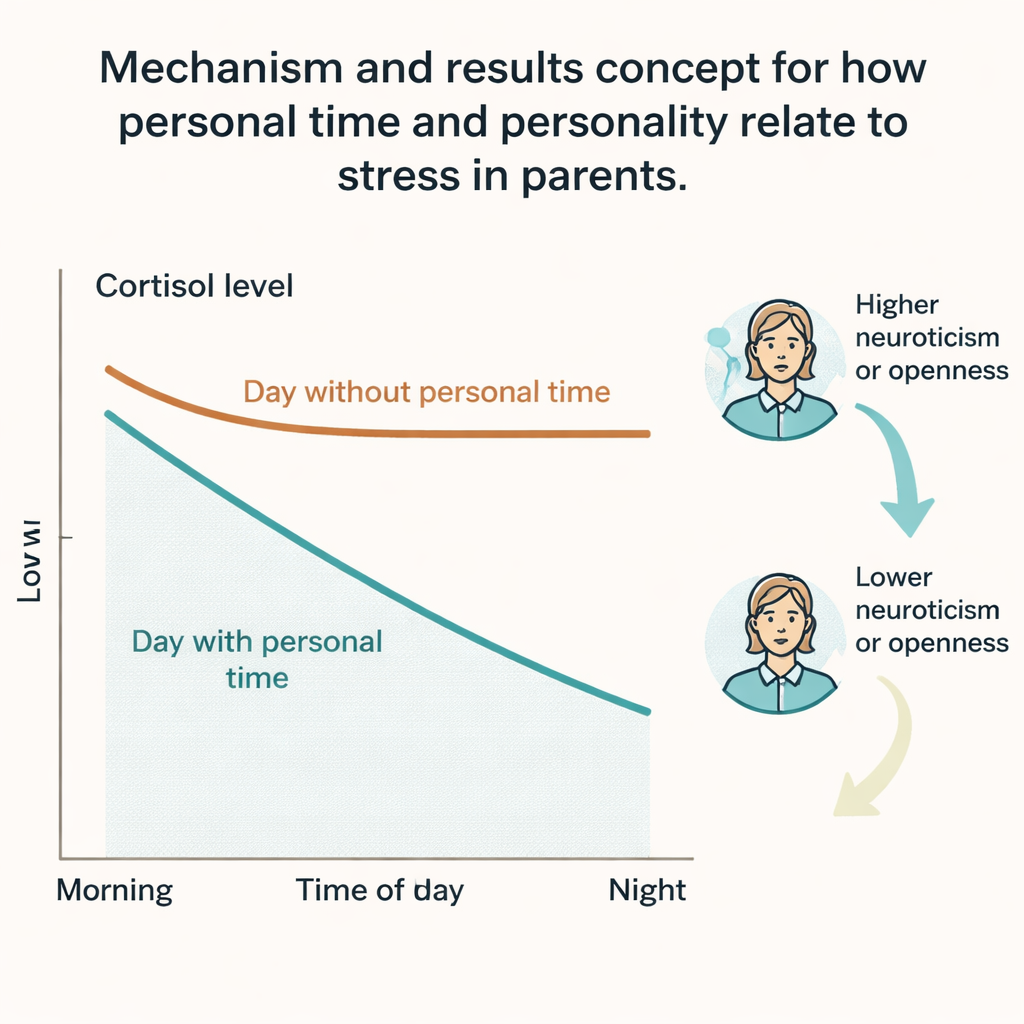
To move beyond self-reports, the study also measured stress biology. For four of the eight days, a subset of 255 parents gave saliva samples four times per day. These samples were used to track cortisol, a hormone that follows a daily rhythm: it rises after waking and should gradually fall toward bedtime. A healthy pattern looks like a steady downward slope. When people are under heavy or lingering stress, that slope tends to flatten, meaning cortisol does not drop as much by evening. Flatter slopes have been tied to problems like depression, burnout, and heart disease, so they offer a useful snapshot of how well the body is “switching off” from daily strain.
How personal time showed up in daily life
On average, parents in this study had an opportunity for personal time on about four out of five days. Even so, they still reported fairly frequent daily stress. By comparing each parent to themselves across different days, the researcher could ask: on my own high-me-time day versus my own low-me-time day, do I feel and recover differently? After taking into account whether the day was stressful, parents reported more positive feelings (such as cheerfulness, calm, and satisfaction) and fewer negative feelings (such as anxiety, irritability, or sadness) on days when they had time to themselves. On those same days, their cortisol dropped more steeply from morning to night, a sign of better stress recovery.
Why personality shapes the benefits
The study also examined how broad personality traits might change these links. Parents who scored higher on neuroticism (tending to worry easily and feel tense) and higher on openness (being curious and drawn to new ideas and experiences) gained the most from personal time. For these parents, days with personal time came with especially sharp drops in negative mood. Those high in neuroticism also showed stronger improvements in their cortisol patterns on days with personal time, suggesting that “me time” may be particularly important for people who are emotionally reactive or easily stressed. In contrast, traits like introversion, agreeableness, and conscientiousness did not meaningfully change how helpful personal time was.
What this means for everyday parents
Put simply, the study suggests that carving out even modest stretches of personal time is more than a luxury—it may be a daily tool for emotional reset and bodily recovery, especially for parents who are prone to worry or who thrive on creative, self-directed activities. The research cannot prove that personal time directly causes better health, but it shows that on days when parents do get it, they feel better and their stress hormone system looks healthier. In a life stage packed with work and family demands, protecting a bit of “time for yourself” may be one of the most practical ways for parents to recharge, care for their own well-being, and stay resilient for the people who depend on them.
Citation: Pauly, T. Personality moderates associations between personal time and parental well-being. Commun Psychol 4, 30 (2026). https://doi.org/10.1038/s44271-026-00396-w
Keywords: parental stress, personal time, cortisol, personality traits, well-being