Clear Sky Science · en
Changes in political attitudes are associated with changes in neural responses to political content
Why our political brains are never set in stone
Many people feel as if their political views are rock solid, yet most of us can look back and remember a time when we saw things differently. This study asks a striking question: as our opinions about politicians and parties shift during turbulent times, does the way our brain responds to political messages shift too? By following the same people across a major political crisis, the researchers show that our brains are surprisingly flexible—and that changes in "whose side we’re on" matter more than changes in our abstract beliefs.
A natural experiment in a time of political upheaval
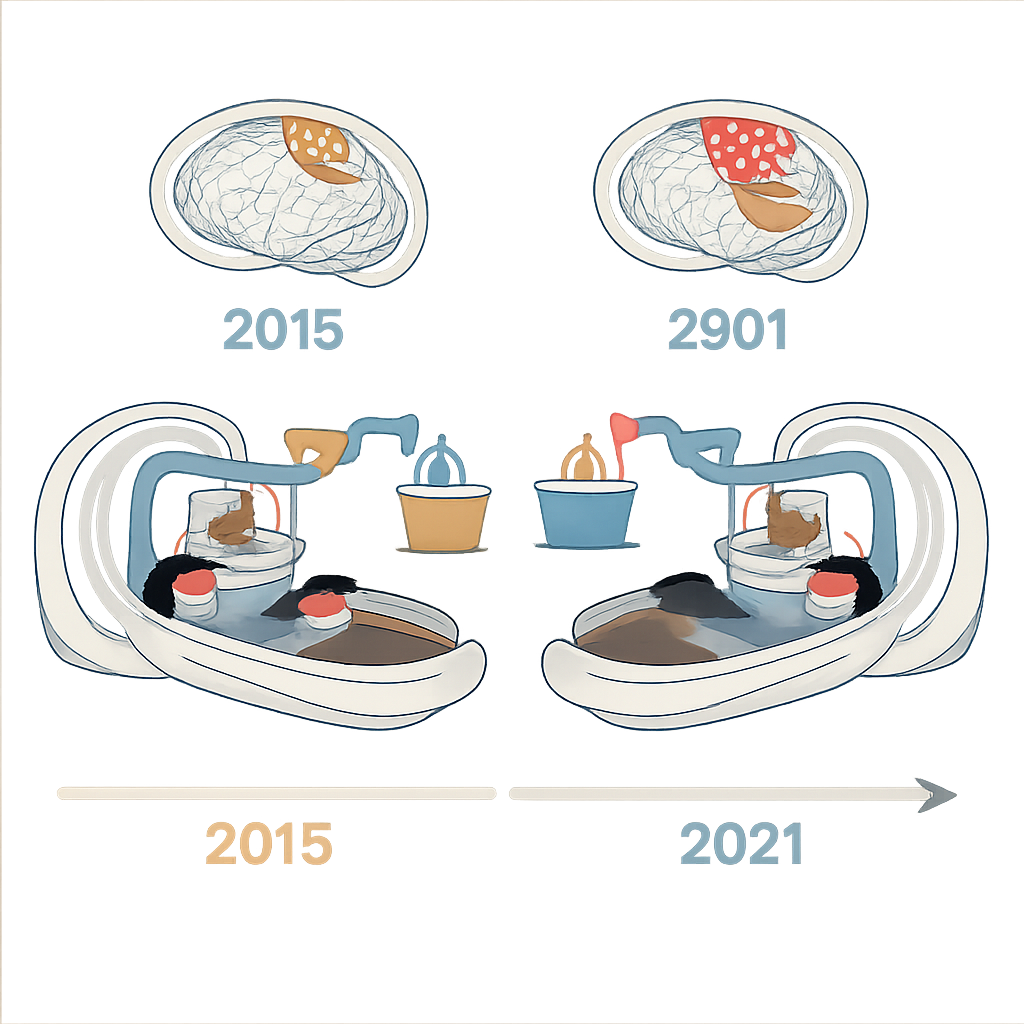
The researchers took advantage of an unusually chaotic period in Israeli politics. Between 2019 and 2021, repeated elections, surprise coalitions and broken promises scrambled the usual left–right map and pushed people to think more in terms of rival camps than tidy ideologies. Before the first election in 2019, 41 politically engaged adults watched a series of political campaign ads and speeches, plus a neutral non-political video, while their brains were scanned in an MRI machine. Two and a half years later, after several election cycles and a dramatic reshuffling of alliances, 21 of these volunteers returned to watch the exact same videos again in the scanner and to answer detailed questionnaires.
Measuring changing minds with detailed questions
After each scan, participants filled out long surveys about the videos: what they thought of the messages, how they felt about the featured parties and politicians, and how their views had changed since 2019. From these answers, the team built an Interpretation Change Coefficient, or ICC—a single score that captured how much a person’s interpretation of each video had shifted. They broke this down into two components. One captured changes in ideology: views about policies and general principles. The other captured changes in group feelings: warmth, trust and other emotions toward specific politicians and parties—essentially, in-group versus out-group attitudes. Not surprisingly, the biggest shifts showed up for parties and leaders whose real-world roles changed the most between the two scans, such as right-wing figures who later helped form a coalition with former opponents.
Where in the brain the changes show up
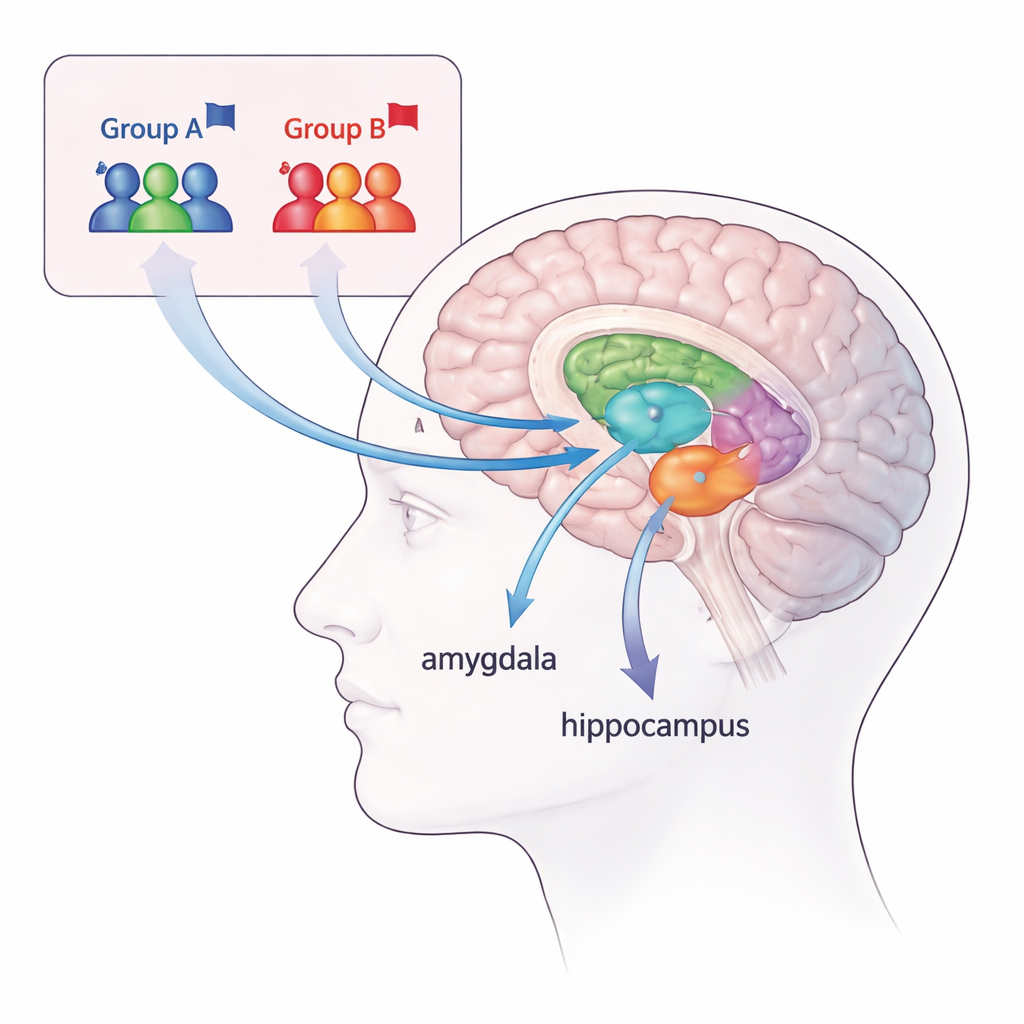
To see how the brain itself changed, the scientists compared the patterns of activity across tens of thousands of tiny brain locations while people watched the political clips in 2019 and again in 2021. Basic sensory areas that handle sights and sounds—at the back of the brain—looked remarkably stable, as if they were simply replaying the same movie. In contrast, deeper regions involved in memory, emotion and reward showed much larger shifts over time. These included the hippocampus (important for building and recalling memories), the amygdala (key for emotional reactions) and parts of the striatum such as the caudate (linked to reward and motivation). Crucially, the more a person’s interpretation of a video changed, the more the activity pattern in these regions differed across the two scans.
Group loyalties outweigh abstract beliefs
When the team separated out the two sides of political identity, a clear pattern emerged. Changes in feelings about in-groups and out-groups—who counts as "us" versus "them"—lined up strongly with changes in brain activity in the amygdala, hippocampus and striatum. Shifts in ideological positions, such as views on policy, showed much weaker links and involved far fewer brain locations. In other words, these emotional and memory-related circuits seemed to track the rise and fall of group loyalties more than shifts in high-level principles. Interestingly, a network of regions often associated with storytelling and self-reflection, known as the default mode network, did not show the expected strong relationship with changing interpretations, suggesting that the core narrative people took from the videos remained relatively stable while their emotional stance toward the characters evolved.
What this means for real-world polarization
To a non-specialist, the upshot is simple but powerful: our brains do not dictate our politics from birth. Instead, as social and political events unfold, they reshape how key emotion, memory and reward systems respond to political content. This study—one of the first to track the same individuals’ brains across years of political turmoil—supports the idea that social experiences and shifting group loyalties sculpt our neural responses, rather than the other way around. It also shows that modern politics may be driven less by differences in ideology than by changing answers to the question, "Are you with us or against us?" Understanding that our political brains are plastic may open the door to new ways of easing hostility and helping people rethink long-standing divisions.
Citation: Boiman, G., Ohad, T., Zvi, Y. et al. Changes in political attitudes are associated with changes in neural responses to political content. Commun Psychol 4, 29 (2026). https://doi.org/10.1038/s44271-026-00395-x
Keywords: political neuroscience, brain plasticity, group identity, political polarization, fMRI study