Clear Sky Science · en
Unlocking solutions to China’s soybean crisis: optimizing cropping systems and dietary structures
Why Soybeans Matter to Your Dinner Plate
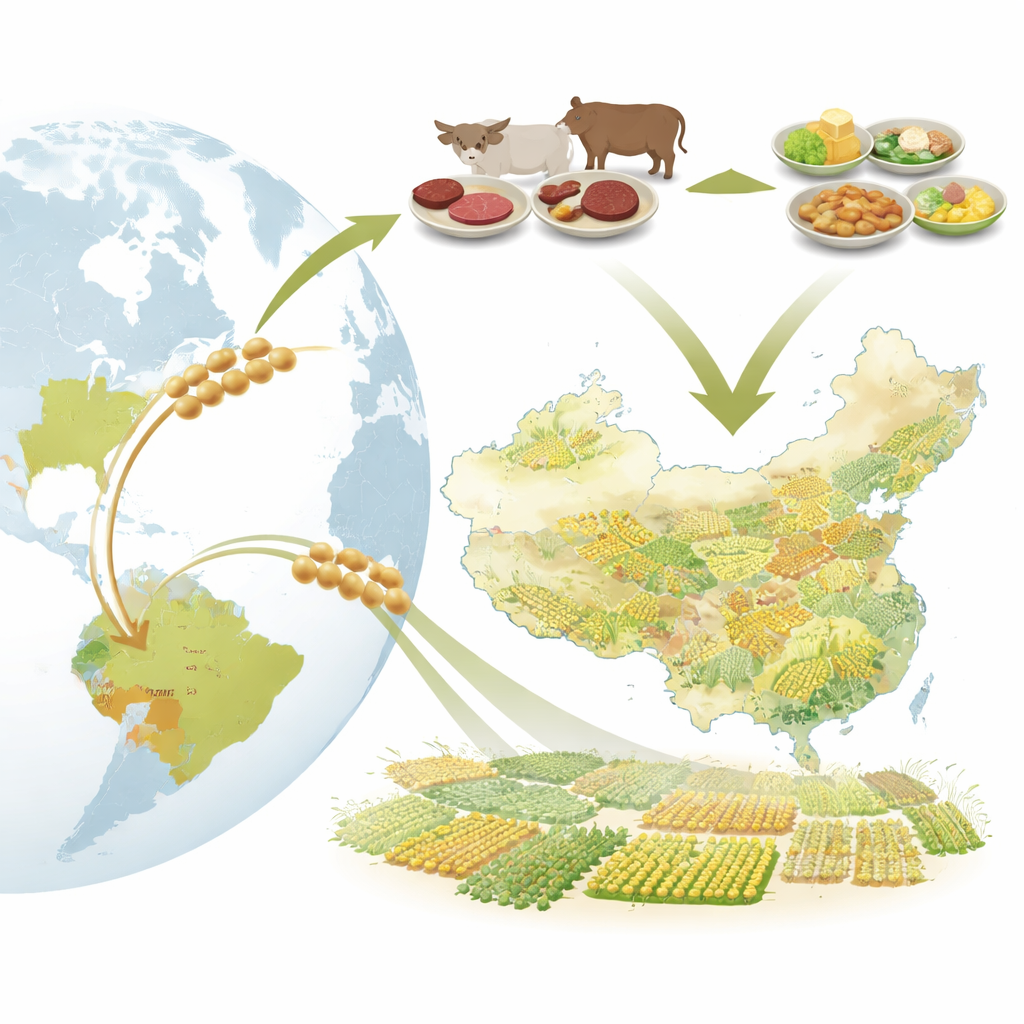
Behind every serving of meat, eggs, or dairy lies a quiet workhorse: soybeans, which are crushed into protein-rich feed for animals. China, the world’s largest buyer of soybeans, imports most of what it uses, tying its food security to distant farms in places like Brazil and the United States—and to the forests and rivers affected there. This study asks a simple but powerful question: Could China grow enough soybeans at home, and eat differently enough, to largely free itself from that dependence while keeping the planet in mind?
China’s Growing Appetite and Hidden Risks
Over four decades of rising incomes in China have reshaped the national menu. People are eating far more meat and other high-protein foods and less of the traditional staple grains. Meat production has increased more than sixfold since the early 1980s, and with it, demand for feed grains has surged. Domestic soybean harvests, however, have not kept up. In 2021, China produced only about one-seventh of the soybeans it consumed, relying on imports that made up more than 60 percent of global soybean trade. That dependence creates strategic risks in a tense trade environment and drives environmental damage abroad, including deforestation, greenhouse gas emissions, and biodiversity loss in Brazil’s Amazon and Cerrado regions.
Using Idle Fields and Smarter Cropping
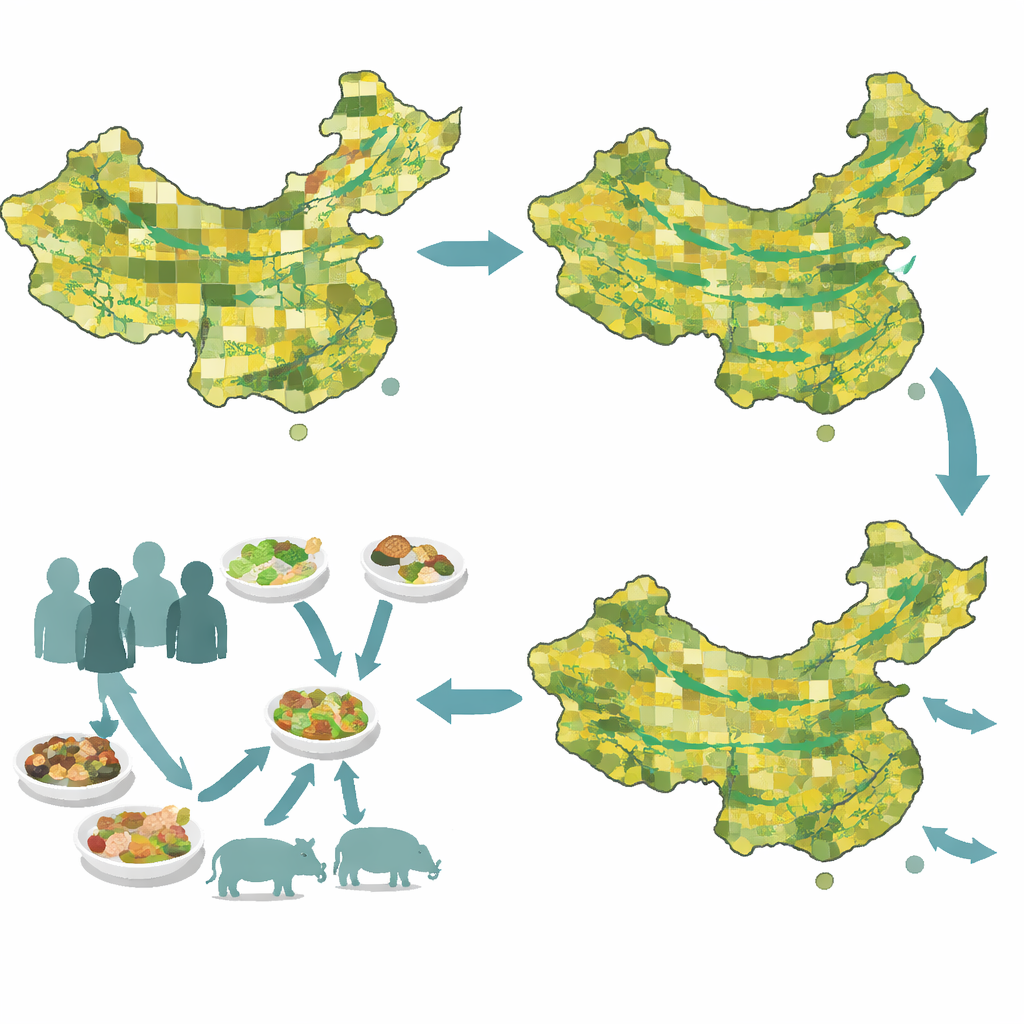
The researchers first explored how far China could go by changing only how it uses existing farmland. They built a detailed optimization model that examined 1.7 million one-kilometer farm grids across the country. Many fields today are underused—left fallow in winter, planted just once a year where two crops could fit, or even abandoned. By rearranging which crops are grown where and when, while still fully meeting current domestic demand for rice, wheat, maize, vegetables, and other staples, the model searched for cropping patterns that would maximize soybean output. The result was striking: soybean production could increase 4.5-fold, and the self-sufficiency rate could jump from 14.2 percent to 77.4 percent. Soybean cultivation would spread from its current stronghold in northeastern China into major plains and basins farther south and west, making use of diverse climates and more intensive double-cropping systems.
Eating a Bit Greener to Close the Gap
Even with better use of every cultivated hectare, a sizable share of soybeans would still need to be imported. To push further, the team added a second layer: a diet optimization model. This tool sought healthier, more plant-forward eating patterns that people could realistically accept and afford. It nudged diets away from excess meat and toward vegetables, potatoes, rice, rapeseed, groundnuts, and other plant foods, all while meeting nutritional needs for energy, protein, vitamins, and minerals. Under this scenario, demand for soybeans and some feed grains fell, while demand for other crops rose. When the revised food demands were fed back into the cropping model, China could, in theory, fully meet its soybean needs at home, reaching a self-sufficiency rate slightly above 100 percent without expanding total farmland.
Shifting Trade and Environmental Burdens
Growing so many more soybeans inside China would not be cost-free for the planet. Using global trade and environmental accounting models, the authors tracked how changes in production and trade would alter land use, water consumption, fertilizer needs, and greenhouse gas emissions worldwide. Moving soybean supply from Brazil and the United States to China increased global land, water, and nitrogen use for soybeans, reflecting generally higher environmental footprints on Chinese fields. Yet, when all 11 major crop groups were considered together, the overall increases in land, water, and nitrogen were modest, and global greenhouse gas emissions and phosphorus use actually decreased. In exporting countries, pressure on land, water, and nutrients eased, potentially reducing stress on sensitive ecosystems.
What This Means for Future Food Security
Taken together, the study shows that, on paper, China could free itself from soybean imports by making two coordinated shifts: using its farmland more intensively and efficiently, and embracing diets that lean more toward plants and less toward meat. Turning this idealized blueprint into reality would be difficult, because it would require new incentives for farmers, safeguards for soil and water, and major changes in people’s food preferences. Still, the work highlights that food security is not just about producing more; it is about how and what we choose to grow and eat. With thoughtful planning across agriculture, trade, and public health, countries can reduce dependence on fragile supply chains while limiting environmental harm at home and abroad.
Citation: Liu, X., Xin, L., Wang, Y. et al. Unlocking solutions to China’s soybean crisis: optimizing cropping systems and dietary structures. npj Sustain. Agric. 4, 30 (2026). https://doi.org/10.1038/s44264-026-00139-8
Keywords: soybean self-sufficiency, China food security, sustainable diets, cropping systems, global food trade