Clear Sky Science · en
Linking species and functional crop diversity in South Asia: a spatial assessment of agrobiodiversity for nutrition-sensitive agriculture
Why the mix of crops on farms matters to families
Across South Asia, millions of families still struggle to afford a healthy diet, even in places where fields look green and productive. This study asks a deceptively simple question: does growing many kinds of crops actually translate into better food and nutrition for people, especially children? By examining what is grown across 906 districts in Bangladesh, India, Nepal, and Pakistan, the authors show that having a wide range of crops in the landscape does not automatically mean children get more varied and nutritious meals—and they propose new tools to pinpoint where smarter crop choices could make the biggest difference.
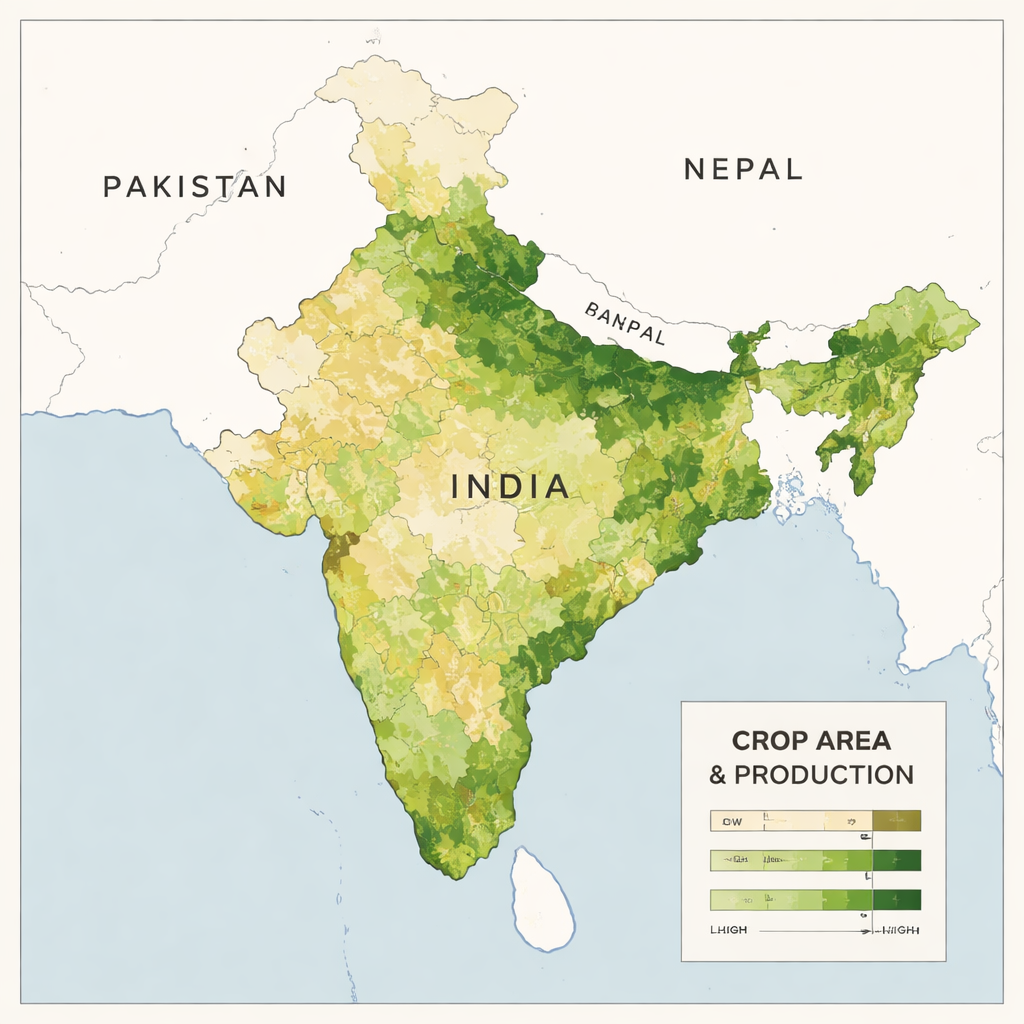
Looking beyond "how much" to "what kind" of food
For decades, agricultural progress in South Asia has focused on boosting harvests of a few staple grains such as rice and wheat. These crops are excellent at delivering calories but relatively poor at supplying vitamins and minerals needed to prevent problems like stunting and "hidden hunger." The researchers argue that we must look at agrobiodiversity in two ways at once: the number of different crop species grown, and the variety of food groups and nutrients they can provide. They call these taxonomic diversity (how many kinds) and functional diversity (what those crops can do for diets and nutrition).
New yardsticks for crop-based nutrition
To make these ideas practical for planners, the team built a large database covering 326 crops at district level and combined it with dietary guidelines and national food composition tables. From this, they calculated three basic measures: species diversity, diversity across ten food groups commonly used to judge diet quality, and diversity of eight key nutrients including protein, iron, and vitamin C. These were then blended into two easy-to-compare scores. The Agrobiodiversity Index Score captures the current overall mix of species and their nutritional value, while the Agrobiodiversity Potential Score highlights places where the existing mix of crops could, in theory, support much more varied and nutritious diets than it currently does.
Hidden potential in cereal-heavy landscapes
When these scores are mapped, a striking pattern appears. Many districts show moderate to high species diversity, yet relatively low diversity in food groups and nutrients. Only a tiny fraction—about 4 percent—are hotspots where both species diversity and dietary diversity are high at the same time. In contrast, nearly a quarter of districts combine high species diversity with high potential scores, meaning they grow many kinds of crops but not in a way that maximizes nutritious foods. Cereal-dominated systems, which account for nearly three-quarters of production, are especially prone to this mismatch: land devoted to grains often squeezes out pulses, vegetables, fruits, and oilseeds that are rich in protein and micronutrients.
Where child undernutrition and crop choices collide
The study also compares these agrobiodiversity patterns with child stunting, a marker of long-term poor nutrition. Almost half of the districts with very high stunting rates overlap with areas that have strong untapped potential in their crop mix. This does not prove that changing crops alone would fix undernutrition, because many other factors—such as women’s education, income, and health services—also matter. But it does reveal promising "opportunity zones" where promoting more pulses, vegetables, and other nutrient-dense crops, and improving markets that connect farmers to consumers, could help turn existing agricultural strength into better diets.
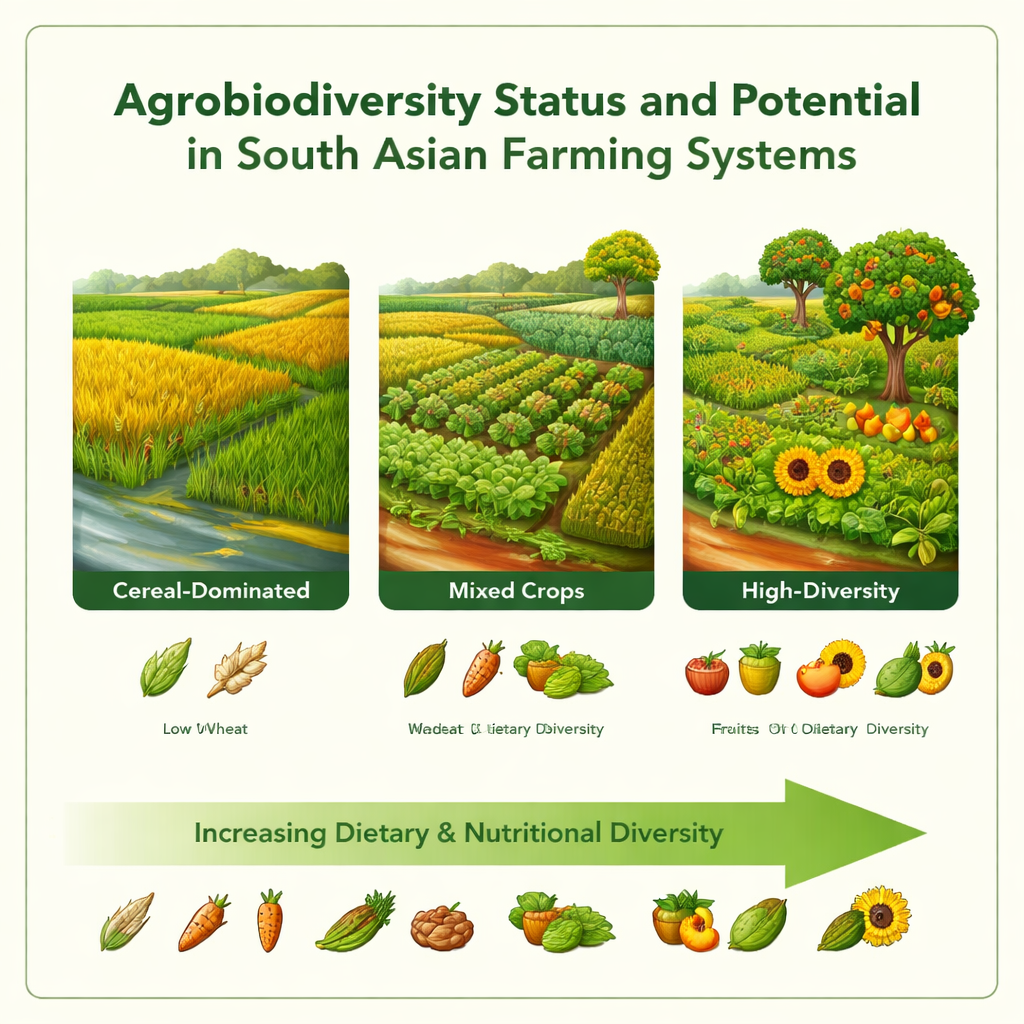
Turning field diversity into healthier plates
In plain terms, the authors conclude that South Asia is not fully using the nutritional power of the crops it already grows. Their new indices act like a nutritional map for agriculture, showing where diversity is already paying off, where it is low, and where a better mix of crops could support healthier, more resilient food systems without needing more land. For decision-makers, this means that simply counting how many crops are grown is not enough; success should be judged by how well those crops can fill local plates with a balanced range of foods. With targeted support for nutrient-rich crops, smarter markets, and nutrition-aware policies, the region’s farms could do far more than fight hunger—they could help families thrive.
Citation: Kamal, M., Nandi, R., Amjath-Babu, T.S. et al. Linking species and functional crop diversity in South Asia: a spatial assessment of agrobiodiversity for nutrition-sensitive agriculture. npj Sustain. Agric. 4, 17 (2026). https://doi.org/10.1038/s44264-026-00130-3
Keywords: agrobiodiversity, nutrition-sensitive agriculture, crop diversification, South Asia food systems, child stunting