Clear Sky Science · en
Reviewing the evidence on precision agriculture and environmental sustainability
Why Smarter Farming Matters to Everyone
How can we feed a growing world without exhausting our soils, polluting water, or worsening climate change? One popular answer is “precision agriculture” – the use of sensors, satellites, and smart machines to deliver just the right amount of fertilizer, water, and chemicals to crops. This article looks past the sales pitch to ask a simple but vital question: when these tools are actually tested on real farms, do they truly help the environment, or are we taking their benefits on faith?
A New Way to Farm, in Theory
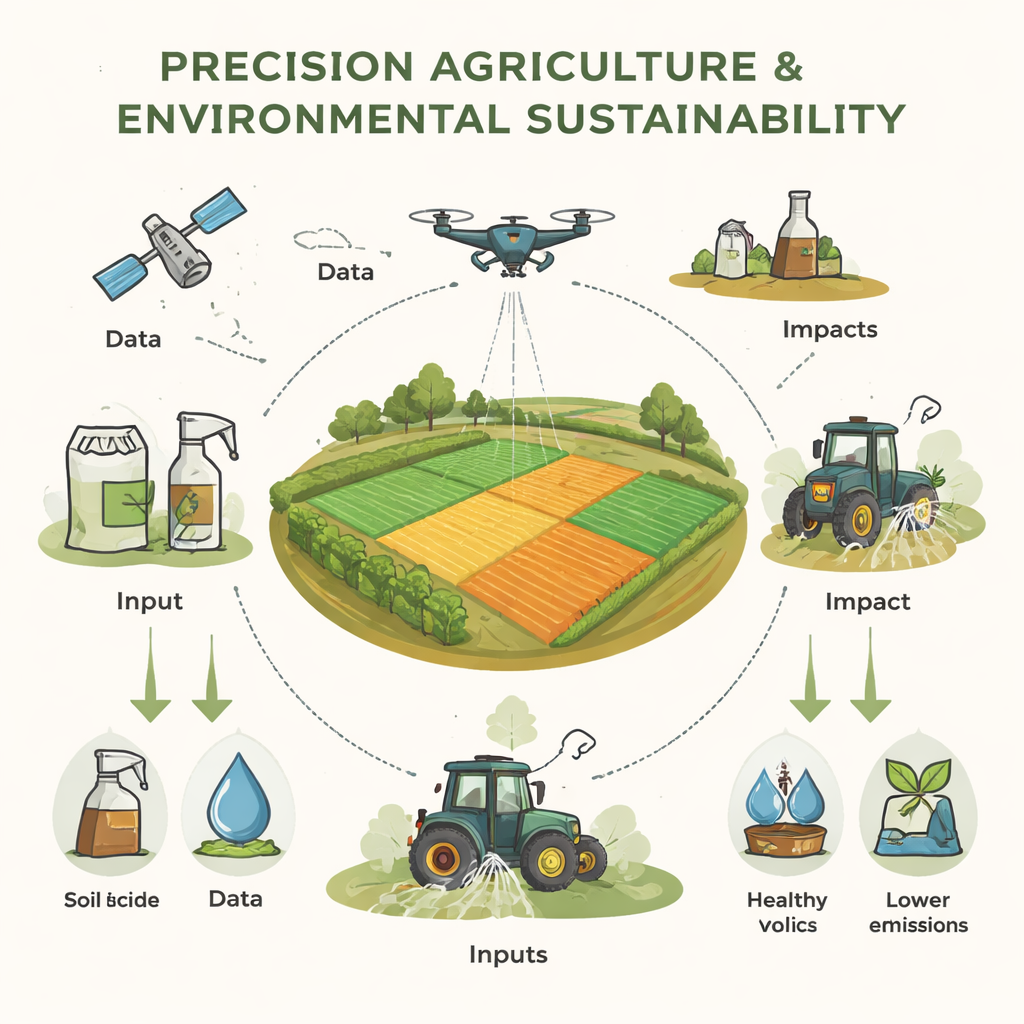
Precision agriculture is a data-driven way of managing fields. Instead of treating a whole farm the same, it gathers detailed information about soil, plants, and weather using tools like soil sensors, drones, satellite images, and GPS-guided tractors. Farmers then use maps and computer programs to vary how much fertilizer, pesticide, or water each part of a field receives. Supporters say this should boost yields while cutting waste and pollution. For years, articles, companies, and even policy reports have described precision farming and environmental sustainability as “inextricably linked” – almost as if buying a new sensor or sprayer automatically makes a farm greener.
Putting High-Tech Farming to the Test
The authors of this review set out to see whether that optimism holds up in practice. They searched three major scientific databases for English-language studies published between 2000 and 2022, focusing on work that measured real environmental outcomes, not just computer simulations or adoption rates. From 444 papers mentioning precision agriculture and sustainability, they found only 82 that actually assessed environmental impacts, and just 54 that included field trials on real or experimental farms. These trials looked at whether precision tools reduced fertilizer, herbicide or pesticide use, water use or contamination, improved soil or water quality, or cut greenhouse gas emissions or fuel consumption.
Where Precision Tools Help the Planet
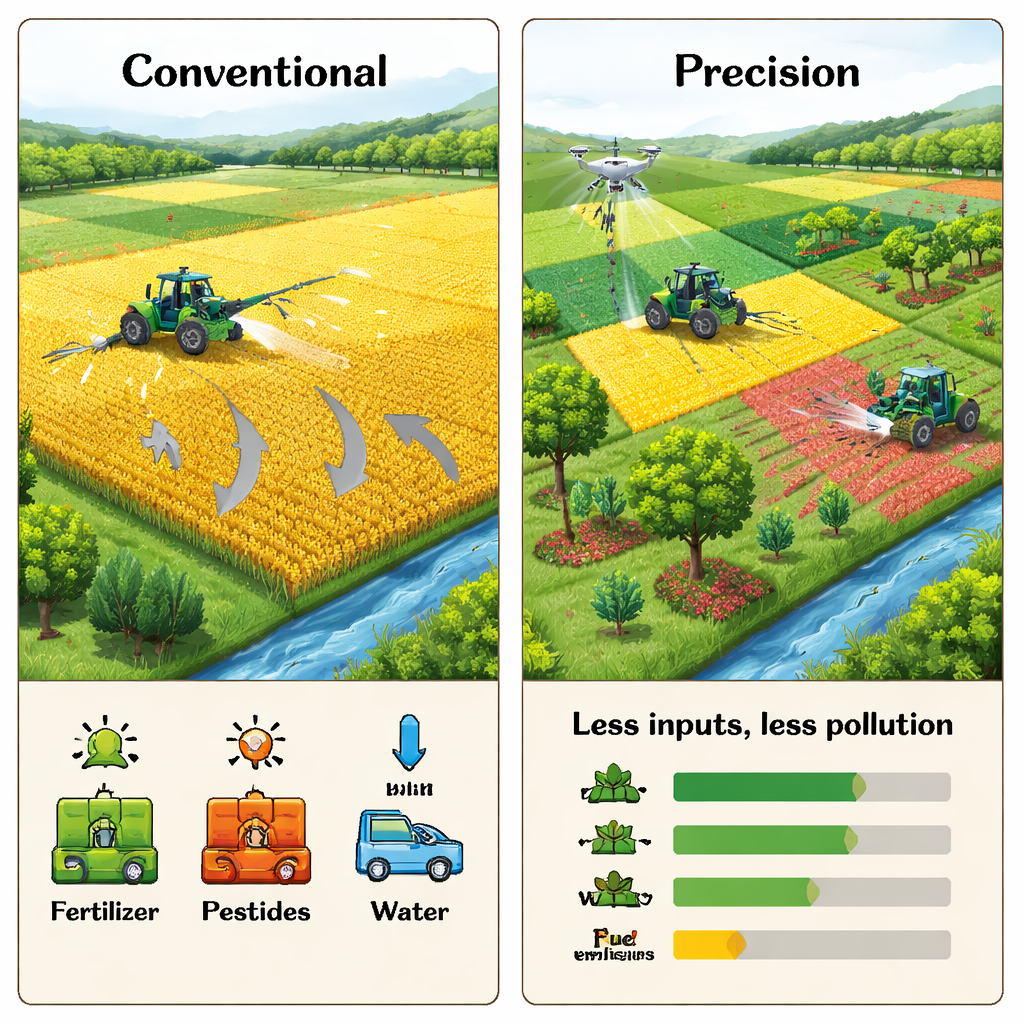
Among those 54 field trials, 45 reported at least one clear environmental benefit. The strongest evidence came from “variable rate” technologies used mostly in grain and oilseed farms. These systems adjust fertilizer rates across a field based on detailed maps. Studies often found fertilizer reductions of several percent, and in some cases much more, without hurting yields. Smart sprayers in orchards and vineyards – machines that sense where plants are and spray only when needed – cut pesticide use dramatically, sometimes by 30 to 70 percent. Sensors and remote sensing tools also helped reduce fertilizer use and, in a few cases, lowered nutrient losses to water or fuel use by guided tractors. These results suggest that, under the right conditions, precision tools can indeed shrink the environmental footprint of farming.
Limits, Blind Spots, and Overblown Claims
The picture is far from uniformly rosy. Nine field trials found no environmental gains, and a few even suggested that precision tools could increase impacts, for example by encouraging slightly higher fertilizer use. Many experiments were short, averaging just two and a half years, so they tell us little about long-term soil health or climate effects. Most took place on larger grain farms in wealthy countries, especially the United States, with almost no trials on small farms or in most of Africa and Latin America. Meanwhile, a separate problem emerged: many widely cited papers and policy discussions simply assume that precision agriculture is sustainable, without presenting data or even citing studies that do. Some surveys treat adoption of precision tools as proof of environmental benefits, even when no measurements of pollution or resource use are made.
What This Means for the Future of Farming
For non-specialists, the takeaway is both hopeful and cautionary. Precision agriculture can help reduce fertilizer and pesticide use and, in some situations, save water and fuel. But these gains are not automatic or universal; they depend on the specific tool, crop, farm size, and local conditions. The authors argue that governments, funders, and farmers should not treat precision technologies as a guaranteed green fix. Instead, they call for longer, more diverse field studies that clearly define what “sustainability” means and measure it using concrete indicators such as pollution levels, soil health, and climate impacts. Only with this kind of careful testing can we decide when high-tech tools are the best way to make agriculture truly sustainable – and when other approaches, like time-tested agroecological practices, deserve more attention and investment.
Citation: Ruder, SL., Faxon, H.O., Orzel, E.C. et al. Reviewing the evidence on precision agriculture and environmental sustainability. npj Sustain. Agric. 4, 9 (2026). https://doi.org/10.1038/s44264-026-00128-x
Keywords: precision agriculture, environmental sustainability, fertilizer reduction, smart farming, sustainable food systems