Clear Sky Science · en
Private-sector engagement in greenhouse gas mitigation in Africa’s ruminant livestock value chains: a perspective based on illustrative examples
Why Cows and Climate Matter
Across Africa, cows, goats, and sheep are central to family incomes and nutrition—but they also release greenhouse gases that warm the planet. This article explores a practical question with global consequences: how can businesses that buy milk, meat, and fibre work with small farmers to cut emissions without cutting already fragile livelihoods? Instead of testing a single new feed or gadget, the authors look at how whole supply chains can be redesigned so that climate‑friendly practices make economic sense for farmers, companies, and society.
Farming, Livelihoods, and a Warming World
Demand for animal products is rising fast in Africa, where livestock already provide food, income, and jobs. Cattle, sheep, and goats also produce a large share of the world’s methane, a potent greenhouse gas. Many known practices—better quality feed, improved grazing, and smarter manure management—can lower emissions per litre of milk or kilogram of meat. But adopting them often costs farmers money or time in the short term, while the climate benefits are shared by everyone. Because these benefits act like public goods, they rarely show up in the prices farmers receive, especially when they have little bargaining power against large agribusiness firms.
Why the Market Alone Isn’t Enough
The authors argue that focusing only on what happens inside the farm gate misses crucial players: input dealers, traders, processors, and retailers who shape what is produced and how. They use value‑chain governance theory to show that the way these actors coordinate—through loose spot markets, fixed standards, or longer‑term relationships—strongly affects whether climate‑smart practices spread. A key idea is the farmer’s “private net benefits” over time: at first, adopting a new low‑emission practice may feel like a loss, but learning, better access to inputs, and changing norms can turn it into a gain. 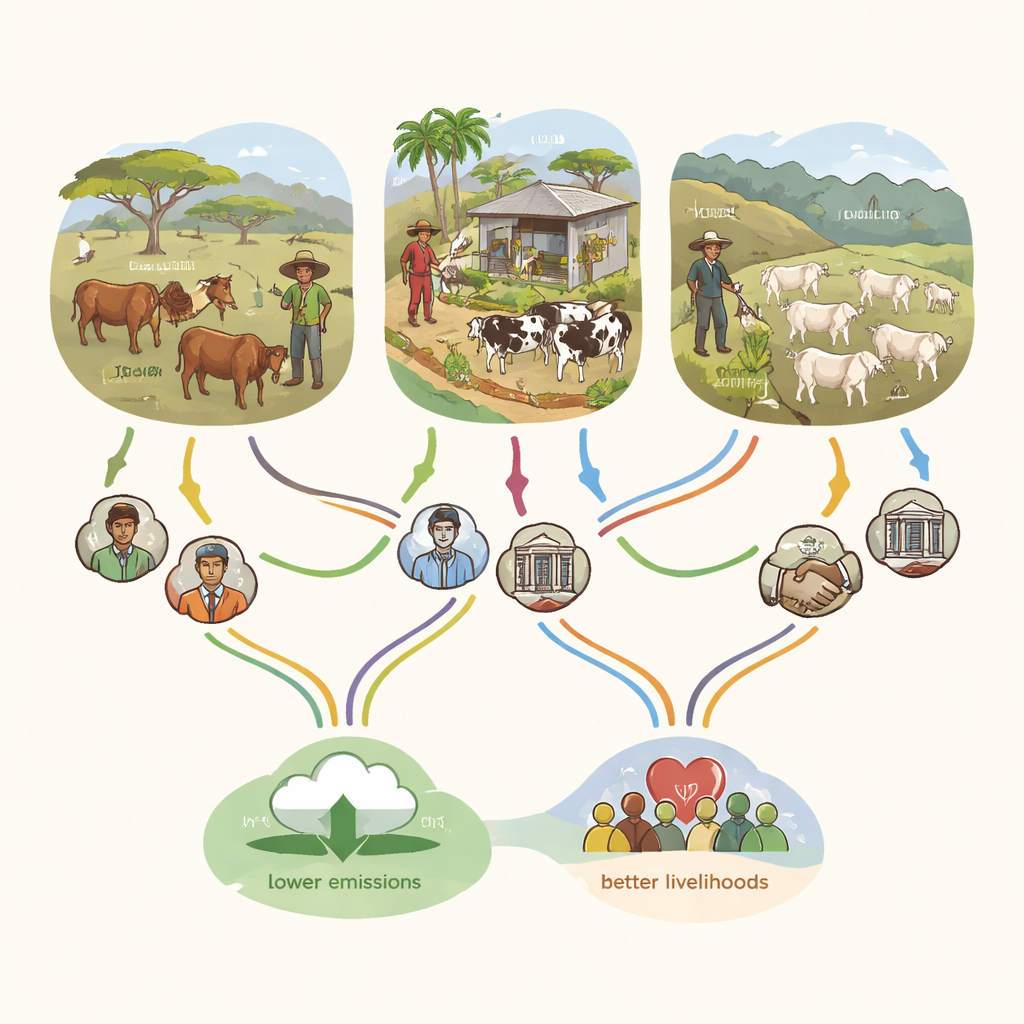
What Partnerships Look Like on the Ground
Instead of reporting on a single grand experiment, the study assembles eight real‑world examples from East and Southern Africa. These range from pasture‑based beef systems and intensive dairy to mohair fibre production. In South Africa, a fibre alliance links rangeland restoration and animal welfare to certification schemes that help wool and mohair reach premium markets. In Kenya and Tanzania, milk processors and dairy programs use quality‑based pricing, village milk hubs, and farmer training to encourage better feeding, animal health, and manure handling. In Northern Kenya, a carbon project pays pastoralists when independently verified improvements in grazing lead to more carbon stored in soils. Elsewhere, a multinational food company tests manure recycling on a company‑owned dairy farm to cut fertiliser use and emissions.
Who Pays, Who Benefits, and Who Gets Left Out
These examples reveal common patterns. Partnerships work best when they bundle “embedded services” like advice, training, and input delivery with clear market incentives—such as higher milk prices for better quality or access to new buyers for animals raised under improved grazing plans. Often, public agencies, donors, or nonprofits help finance the parts that mostly deliver public benefits, such as restored rangelands or lower methane, while companies focus on productivity and product quality. However, power imbalances are a constant concern. Strict private standards or complex carbon schemes can sideline poorer or remote farmers who lack capital, paperwork, or infrastructure to participate. The authors therefore stress the role of public rules, monitoring, and support to keep private initiatives aligned with wider social and environmental goals. 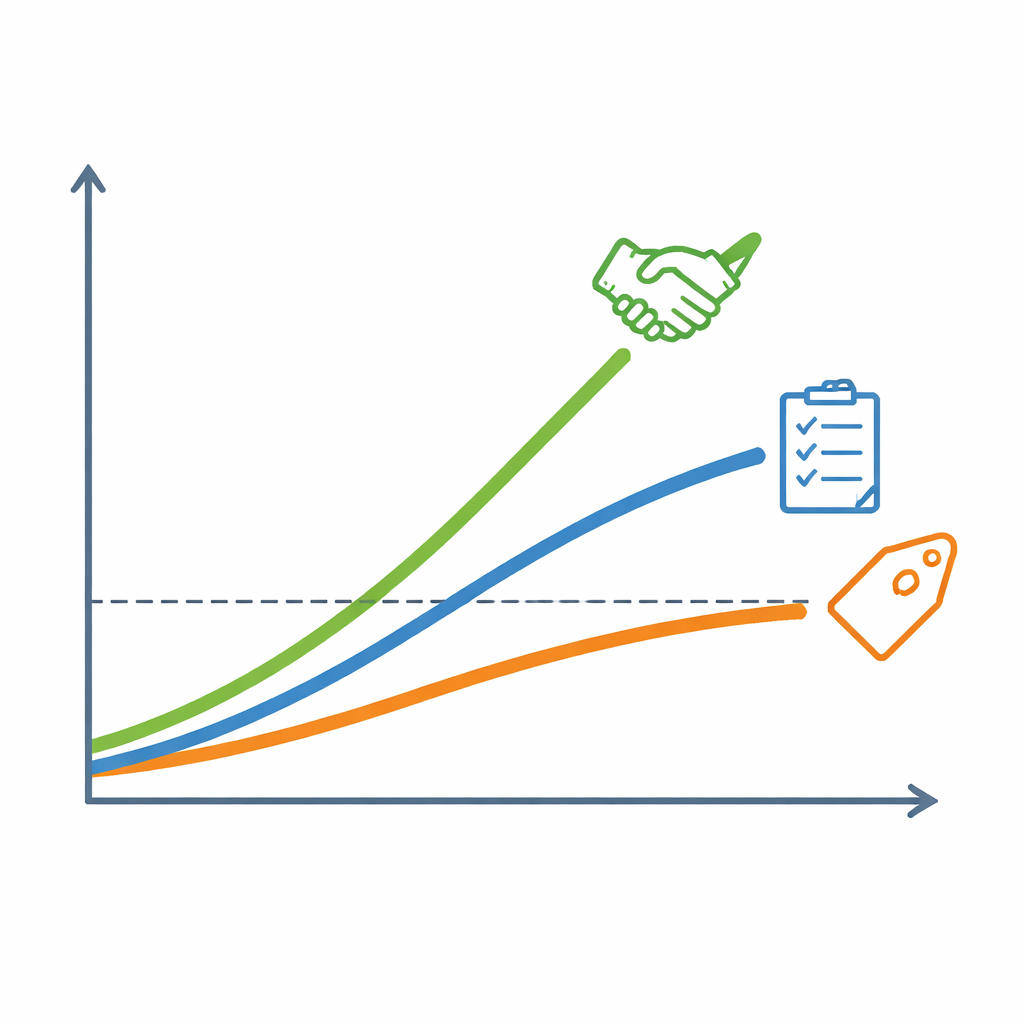
What This Means for the Future
The article concludes that climate‑friendly livestock in Africa will not emerge from technology alone, but from carefully designed partnerships that balance private profit with public good. When low‑emission practices bring clear, near‑term gains for farmers—and when buyers, governments, and nonprofits share the costs of getting started—uptake is far more likely. Where benefits are mostly public, such as large‑scale rangeland restoration, public or climate‑finance support is essential. The authors do not claim that the cases they review have already transformed emissions; instead, they offer a roadmap for how businesses and policymakers can structure value chains so that cutting greenhouse gases goes hand in hand with more secure livelihoods for the millions of Africans who rely on livestock.
Citation: Komarek, A.M., Rufino, M.C., Snow, V. et al. Private-sector engagement in greenhouse gas mitigation in Africa’s ruminant livestock value chains: a perspective based on illustrative examples. npj Sustain. Agric. 4, 15 (2026). https://doi.org/10.1038/s44264-026-00124-1
Keywords: livestock, greenhouse gas mitigation, Africa, value chains, public–private partnerships