Clear Sky Science · en
Pathways to a nature positive agricultural sector
Why Farms and Wildlife Need Each Other
As the world races toward a population of nearly 10 billion people, farmers are under pressure to produce more food than ever. Yet the very methods that boost yields can strip the land of wildlife, healthy soils, and clean water. This article explores how Australia—a major food exporter with a long history of land use change—could redesign its farming systems so that nature bounces back instead of being slowly worn away. The authors lay out a practical, step-by-step roadmap for turning today’s damaging trends into a “nature positive” future where farms and ecosystems both thrive.
A Big Vision for Better Land
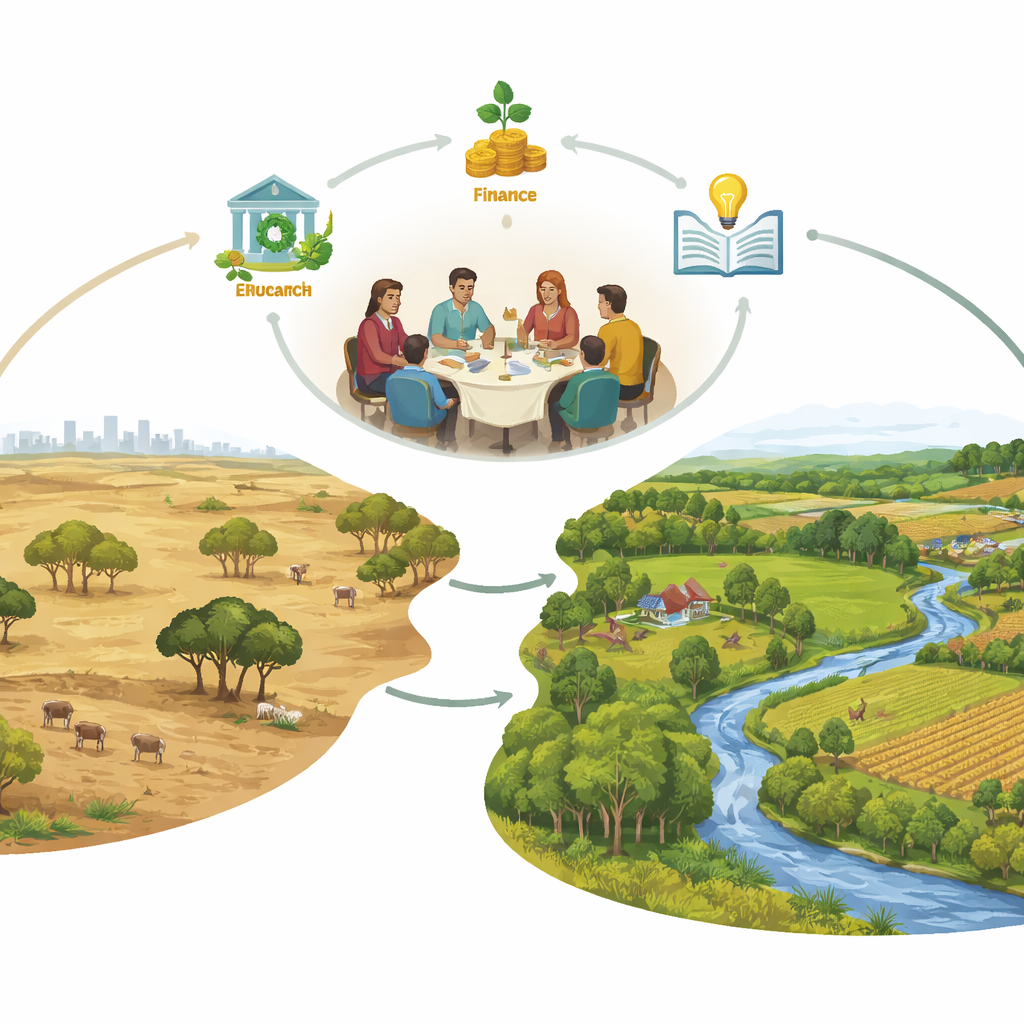
The heart of the study is a simple but ambitious idea: by 2050, Australian agriculture should leave nature in better shape than it is today. This “nature positive” goal means more than slowing damage—it requires real recovery of native plants, animals, and ecosystems compared with a 2020 baseline. The authors link this vision to global biodiversity agreements, which call for food production that supports, rather than undermines, nature’s ability to provide services like pollination, soil fertility, and water purification. They note that Australia’s current pathway—marked by large-scale land clearing, heavy water use, and expanding exports—risks further species loss unless the entire food system changes direction.
Learning from the Past, Planning for the Future
Australia’s landscapes have been shaped by people for tens of thousands of years. Indigenous communities developed sophisticated methods using fire, water, and native crops to manage the land productively without exhausting it. European colonisation brought hoofed animals, mechanised ploughing, and rapid clearing of native vegetation, leading to severe soil damage and habitat loss. Today, more than half the continent is used for primary production, and agriculture is the main driver of deforestation and water extraction. Against this backdrop, the authors argue that simply improving efficiency is not enough; instead, the sector needs a deliberately planned transition that respects Indigenous knowledge, restores damaged ecosystems, and still delivers food security.
A Roadmap Built Backwards from 2050
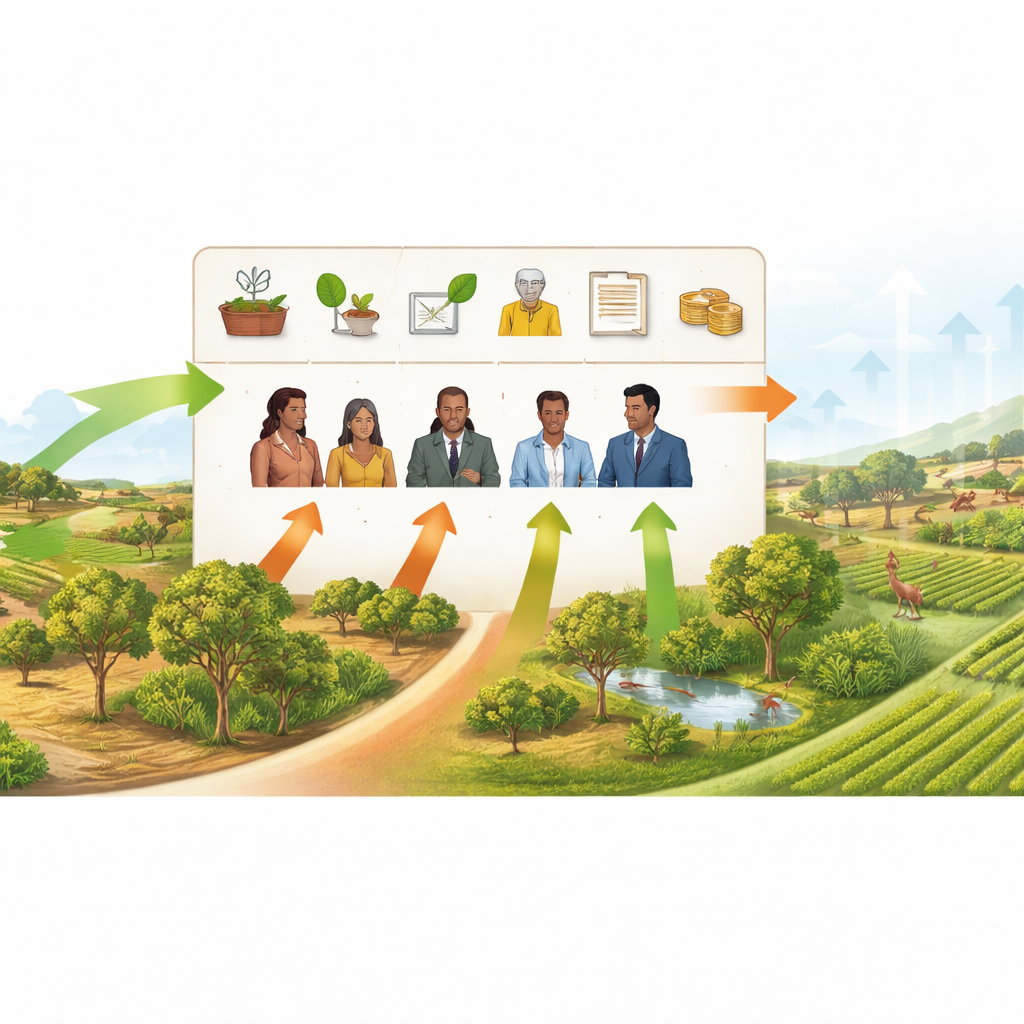
To design that transition, the research team used a method called backcasting. Rather than predicting what might happen, they first asked 18 experts from fields such as ecology, farming, law, finance, and Indigenous land management to imagine what a thriving, nature positive farm sector would look like in 2050. From this shared vision, the group then worked backwards to identify the concrete targets needed by 2040 and 2030, and the actions, key players, obstacles, and supporting factors required along the way. The final roadmap contains 20 long-term targets grouped into 11 themes, including protecting remaining native vegetation, boosting soil health, recognising the rights and contributions of Indigenous Peoples, improving rural community wellbeing, creating clear product certification schemes, redesigning finance and insurance, and making sustainable food options easy to choose.
What Needs to Happen in Each Decade
By 2030, the experts say, clearing and degrading native vegetation on farms must cease, supported by stronger regulations and incentives that reward landholders for protecting nature. The sector also needs agreed, practical ways to measure soil health and on-farm biodiversity so that progress can be tracked and reported. Early actions should build respectful partnerships with Indigenous communities, recognise their intellectual property in native foods, and embed cultural knowledge into land management. Public education about where food comes from and how farming depends on nature is another urgent priority, along with better communication between farmers, conservation groups, businesses, and governments. From 2030 to 2040, the roadmap calls for regional landscape plans that coordinate restoration efforts, greater transparency in supply chains through farm-level natural capital data, and trialling trusted “nature positive” labels for food and fibre. By 2050, the vision is for thriving rural communities, measurably healthier soils across farmland, financial products that favour nature friendly practices, and affordable, sustainable food options available to everyone.
Challenges, Trade-Offs, and Who Pays
The experts did not shy away from tensions and disagreements. Some industry representatives argued that certain livestock systems are already nature positive, while others pointed to ongoing habitat loss as proof that deeper change is needed. Participants also wrestled with how to define terms like “sustainable” or “regenerative,” and how far to push sensitive issues such as meat consumption or chemical use. A major sticking point is money: many actions require up-front investment, better incentives, and new financial tools such as biodiversity credits. The group stressed that farmers alone cannot bear the costs; retailers, consumers, banks, and governments all need to share responsibility. New technologies—such as drones for monitoring vegetation and national systems for tracking environmental accounts—could lower costs and make nature gains easier to verify.
How This Helps Ordinary People and the Planet
For non-specialists, the key message is that a healthier countryside is not a luxury add-on to food production; it is its foundation. The roadmap shows that with careful planning, it is possible to keep feeding people while restoring wildlife, soils, and rivers, and strengthening rural communities. Instead of relying on distant offsets or narrow efficiency gains, the authors promote on-farm improvements and landscape-scale coordination, backed by fair financing and clear standards. If governments, businesses, Indigenous leaders, farmers, and citizens act quickly on the early steps—stopping further habitat loss, rewarding good stewardship, and measuring what matters—Australia’s farm sector could become a powerful example of how to turn today’s biodiversity crisis into a story of recovery.
Citation: Selinske, M.J., Garrard, G.E., Humphrey, J.E. et al. Pathways to a nature positive agricultural sector. npj Sustain. Agric. 4, 18 (2026). https://doi.org/10.1038/s44264-025-00104-x
Keywords: nature positive agriculture, biodiversity and farming, sustainable food systems, Australian agriculture policy, Indigenous land stewardship