Clear Sky Science · en
Inequality of opportunities creates structural marginalization in networks
Why Who You Know Depends on What You Have
In everyday life, opportunities often flow through social networks: friends who recommend jobs, colleagues who share data, or neighbors who know where to find help. This paper asks a deceptively simple question with far‑reaching consequences: when some groups start out with fewer resources than others, how does that initial disadvantage reshape the entire web of connections around them—and can standard remedies like growing the minority group or networking harder really fix the problem? 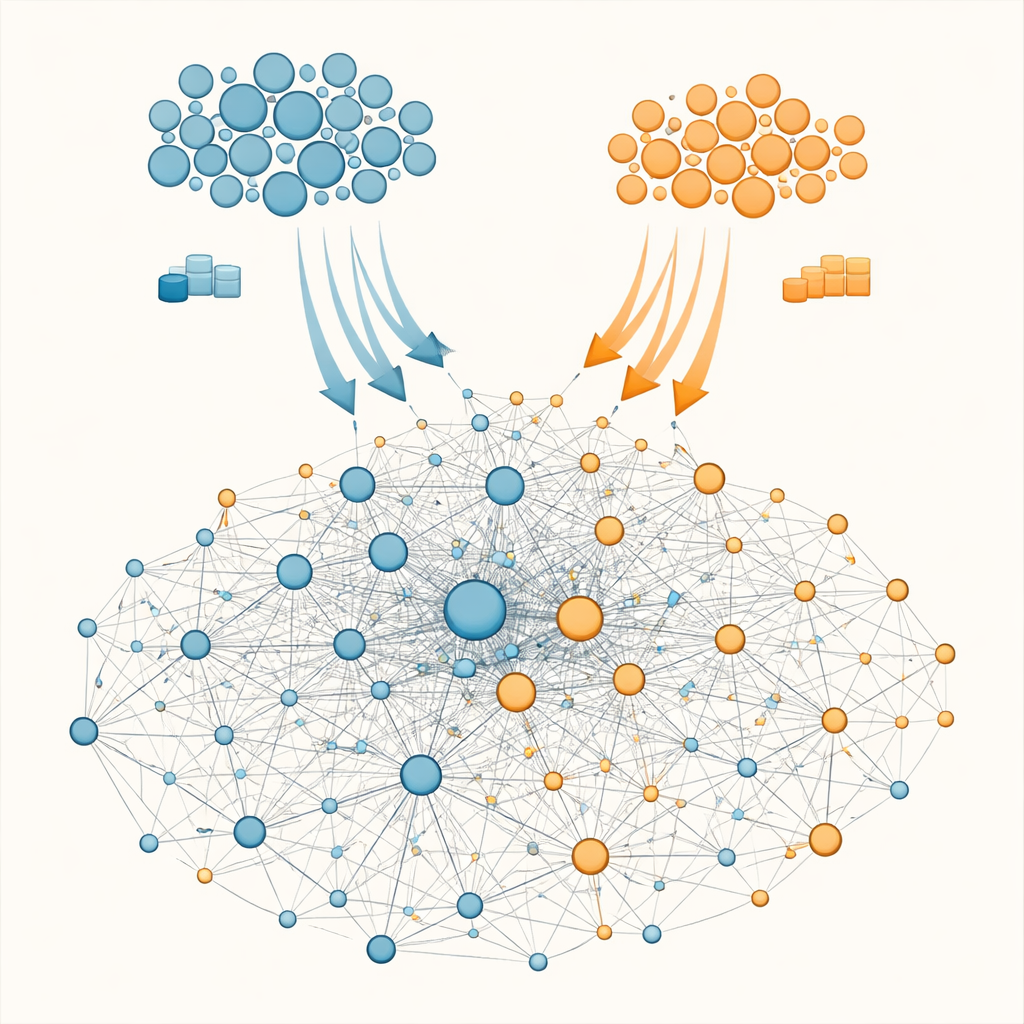
How Unequal Starting Points Shape Social Webs
The authors focus on structural marginalization, a situation where certain groups are gradually pushed to the edges of social networks, limiting their access to information, support, and opportunities. They point to real examples: minority families in the UK who are less connected to local housing support and thus face higher risks of homelessness, or young people whose lack of early educational funding locks them out of elite university and career circles. Rather than looking only at obvious inequalities like income or funding, the study zooms in on how these differences interact with the basic ways people form ties—preferring those who are similar, or gravitating toward those who are already well connected.
A Simple Model of Groups, Resources, and Choice
To explore these forces, the authors build a computational model of a growing social network with two groups: a numerical majority and a smaller minority. Each individual is given an initial amount of “fitness,” representing their resources or opportunities—things like education, money, or institutional support. People are more likely to connect to those who already have many connections (a “rich get richer” tendency), and a tunable parameter controls whether they prefer to link with similar others (homophily) or with those who are different (heterophily). Crucially, the two groups can start with different average resource levels, allowing the researchers to examine how even modest gaps in opportunity reshape the network over time.
What Happens to Connection Power
The study tracks how many links each person accumulates—a stand‑in for social capital—and compares the majority and minority. When the minority is better resourced, they can function like a small but powerful elite, attracting many ties regardless of mixing preferences. When resources are equal, whether the minority does better or worse depends mainly on how strongly people favor similar or different contacts. But when the majority holds more resources—a common real‑world pattern—the minority almost always ends up with fewer and weaker connections, even if they seek out majority contacts. Increasing the minority’s share of the population or tweaking who prefers whom can narrow, but never close, this gap as long as the resource imbalance persists. 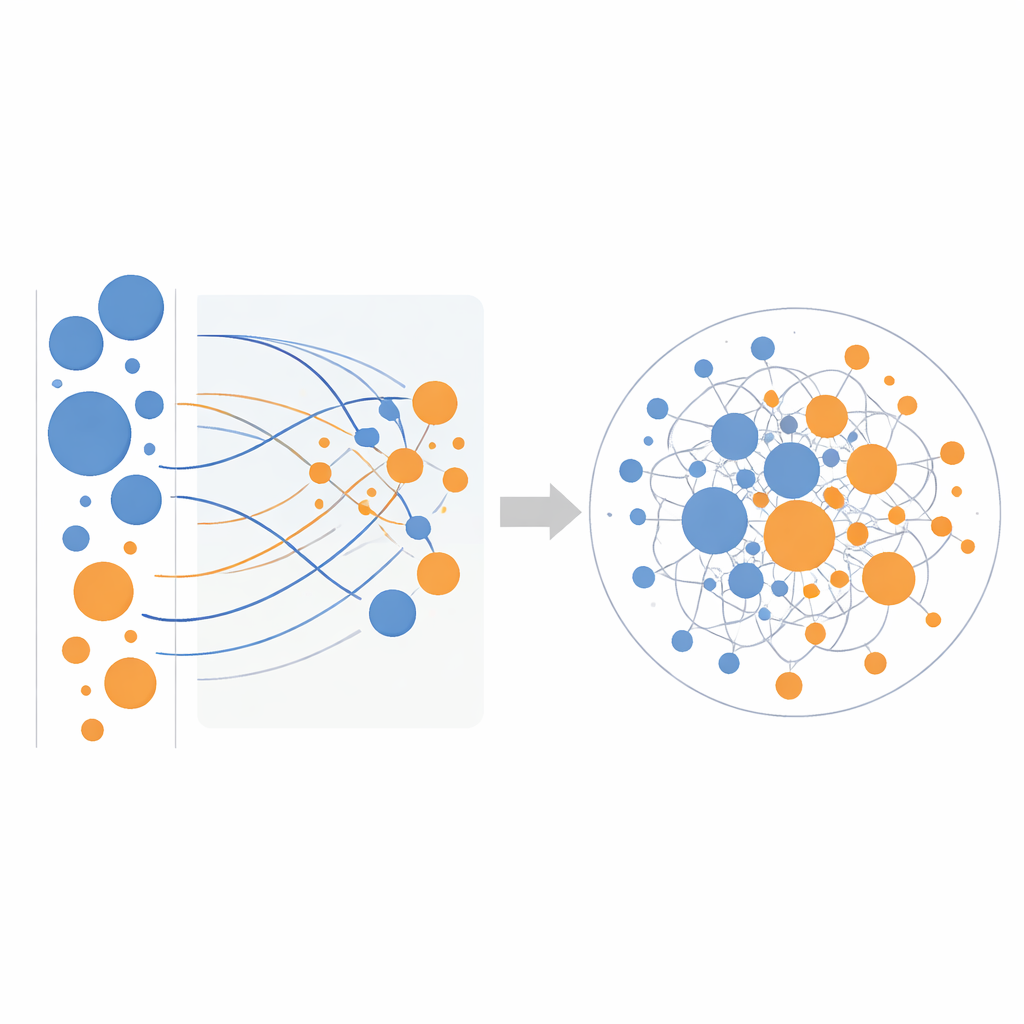
Hidden Clubs at the Core
Beyond simple connectivity, the authors examine “rich‑club” effects—tight cores of highly connected individuals who are also well connected to one another. These cores act as powerful hubs where information, prestige, and opportunities circulate. The model reveals that strong differences in resources between groups almost inevitably encourage the formation of such rich clubs, no matter which group is advantaged. The well‑resourced group disproportionately occupies these cores, while the disadvantaged group is left on the fringes. Tests with real‑world data on scientific coauthorship networks, using country wealth as a proxy for initial resources, show patterns that echo the model: researchers from richer countries build larger, more central collaboration networks, and the structure of these networks is consistent with entrenched inequalities in opportunity.
Why Equal Chances Matter More Than Equal Numbers
In plain terms, this work shows that who gets pulled to the center or pushed to the margins of our social webs is not just about personal talent or networking savvy, nor is it fixed simply by increasing the headcount of underrepresented groups. When one group systematically starts with fewer resources, the entire structure of the network evolves in ways that keep them peripheral and make opportunity gaps hard to erase. Policies that focus only on representation or on asking minorities to “network smarter” are therefore insufficient. To dismantle structural marginalization, the authors argue, societies and institutions must directly address unequal starting points—through targeted funding, sponsorship, and support that raise the resource base of disadvantaged groups—so that the web of connections itself can become more equitable.
Citation: Cinardi, N., Karimi, F. Inequality of opportunities creates structural marginalization in networks. npj Complex 3, 16 (2026). https://doi.org/10.1038/s44260-026-00077-z
Keywords: social networks, inequality of opportunity, structural marginalization, rich club, homophily