Why tiny lake microbes matter for antibiotic resistance
Antibiotic resistance is often framed as a problem of hospitals and farms, but it also plays out quietly in lakes, rivers, and oceans. This study looks at cyanobacteria—microscopic, photosynthetic microbes best known for forming green scums and toxic blooms—and shows that they can carry and potentially spread genes that break down an important class of antibiotics called macrolides. Understanding how these water‑dwelling microbes handle antibiotics helps us gauge hidden risks to both environmental and human health.
Antibiotics that linger in water
Macrolides are widely used antibiotics in human medicine, veterinary care, and aquaculture because they work against many types of bacteria. Unlike some chemicals that quickly degrade, macrolides break down slowly and can persist in water for long periods. That means bacteria in rivers, lakes, and coastal waters are constantly exposed to low, non‑lethal doses. Such chronic exposure nudges microbial communities to evolve resistance and to swap resistance genes with their neighbors, turning natural waters into hotspots where new antibiotic‑resistant strains can emerge.
Bloom‑forming microbes as gene reservoirs Figure 1.
Cyanobacteria are among the most abundant microbes in fresh and marine waters and frequently cause harmful algal blooms that foul drinking water and damage ecosystems. Although they are very sensitive to macrolides, earlier work suggested they can harbor many antibiotic resistance genes. The authors asked whether cyanobacteria also carry genes for a particular resistance mechanism: macrolide esterases, enzymes that chemically “disarm” macrolide drugs. By combing through genome data from 100 cyanobacterial species (almost 19,000 genomes), they discovered three previously uncharacterized esterase genes, named NOD‑1, OCA‑1, and OCB‑1, in different cyanobacterial lineages, hinting that this resistance strategy may be widespread.
How the enzymes disable antibiotics
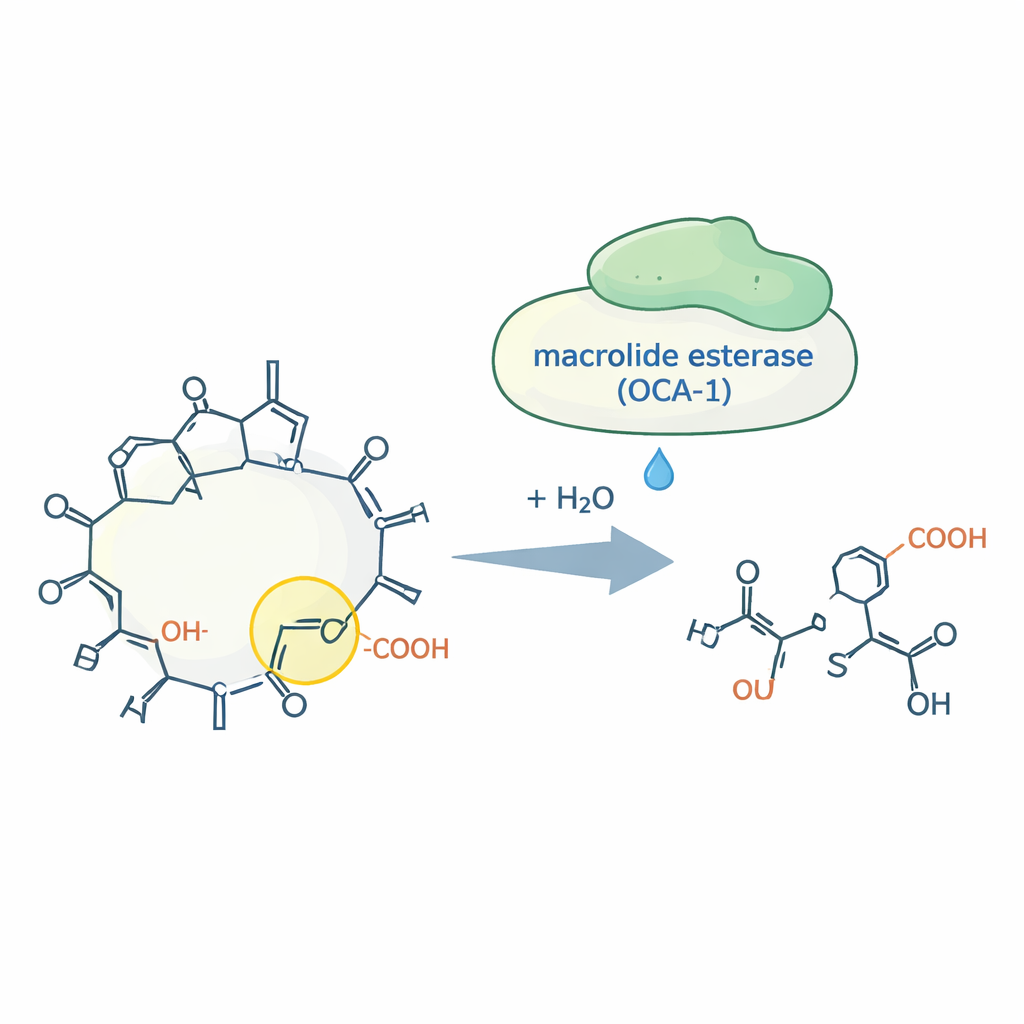
To see what these genes actually do, the team inserted them into lab strains of Escherichia coli and tested how the bacteria responded to 12 different macrolide drugs. All three enzymes increased resistance to tylosin, a veterinary macrolide, and follow‑up assays showed that they could physically degrade several 16‑membered macrolides. OCA‑1 was the most versatile, inactivating five drugs used in both animals and humans. Figure 2. Using purified OCA‑1, the researchers measured how quickly it broke down each antibiotic and found clear preferences: tylosin was destroyed within 30 minutes, while some human medicines, like spiramycin and leucomycin A1, degraded more slowly. Mass spectrometry confirmed that the enzyme adds water across specific chemical bonds in the drug, consistent with its role as an esterase.
Zooming in on the molecular machinery
Computer‑based protein structure predictions revealed that NOD‑1, OCA‑1, and OCB‑1 resemble known enzymes from a broader family called α/β‑hydrolases. Their overall shapes and active sites suggested a classic three‑part “catalytic triad” centered on a key serine amino acid. Molecular docking and targeted mutation experiments pinpointed one residue, serine 102 in OCA‑1, as essential. When the researchers swapped this serine for another amino acid, the modified enzyme completely lost its ability to break down macrolides and no longer provided antibiotic resistance to E. coli, confirming the molecular mechanism.
Genes on the move and global implications
Beyond how the enzymes work, the authors examined where their genes sit in cyanobacterial genomes. They found the esterase genes in species from hot springs, wetlands, and terrestrial crusts across multiple countries. Importantly, these genes often appeared next to mobile genetic elements—small DNA segments that can hop between locations and sometimes between species—as well as other antibiotic resistance genes. Very similar gene neighborhoods were found in strains from distant places like China and Slovakia, suggesting that mobile DNA may already be helping these resistance genes spread. The fact that such genes show up in regions with high environmental macrolide pollution strengthens the concern that lingering antibiotic residues help select for and concentrate resistance in cyanobacterial communities.
What this means for people and the environment
For a non‑specialist, the key takeaway is that cyanobacteria are not just troublesome bloom‑formers; they are also potential factories and warehouses for antibiotic resistance. This study provides the first detailed evidence that cyanobacteria carry active enzymes capable of neutralizing multiple clinically important macrolide drugs, and that the corresponding genes sit in genomic contexts that favor movement between microbes. As climate change and nutrient pollution drive more frequent cyanobacterial blooms, the chances increase that these resistance traits could pass to harmful bacteria in the same waters. Monitoring cyanobacterial genes and reducing antibiotic contamination in the environment will be critical steps in managing the long‑term spread of antibiotic resistance.
Citation: Tao, H., Zhou, L., Zhou, Y. et al. Functional characterization of macrolide esterase from cyanobacteria and their potential dissemination risk.
npj Antimicrob Resist4, 10 (2026). https://doi.org/10.1038/s44259-026-00182-y