Clear Sky Science · en
Polygenic score for C-reactive protein is linked to faster cortical thinning and psychopathology risk in adolescents
Why Some Teens Are More Vulnerable
Adolescence is a time when the brain is being rebuilt at high speed, and it is also when many mental health problems first appear. This study asks a simple but far-reaching question: could a person’s built-in tendency toward inflammation in the body quietly shape how the teenage brain matures, and in turn nudge behavior toward problems such as aggression or rule-breaking?
Genes, Inflammation, and the Growing Brain
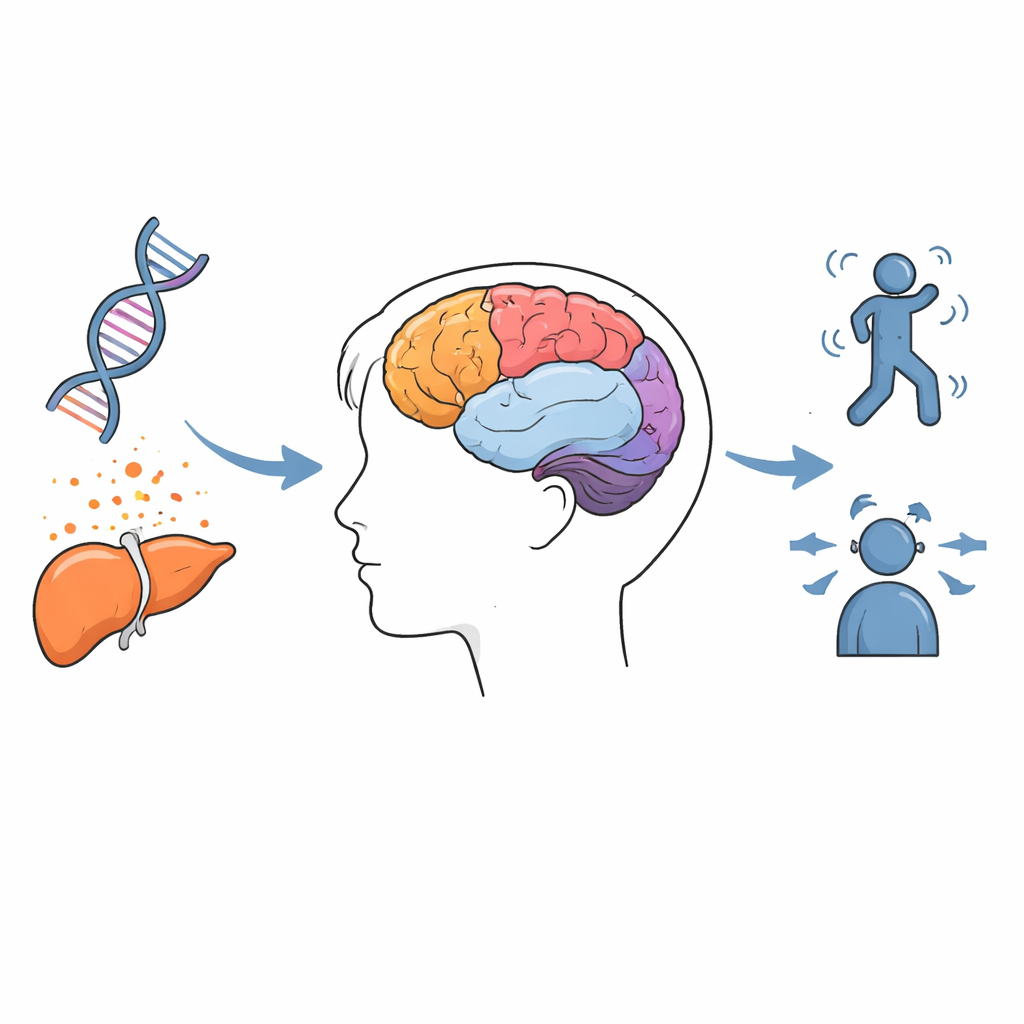
The researchers focused on C-reactive protein, a substance made by the liver that rises when the body is inflamed. Instead of measuring moment-to-moment levels in the blood, they used a “polygenic score” built from many small genetic variants that together indicate a lifelong predisposition to having higher CRP levels. This score is a stable readout of someone’s baseline tendency toward systemic inflammation. Using data from more than 11,000 children in the long-running Adolescent Brain Cognitive Development (ABCD) Study, they followed brain scans and mental health measures from ages about 10 to 12 to see whether this inherited inflammatory tendency was linked to how the cortex—the wrinkled outer layer of the brain—changed over time.
When the Cortex Thins Too Fast
In typical adolescence, the cortex gradually becomes thinner as unused connections are trimmed away and wiring is streamlined. In this study, teens with higher genetic scores for CRP showed faster thinning of the cortex over a two-year period, especially in deep regions of the temporal lobe and the insula, areas involved in processing emotions, body signals, language, and memories. The effect was modest but reliable, and it held across youths with different genetic backgrounds. These changes were not seen in response to reported early-life infections alone, suggesting that the genetic drive toward inflammation plays a distinct role in shaping brain structure during this sensitive window.
Links to Behavior and Mood
The team also examined how these biological factors related to mental health symptoms reported by caregivers. Youth with higher inflammatory genetic scores tended to show more “externalizing” problems at baseline—behaviors such as aggression, acting out, and rule-breaking—regardless of age or infection history. Early-life infections in the first year of life were independently tied to higher depression and externalizing scores, but they did not appear to change the pace of cortical thinning or interact with genetic risk. Using statistical models that follow pathways between variables, the researchers found that part of the link between the CRP genetic score and later externalizing behavior ran through overall cortical thinning: teens with higher genetic risk tended to have greater thinning, which in turn was associated with more behavior problems. This indirect pathway explained a small but meaningful fraction of the overall effect.
Hidden Chemical Pathways in the Brain
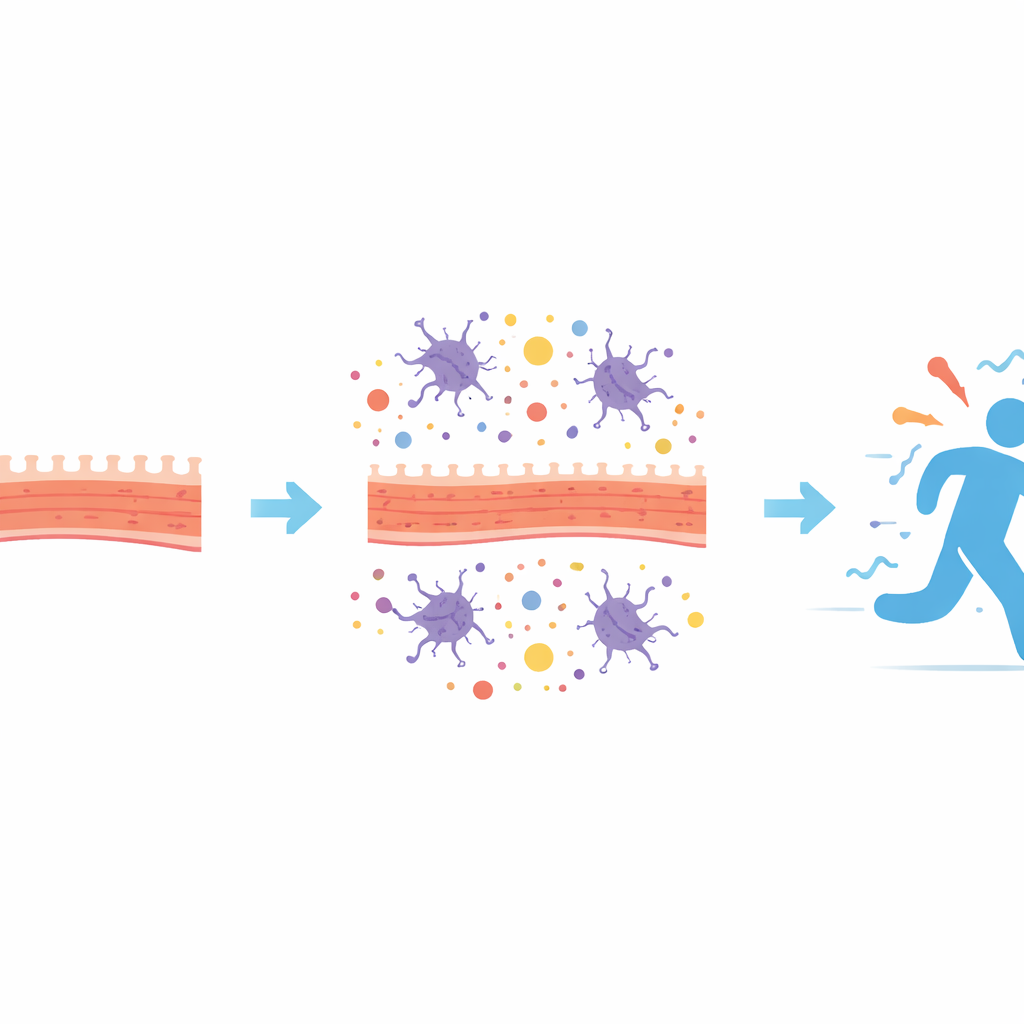
To gain clues about how inflammation might alter brain function, the study compared the regions most affected by thinning with maps of various brain chemical systems measured by advanced imaging in adults. Areas where thinning tracked most strongly with the CRP genetic score tended to overlap with regions rich in receptors for serotonin, GABA, cannabinoids, and glutamate—chemical messengers that help regulate mood, motivation, and impulse control. These overlaps did not all survive the strictest statistical corrections, but they hint that immune-related genes may influence brain maturation partly by disrupting these signaling systems, rather than through structure alone.
What This Means for Teens and Their Futures
For non-specialists, the core message is that a built-in tendency toward higher inflammation appears to nudge the teenage brain toward slightly faster “pruning” in regions that help control emotions and behavior, and that this shift is linked to a higher risk of acting out. Early infections also add to behavioral and mood risk, but by different routes. No single gene or infection determines a young person’s fate; the effects are small and unfold alongside family life, stress, and many other influences. Still, the findings strengthen the idea that the immune system is an important player in mental health. They point toward the possibility that, in the future, identifying youth with higher inflammatory risk and supporting them with lifestyle changes or anti-inflammatory strategies could help reduce the chances that normal growing pains turn into lasting psychiatric disorders.
Citation: Zheng, H., Savitz, J., Haroon, E. et al. Polygenic score for C-reactive protein is linked to faster cortical thinning and psychopathology risk in adolescents. Nat. Mental Health 4, 427–438 (2026). https://doi.org/10.1038/s44220-026-00585-w
Keywords: adolescent brain development, inflammation and mental health, cortical thinning, polygenic risk, externalizing behavior