Clear Sky Science · en
Canopy closure and intensifying climate extremes drive understory species loss over 25 years of forest monitoring
Why this forest story matters
Walk into a forest and most eyes go straight to the towering trees. But the real bustle of life often happens closer to your boots, in the carpet of herbs, grasses, and small shrubs that make up the forest floor. This study followed that hidden world in Italian forests for 25 years, asking a simple but crucial question: as the climate becomes harsher and tree canopies grow denser, what happens to the plants living in the shade? The answer helps us understand how forests will support biodiversity, store carbon, and protect human well‑being in the decades to come.
Watching the forest floor over decades
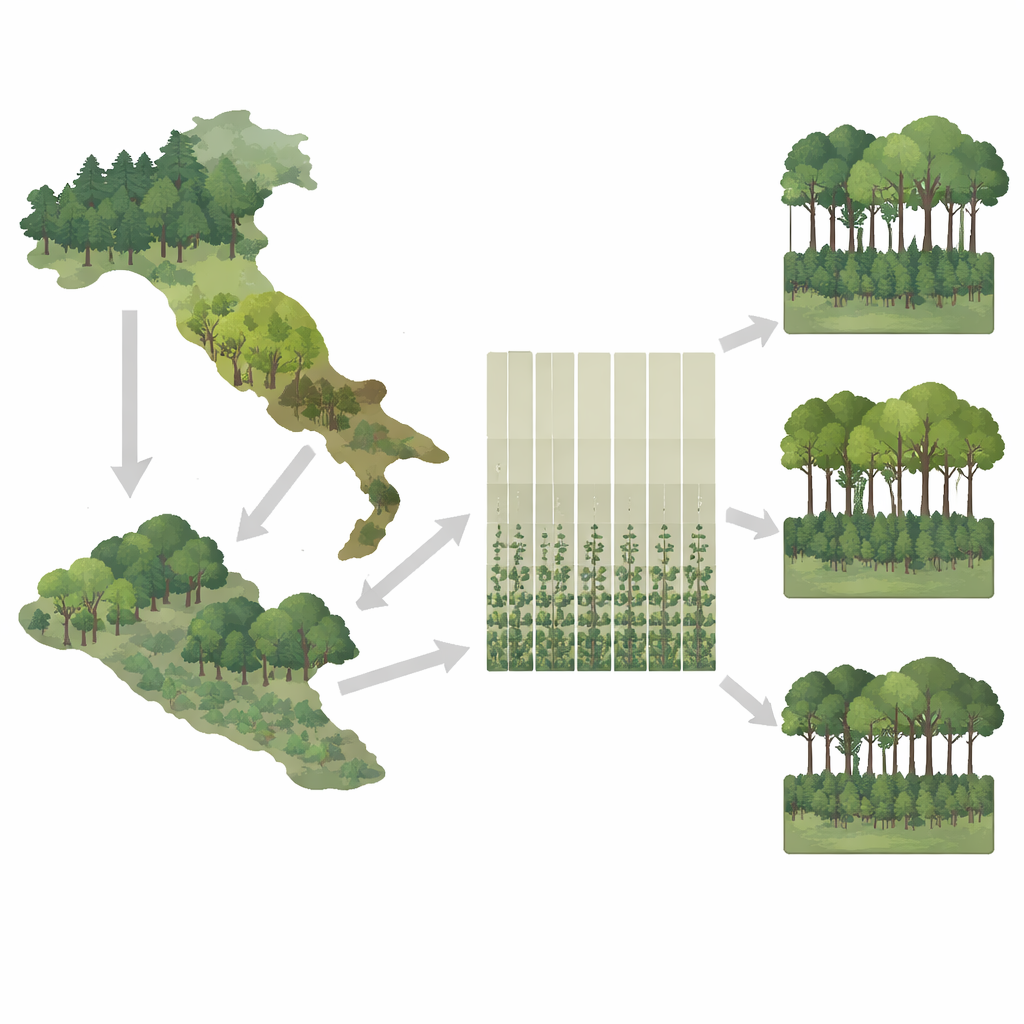
To track change, researchers relied on a network of 31 permanent monitoring plots scattered from the Alps to the Mediterranean coast. These plots, each carefully fenced and repeatedly surveyed, form part of a European program that checks how air pollution, drought, and other stresses affect forests. Instead of taking a one‑off snapshot or revisiting rough locations, the team returned to exactly the same subplots from 1999 to 2023, recording every vascular plant shorter than half a meter. They grouped the sites into four broad forest types: alpine conifer forests, cool beech forests, warmer oak forests, and drought‑adapted Mediterranean evergreen forests. This setup allowed them to compare how different kinds of forests respond to the same broad forces of global change.
Where plant variety is slipping away
Across this quarter‑century, three of the four forest types lost species from their understory. Alpine conifer, temperate beech, and oak forests all showed clear declines in how many plant species grew beneath the trees. Only the Mediterranean evergreen forests, already accustomed to summer drought and with relatively stable tree cover, maintained a steady number of understory species. That stability, however, does not mean nothing is changing: turnover in which species appear from year to year still increased in Mediterranean sites, suggesting a quiet reshuffling behind the scenes even while the overall tally of species holds steady.
Closing roofs and harsher weather
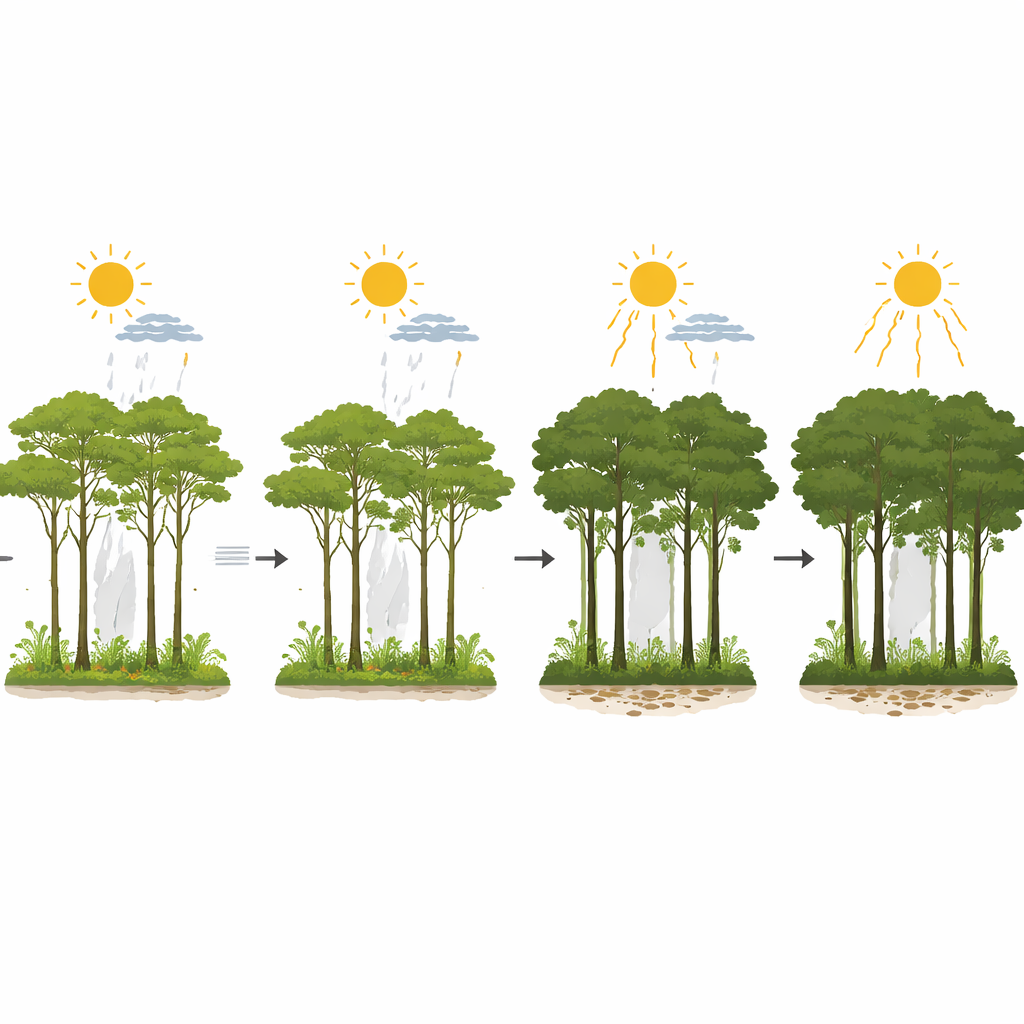
Why are some forest floors losing variety while others hold on? A major culprit is the slow but steady closing of the canopy in alpine and temperate forests. As past logging has ceased and trees have matured, their crowns now block more light. The study found that greater tree and shrub cover went hand in hand with fewer understory species, especially in high‑elevation conifer and cool beech stands. At the same time, the researchers linked declines in temperate forests to more frequent hot days, longer dry spells during the growing season, and more erratic rainfall through the year. These climatic extremes—rather than simple changes in average temperature or total rainfall—appear to do the most damage, pushing communities toward species that tolerate heat and drought and squeezing out those that cannot keep up.
Hidden reshuffling behind the numbers
Counting species is only part of the story. The team also asked how community composition changed through time: are species simply trading places, or are forests becoming poorer subsets of what they once were? By separating “turnover” (replacement of some species by others) from “nestedness” (net loss without replacement), they showed that alpine and temperate forests are experiencing both replacement and long‑term filtering. Over the years, some plots now host communities that are thinner versions of their former selves, with fewer species overall. In contrast, Mediterranean forests behave more like a carousel: species come and go between one survey and the next, but there is no strong long‑term drift toward loss or gain in richness.
What this means for the future of forests
For non‑specialists, the key message is that the health of a forest cannot be judged by its trees alone. In many Italian alpine and temperate woods, the leafy roof has grown thicker just as heatwaves and dry spells have intensified, and together these trends are gradually thinning the vibrant layer of plants on the forest floor. Mediterranean forests, already adapted to drought and with more stable canopies, currently show more resilience, though their internal reshuffling suggests they too may face thresholds in a warming climate. The study highlights the value of long‑term, plot‑based monitoring to detect these slow changes and to guide forest management that balances canopy cover, microclimate, and biodiversity. Protecting the quiet diversity under our feet may be just as important as safeguarding the trees above.
Citation: Francioni, M., Bricca, A., Andreetta, A. et al. Canopy closure and intensifying climate extremes drive understory species loss over 25 years of forest monitoring. npj biodivers 5, 13 (2026). https://doi.org/10.1038/s44185-026-00126-9
Keywords: forest understory, canopy closure, climate extremes, biodiversity change, Mediterranean forests