Clear Sky Science · en
Vietnamese Odonata: bridging global biodiversity, ecological, and conservation gaps in a changing world
Why dragonflies matter to all of us
Dragonflies and damselflies are more than just flashes of color over ponds. In Vietnam, nearly 500 species knit together rivers, rice fields, forests, and cities. They help control mosquitoes, feed birds and bats, and shuttle both nutrients and pollutants between water and land. This review pulls together two centuries of research on these insects in Vietnam and shows how they can serve as early-warning sentinels for the health of tropical ecosystems in a rapidly warming, heavily altered world. 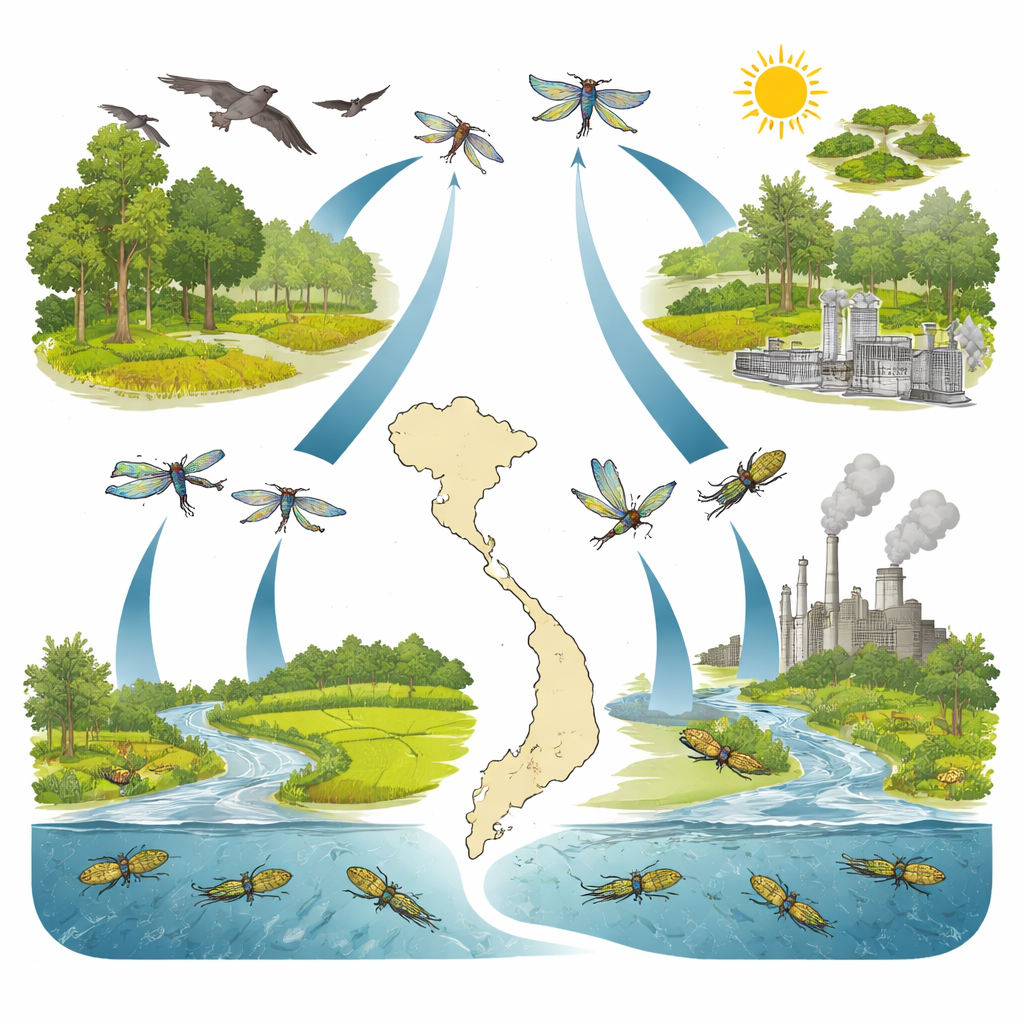
Life between water and sky
Dragonflies and damselflies spend most of their lives underwater as larvae before emerging as flying adults. In lakes, streams, wetlands, and even rice paddies, the larvae are mid-level predators that eat mosquito larvae, small crustaceans, worms, tiny fish, and tadpoles, while also providing food for larger fish. When they transform into adults, they carry with them energy-rich fats, especially omega‑3 fatty acids, that become vital fuel for birds, bats, and other insect‑eating animals. At the same time, they can also move chemical pollutants such as pesticides and pharmaceuticals from contaminated waters into terrestrial food webs, showing both the bright and dark sides of the links between water and land.
A biodiversity treasure under pressure
Vietnam is one of the world’s hotspots for dragonflies and damselflies, with 493 species recorded as of mid‑2024 and dozens more described in just the past decade. Yet this richness is unevenly known. Only about 15% of species are widespread generalists that tolerate many habitats. More than a hundred are known from just a single location, often cool mountain streams or small wetlands, making them highly vulnerable to local damage. Research has focused mainly on adults and on naming new species, while larvae, distributions, and ecological roles remain poorly documented. Many species have not been seen in decades or are known from a single specimen, raising the possibility that some may vanish before scientists can study or even properly describe them.
Climate and human changes reshaping their world
Vietnam has warmed by more than half a degree Celsius since 1960, with more heatwaves, shifting rains, and stronger storms. These shifts are already reshaping the seasonal cycles and habitats that dragonflies and damselflies depend on. In the drought‑prone Central Highlands, temporary ponds and swamps can dry before larvae complete development, forcing faster growth and leading to smaller, less fertile adults. In the north, species in cool mountain streams must cope with both summer heat spikes and freezing winter events, relying on strategies such as dormancy to survive. At the same time, deforestation, the replacement of primary forests by plantations, pollution from intense pesticide use, hydropower dams, and expanding cities all fragment and degrade freshwater habitats. These pressures can act together: warmer water, poorer habitat, and toxic chemicals combine to make larvae less resilient and push sensitive species toward local extinction.
A new toolkit to watch and protect
To move from scattered species lists to genuine protection, the authors propose an integrated research and conservation framework built around Vietnamese Odonata. First, they call for strengthening taxonomy of both larvae and adults using modern DNA tools and, for key species, whole‑genome sequencing, to clarify which species exist and how they are related. Second, they highlight long‑term monitoring that mixes classic field surveys with environmental DNA from water samples, remote sensing of land and water changes, automated imaging, and large‑scale citizen science using smartphones. Third, they urge more experiments on how these insects grow, fly, reproduce, and cope with stressors such as heat, drought, and pollution, using multi‑omics approaches to uncover the mechanisms behind their responses. Finally, they suggest applying machine learning to combine all these data and forecast which species and places are most at risk under future climate and land‑use scenarios. 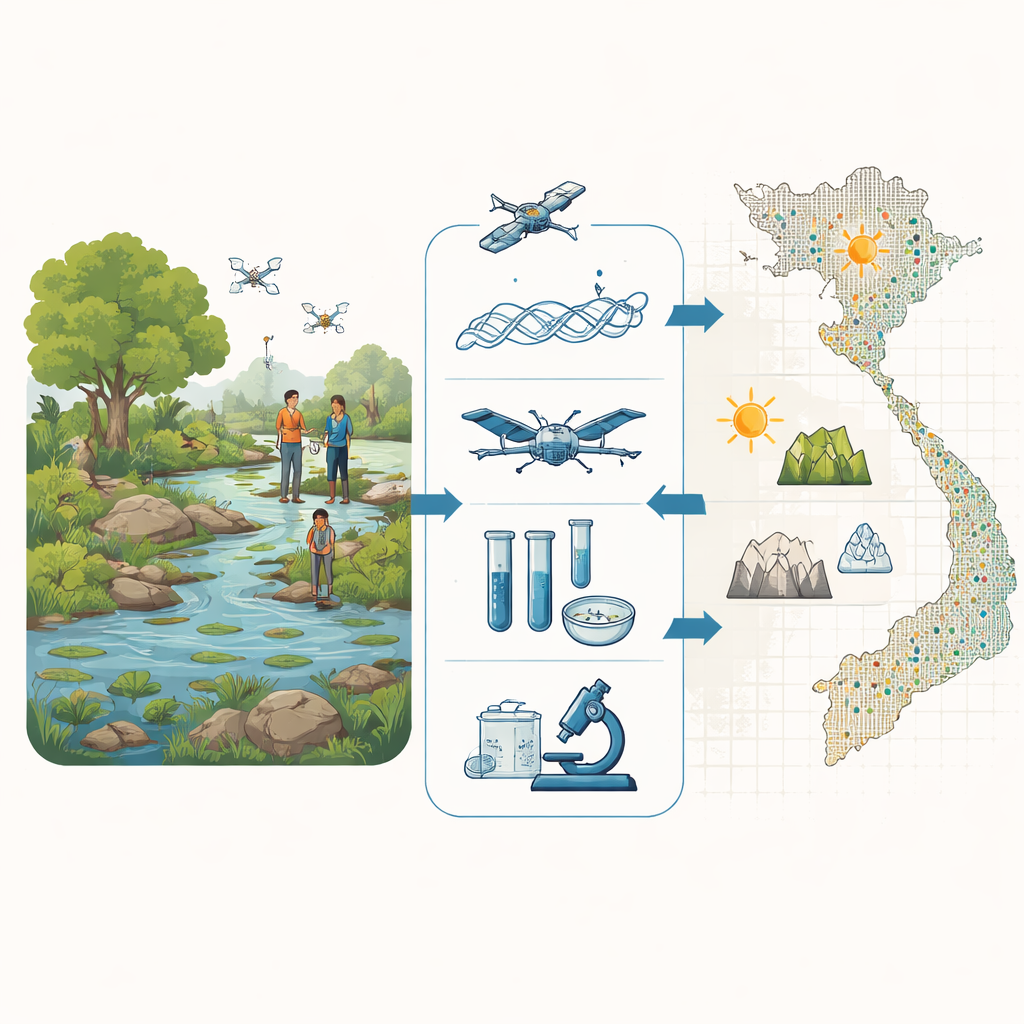
What this means for people and the planet
The review concludes that Vietnam’s dragonflies and damselflies can serve as powerful sentinels and ambassadors for tropical freshwater ecosystems worldwide. By closing gaps in basic knowledge, building nationwide monitoring systems, and linking field observations to advanced genetic and analytical tools, Vietnam can better protect its own rich odonate fauna while contributing data and methods useful from Southeast Asia to the Amazon. Safeguarding these insects helps maintain mosquito control, supports birds and bats, and preserves the invisible flows of energy that tie rivers to forests. In practical terms, the authors argue that investing in odonate research and conservation is a concrete way to advance global biodiversity goals and keep tropical waters and landscapes thriving in a changing climate.
Citation: Phan, Q.T., Nguyen, H.N. & Dinh, K.V. Vietnamese Odonata: bridging global biodiversity, ecological, and conservation gaps in a changing world. npj biodivers 5, 12 (2026). https://doi.org/10.1038/s44185-026-00124-x
Keywords: dragonflies, Vietnam biodiversity, freshwater ecosystems, climate change impacts, conservation science