Clear Sky Science · en
A systematic review on mindfulness-based immersive interventions in depressive disorders
Why virtual reality might help with low mood
Depression can make it hard to focus, break out of negative thought loops, or stick with therapy long enough to feel better. This review paper looks at a new twist on an old idea: combining mindfulness training with immersive technologies such as virtual and augmented reality. The authors ask whether placing people inside carefully designed digital environments can make mindfulness more engaging, easier to learn, and more effective for easing depressive symptoms.
New tools for an old problem
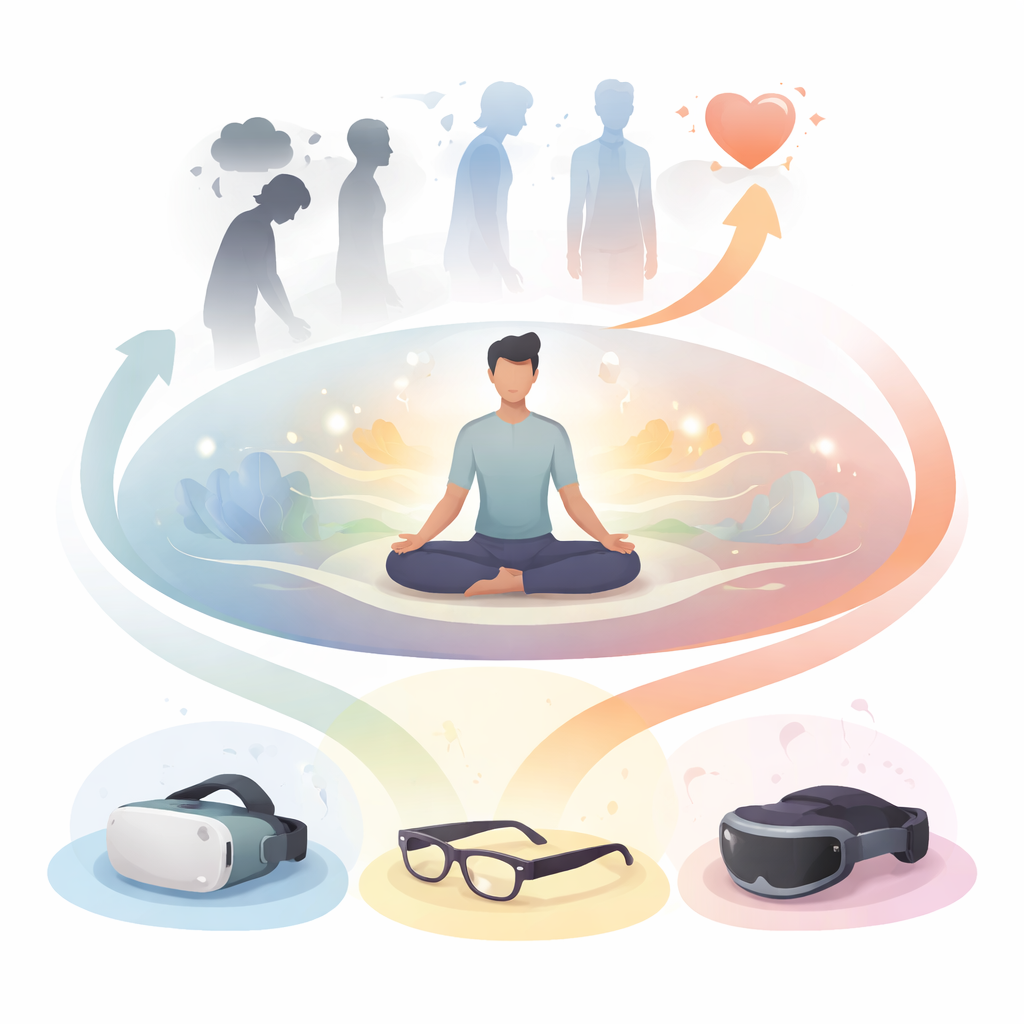
Mindfulness-based interventions teach people to pay attention to the present moment in a gentle, non-judgmental way. They can reduce relapse in depression, but traditional courses are long, repetitive, and mentally demanding, which leads many patients to drop out. Mindfulness-based immersive interventions (MBIIs) try to solve this by using technologies like virtual reality headsets, augmented reality overlays, or mixed reality environments. These systems surround users with calming sights and sounds, sometimes paired with gentle vibrations or real-time feedback from their breathing or heart rate, to anchor attention and reduce mental “wandering” into worry and rumination.
What the researchers examined
Following strict systematic-review guidelines, the authors searched six major medical and psychological databases plus Google Scholar, focusing on studies from 2016 to 2025. They included only research where people had depressive symptoms and where mindfulness was combined with immersive technology. After screening 670 records and excluding low-quality or irrelevant work, 37 studies remained. About half were randomized controlled trials, and the rest were pilot or observational studies. Together, they covered more than 2,000 participants, from adolescents and students to older adults and people with cancer, psychosis, or chronic pain.
How these digital mindfulness programs were used
The studies varied widely in how they delivered MBIIs. Most used virtual reality mindfulness, sometimes on its own and sometimes integrated with other treatments such as cognitive-behavioral therapy, exercise programs, or brain-stimulation techniques. Some trials offered a single brief session lasting 10–45 minutes; others ran multi-week courses. Immersive content ranged from guided meditations on a virtual beach or in a “therapeutic garden” to interactive scenarios that practiced coping skills or encouraged positive future thinking. A few systems included biofeedback, adjusting the scene based on heart-rate variability or breathing patterns so that calmer physiology produced more soothing experiences.
What changed for mood, mind, and body
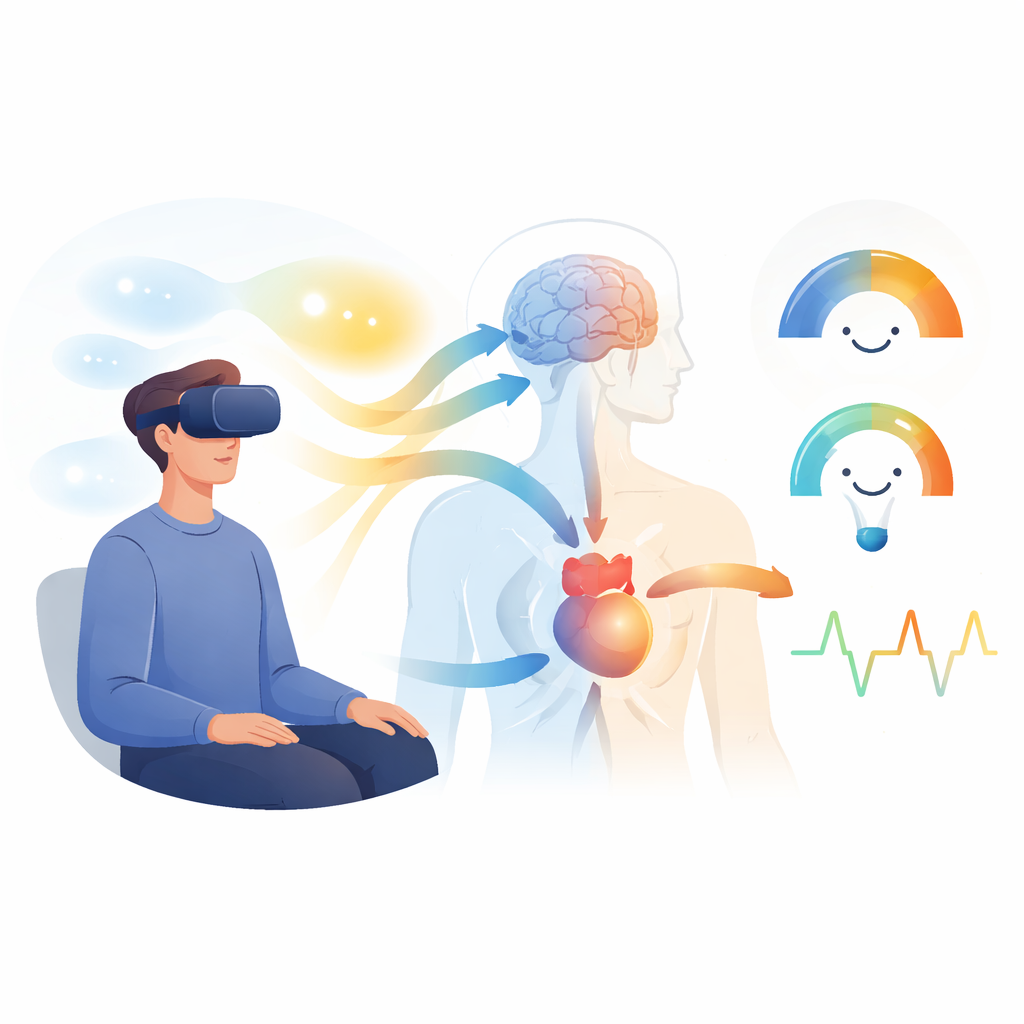
Around two-thirds of the studies reported larger improvements in depression or anxiety symptoms for MBIIs compared with the alternatives they were tested against, which included standard care, waitlists, exercise, music or nature videos, and traditional mindfulness classes. Many trials also found that immersive versions led to better concentration, emotion regulation, and self-awareness, and that people were more willing to complete the program when it was delivered through virtual reality. Nearly nine in ten studies that measured bodily signals, such as heart-rate variability or skin conductance, reported shifts consistent with calmer, more flexible stress responses. Benefits appeared strongest in people under high distress, such as patients undergoing chemotherapy, while results were more mixed in mildly depressed student groups.
Gaps, challenges, and next steps
Despite promising trends, the evidence is far from definitive. The reviewed studies used different types of headsets, session lengths, and control conditions, making them hard to compare. Many relied almost entirely on self-report questionnaires, with only a minority combining these with brain or physiological measures. Few studies followed participants for more than a few months, so it is unclear how long the gains last. Cost, technical complexity, and motion sickness are practical barriers, and it is still not fully understood whether people actually build lasting mindfulness skills through these digital experiences or simply feel better for a short time while using them.
What this means for people living with depression
Overall, the review suggests that immersive mindfulness could become a useful addition to the depression-care toolkit rather than a magic cure. By making practice more vivid and engaging, MBIIs may help some people stick with therapy, feel calmer in their bodies, and loosen the grip of negative thinking—especially when depression is severe or linked to other health problems. To move from promising prototype to everyday clinic use, future studies will need to standardize programs, test them against the best existing treatments, probe how they work in the brain and body, and show they are worth the cost. If those hurdles can be cleared, stepping into a virtual calm space may become a routine part of how we care for mood and mental health.
Citation: Tan, P., Wu, Y., Chen, X. et al. A systematic review on mindfulness-based immersive interventions in depressive disorders. npj Mental Health Res 5, 22 (2026). https://doi.org/10.1038/s44184-026-00205-6
Keywords: virtual reality, mindfulness, depression, digital mental health, immersive therapy