Clear Sky Science · en
Designing a systemic intervention for student loneliness and social connectedness using a mixed-methods, co-creation approach
A Hidden Campus Challenge
Starting university is often sold as the best years of your life: new friends, packed social calendars, and a buzzing campus. Yet many students quietly feel lonely and disconnected, and may blame themselves for not “fitting in.” This paper shows that loneliness is not just a personal failing or a matter of shyness. It is also shaped by how universities are built and run—and it describes a new, student-designed app that treats loneliness as a whole-campus problem rather than an individual one.
Why Feeling Connected Matters
Humans are wired to belong. Strong, satisfying relationships are tied to happiness, physical health, and academic success. But research suggests that more than a third of university students feel lonely, and that this sense of disconnection is linked with depression, anxiety, risky behaviors, and even future unemployment. Crucially, loneliness is not the same as simply being alone: it is the painful feeling that your relationships are not enough in number or in depth. Students can sit in crowded lecture theatres, attend parties, and still feel profoundly isolated. The authors argue that to understand this, we must look beyond individual students to the social fabric of the university itself.
What Students Say About Campus Life
Through focus groups and a survey at a UK university, the research team—working closely with paid undergraduate co‑researchers—asked students how they experience connection and disconnection. Students described two main routes to connection. Passive connections emerged almost automatically through courses, shared accommodation, and simply being on campus, soaking up its noise and energy. Active connections required effort: joining societies, attending events, or seeking work and volunteer roles. Both routes helped, but neither guaranteed that students felt they truly belonged. Some felt “connected yet lonely,” surrounded by people but lacking deeper bonds. Others were held back by anxiety about meeting new people, financial pressures, commuting, disability, and an alcohol‑heavy social scene that made many events feel off-limits.
The Campus and Social Media: Help and Hindrance
Students repeatedly highlighted the power of physical spaces. A lively, welcoming campus with places to just “be” made them feel part of something bigger; a quiet, closed, or bar‑dominated campus did the opposite. The COVID‑19 lockdowns drove this home: when campus closed, casual encounters vanished and many relationships withered, even though students were still connected online. Social media played a complicated role. It helped people find coursemates, coordinate group work, and discover events. At the same time, it fed constant comparison and fear of missing out, and some students avoided mainstream platforms altogether because they felt “toxic” or unsafe. Many wanted a way to tap into campus life without wading through endless feeds or exposing themselves on public platforms.
Co‑Creating a Different Kind of App
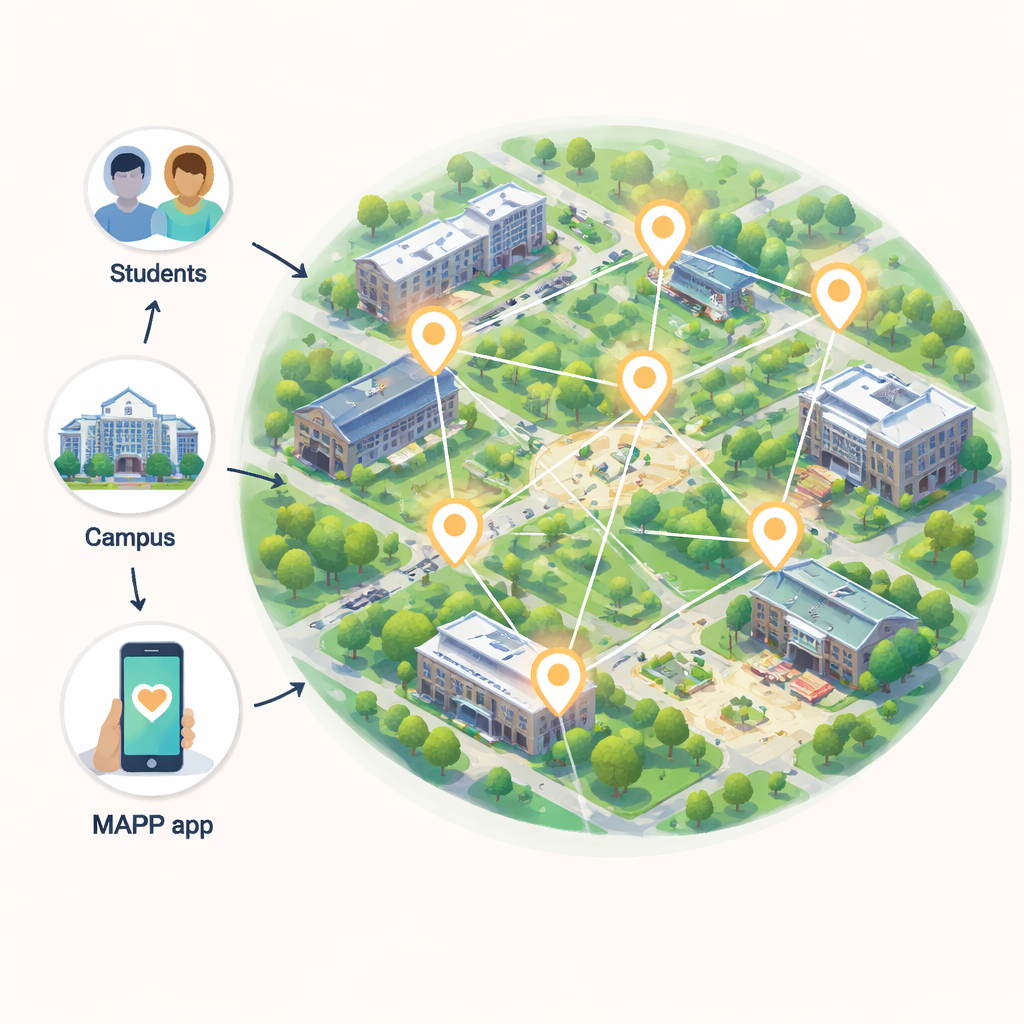
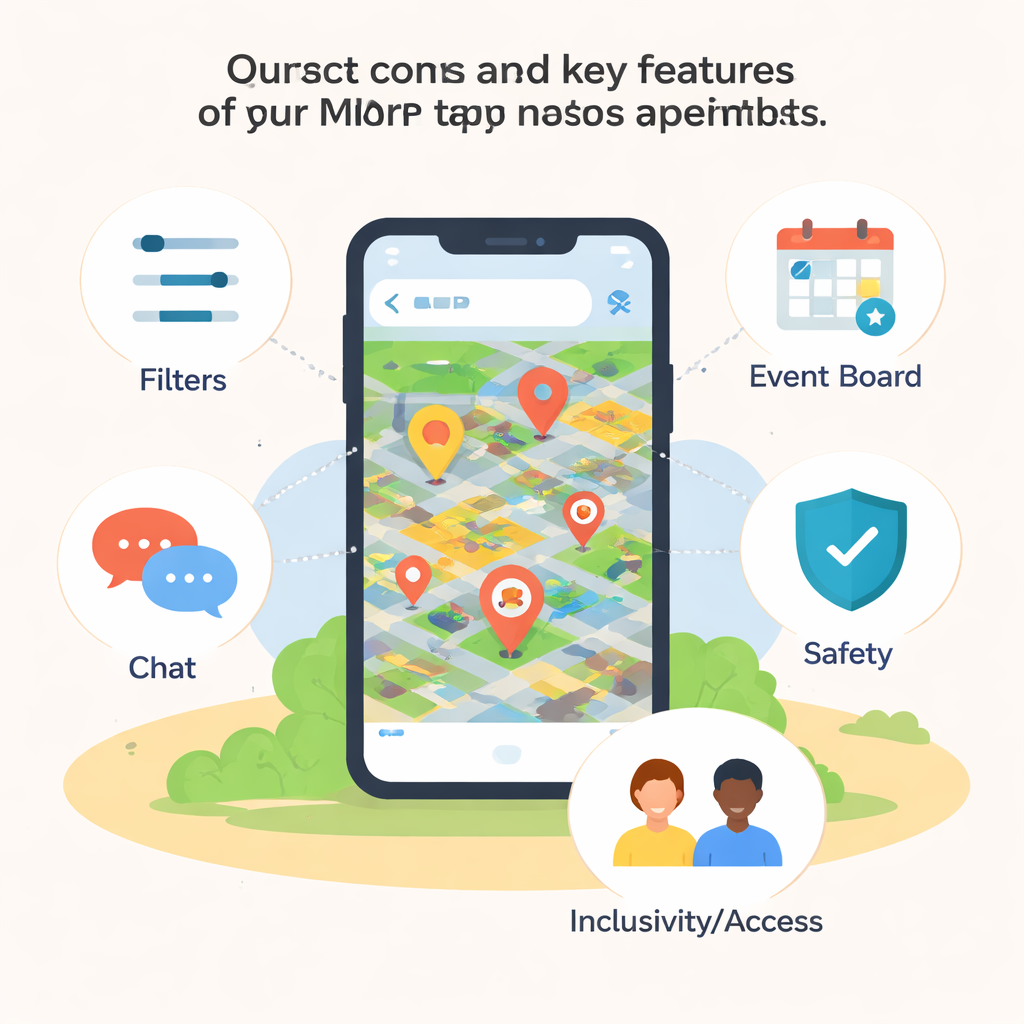
In a series of workshops, students helped design a new digital tool called MAPP. Rather than centering on individual profiles and friend counts, MAPP revolves around an interactive map of the university campus that displays live social opportunities: events, society meetings, study groups, and informal gatherings. Students imagined filters to sort events by topic, course, or alcohol‑free status; message boards and chat to coordinate plans; reminders and calendars to make attending easier; and strong safety features such as verified university logins, privacy controls, and options to limit who can see certain posts. They also wanted the design to be bright, simple, and inclusive, and for the app to encourage—not replace—face‑to‑face contact.
Seeing the University as a Social System
MAPP’s most important shift is in how it frames the problem. Instead of trying to “fix” lonely individuals, it makes the university’s social system visible and easier to navigate. By turning the campus map into a living picture of the university’s social network, the app helps students notice opportunities they might otherwise miss and lowers the effort needed to join in. At the same time, it gives university leaders a new window onto where social life is thriving and where it is thin, helping them adjust spaces and events to be more inclusive. In simple terms, the paper concludes that student loneliness is not just about who you are, but where you are and what your institution makes possible. A tool like MAPP aims to change the environment so that feeling part of the community becomes the norm, not the exception.
Citation: Homer, S.R., Milne-Ives, M., Cornford, E. et al. Designing a systemic intervention for student loneliness and social connectedness using a mixed-methods, co-creation approach. npj Mental Health Res 5, 12 (2026). https://doi.org/10.1038/s44184-026-00191-9
Keywords: student loneliness, social connectedness, university campus, digital mental health, participatory design