Clear Sky Science · en
Associations of heat exposure with mental health and suicide in children and adolescents: a systematic review and meta-analysis
Hotter Days, Troubled Minds
Parents, teachers, and young people themselves are increasingly worried about how climate change might affect not just our bodies, but our minds. This study tackles a pressing question: as heat waves become more frequent and intense, are children and teenagers facing higher risks of mental health problems and even suicide? By pulling together evidence from around the world, the authors show that hotter days are linked to more emergency visits, hospital stays, and deaths related to mental health in people up to 24 years old.
Why Young Brains Feel the Heat
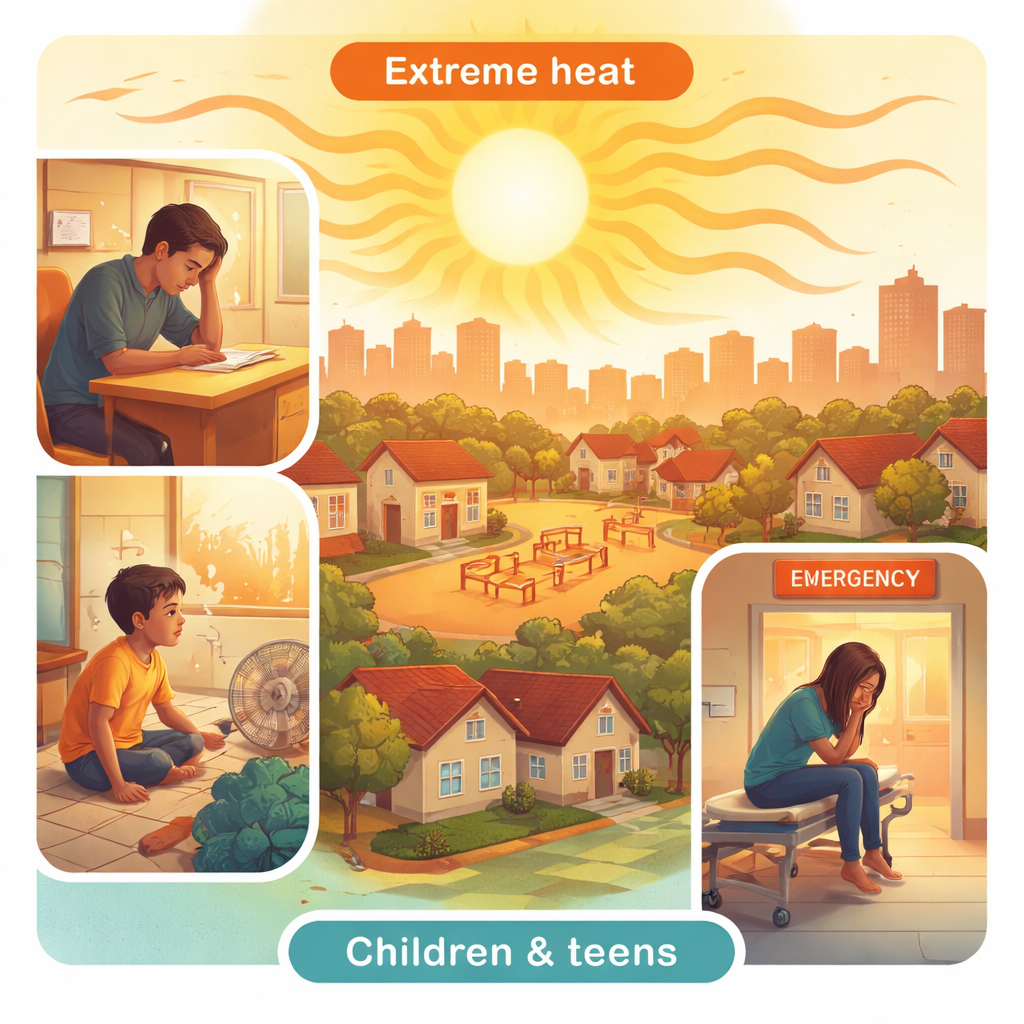
Childhood and adolescence are already critical years for emotional and social development, with roughly one in nine young people worldwide living with a mental disorder. The authors point out that today’s children are experiencing far more extremely hot days than previous generations, while also being more physically sensitive to heat and more reliant on adults for protection. High temperatures can keep kids indoors, cutting down on physical activity and outdoor play that usually support mental well-being. Hot bedrooms can disrupt sleep, and prolonged heat can interfere with the body’s cooling system and brain function, affecting mood, thinking, and behavior. On top of this, growing awareness of climate change can fuel anxiety about the future.
What the Researchers Looked At
The team conducted a systematic review and meta-analysis, which means they searched four major scientific databases and Google Scholar for all high-quality, peer-reviewed studies examining heat and mental health in children and young adults up to age 24. They ended up with 28 observational studies from 2007 to 2025, drawn mostly from high- and upper-middle-income countries such as the United States, China, Australia, Brazil, Canada, and several Asian and European nations. These studies tracked hospital visits, emergency department encounters, and deaths related to conditions like depression, anxiety, schizophrenia, other psychotic disorders, and suicide. Temperatures were measured using weather stations or gridded climate data and were compared across cooler and hotter days, heat waves, or percentile-based “extreme heat” thresholds.
What the Numbers Say
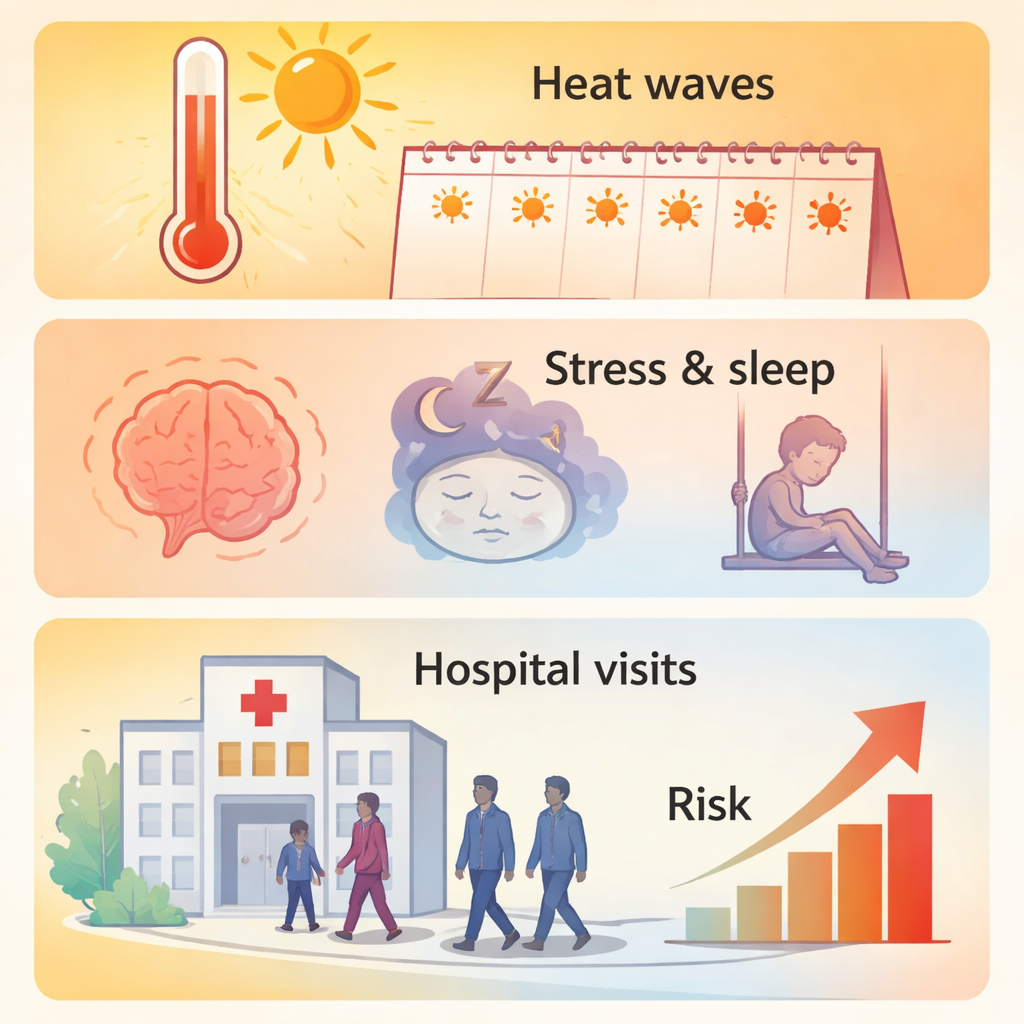
Across 18 studies that could be combined in a meta-analysis, the authors found a consistent pattern: hotter conditions meant more serious mental health problems. Compared with cooler days, high temperatures were linked to a 13% higher risk of hospital visits or admissions for all mental health disorders, a 14% higher risk for schizophrenia and similar psychotic illnesses, and an 18% higher risk for depression in young people. When all these conditions were combined into a single group, high heat was associated with a 12% increase in hospital use for mental health. For suicide, each 1 °C rise in daily average temperature was tied to about a 1% increase in the risk of death by suicide among children and adolescents. These effects appeared stronger when heat lasted several days, and similar patterns were seen whether studies used time-series or case-crossover designs.
How Certain Are These Findings?
The researchers carefully rated how much confidence we can place in the evidence using a standard grading system. They judged the overall evidence as moderate for links between high heat and both schizophrenia-like disorders and suicide, and as low for broader mental health disorders, depression, and anxiety. One reason is that many studies relied on relatively coarse temperature measurements, such as a single weather station for an entire city, which may blur the true exposure for individual children. Another is that most data came from wealthier countries, leaving major gaps in low-income regions that are likely to experience some of the most intense future heat. In addition, most studies focused on hospital-level problems, so milder but still important mental health issues are likely undercounted.
What This Means for Families and Policymakers
In plain terms, the study concludes that as temperatures rise, so do serious mental health risks for young people, including a small but measurable rise in suicide. This does not mean that every hot day will trigger a crisis, but it does suggest that heat is another environmental stressor that can push vulnerable children and adolescents closer to the edge. The authors argue that protecting youth mental health should be a central part of climate adaptation: cooler schools and playgrounds, better heat warnings and community support, and affordable access to cooling at home. They also call for more research in low-income countries and for early-life interventions that help build psychological resilience in a warming world.
Citation: Lai, K.Y., Bauermeister, S. & Sarkar, C. Associations of heat exposure with mental health and suicide in children and adolescents: a systematic review and meta-analysis. npj Mental Health Res 5, 7 (2026). https://doi.org/10.1038/s44184-026-00190-w
Keywords: extreme heat, youth mental health, climate change, suicide risk, children and adolescents