Clear Sky Science · en
Safeguarding the skilled trades: burnout, job satisfaction, and the risk of turnover in Ontario electricians
Why the future of electricians matters to everyone
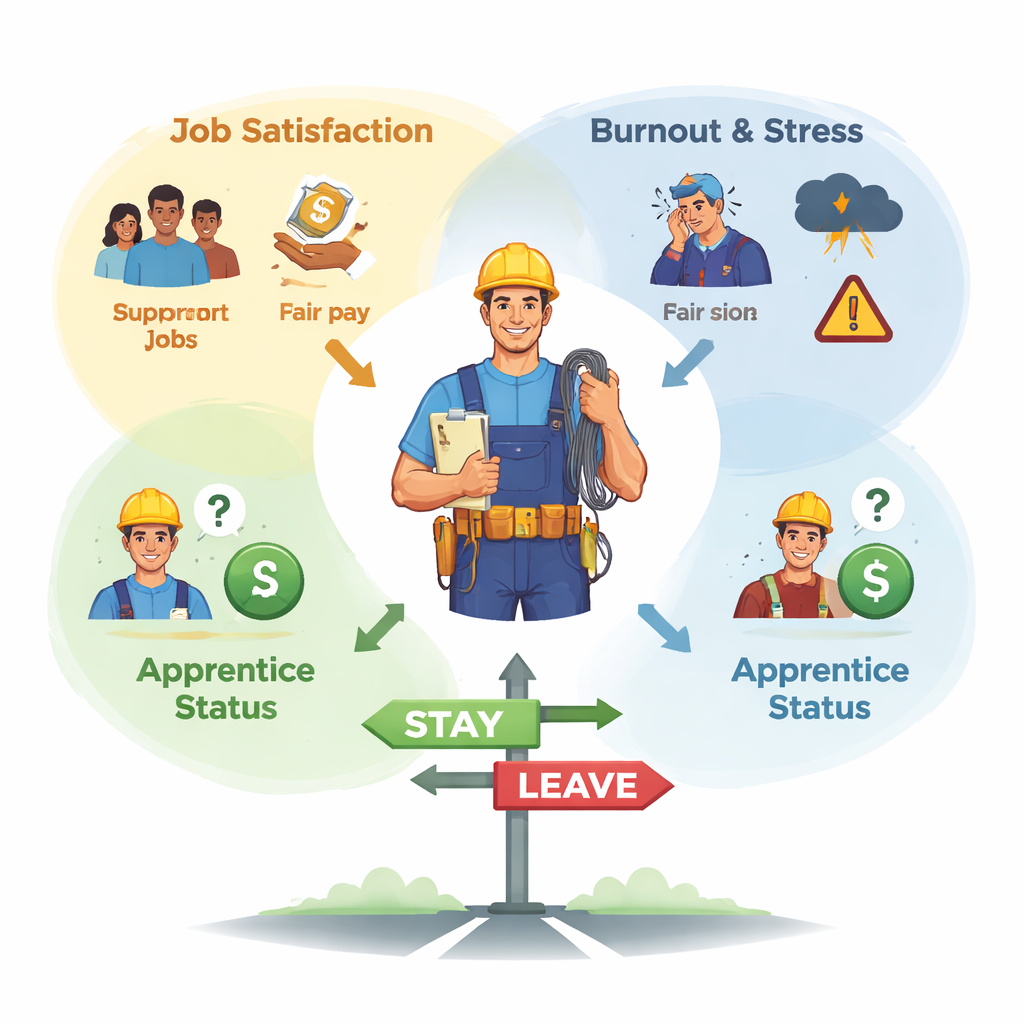
Across Ontario and much of the world, we depend on electricians to build and maintain the power systems behind homes, hospitals, schools, and transit. Yet the skilled trades are facing a serious worker shortage just as demand for new infrastructure is rising. This study looks closely at the mental health and job experiences of Ontario electricians to understand why some are thinking about leaving the field—and what might persuade them to stay.
Electricians under pressure
Electricians work in environments where physical danger and psychological strain often go hand in hand. Electrical contact has been responsible for a notable share of construction deaths in Ontario, and day-to-day work can involve long hours, harsh conditions, and tight deadlines. At the same time, the province and country are grappling with a large and growing gap between how many tradespeople are needed and how many are available. Losing experienced workers, or failing to keep new ones, threatens everything from housing projects to hospital upgrades.
Taking the pulse of a hidden workforce
To explore these issues, researchers surveyed 73 electricians and apprentices in Ontario between 2021 and 2023, in partnership with the Ontario Electrical League. Participants answered questions about who they are, how satisfied they feel with their jobs, how burned out they feel, and whether they plan to stay in their current position over the next five years. Burnout was measured as ongoing physical, emotional, and mental exhaustion; job satisfaction captured how positively workers viewed their jobs overall, including whether they would recommend the work to a friend. The team then used statistical models to see which factors were linked to a serious intention to leave.
Burnout is common, but satisfaction is the key signal
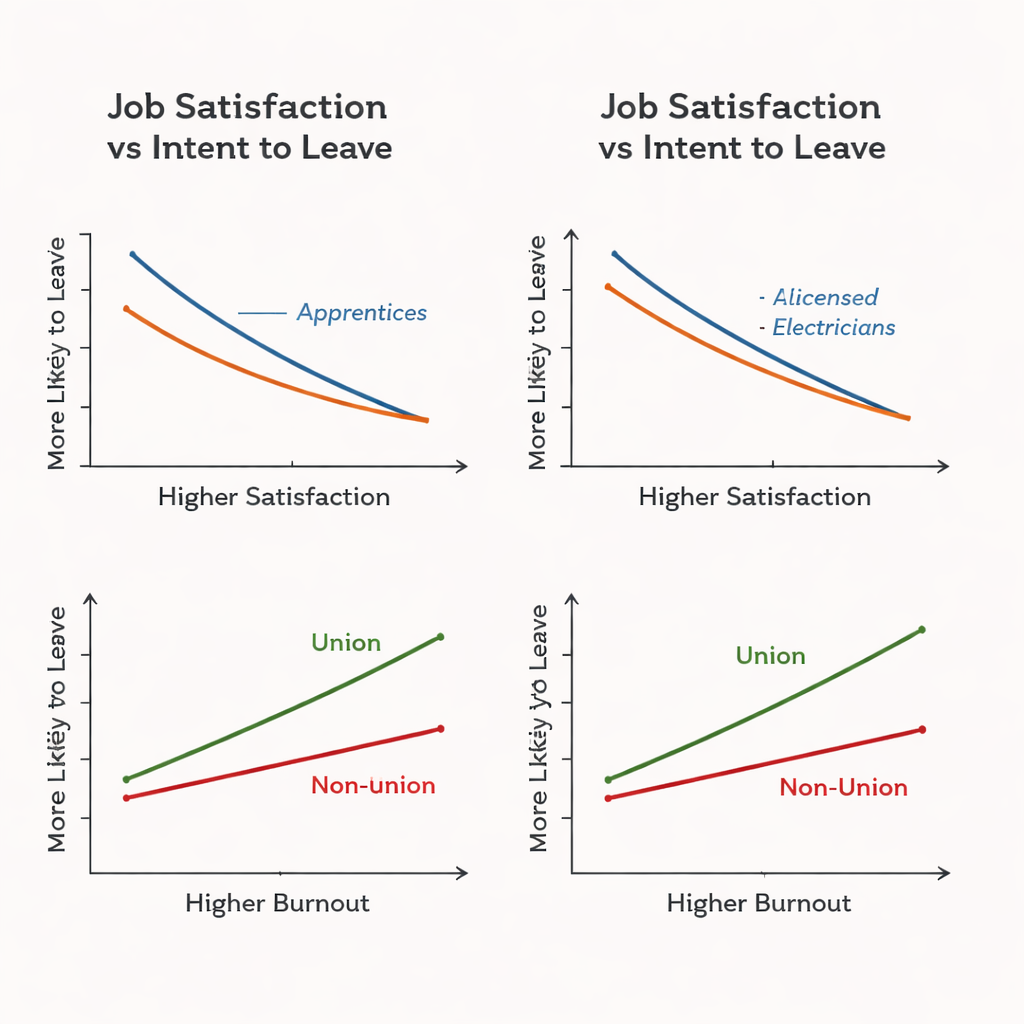
The picture that emerged was troubling but nuanced. Nearly one in three participants met the threshold for burnout, especially in their personal lives, showing that constant strain is common among these workers. Yet only about 14% said they planned to leave their current role within five years. When the researchers looked more closely, they found that burnout alone did not clearly predict who wanted to walk away. Instead, job satisfaction stood out: each step up in satisfaction was linked to a large drop in the odds of intending to leave. In other words, electricians who felt fairly treated, valued, and content with their work were much more likely to imagine a future in their current job, even when demands were high.
The vulnerable early years
Apprentices—workers still in training—emerged as a particularly at-risk group. About one third of the sample were apprentices, and they were more than six times as likely as fully licensed electricians to say they planned to leave their current job. Earlier research suggests that apprentices often face low pay, limited control over their tasks, bullying, and uncertainty about career progression. The study’s findings echo this reality: while satisfaction mattered, simply being at the apprentice stage seemed to carry its own risk of walking away. Subgroup analyses also hinted that satisfaction was a stronger anchor for licensed electricians and non-union workers than for apprentices or union members, suggesting that different groups respond differently to the same pressures.
What this means for keeping the lights on
For a layperson, the takeaway is straightforward: keeping electricians on the job is not just about reducing stress, but about making the work feel worthwhile and sustainable—especially for those just entering the trade. The study suggests that boosting job satisfaction through better mentoring, clearer career paths, safer and more respectful workplaces, and fairer pay could be one of the most effective ways to prevent costly turnover. At the same time, targeted support for apprentices may be crucial to preserving the pipeline of future licensed electricians. If these needs are ignored, shortages in the electrical trades could deepen, putting vital infrastructure projects—and the everyday reliability of our power—at risk.
Citation: Shahzad, M., Ledo, J.M., Azarmi, M. et al. Safeguarding the skilled trades: burnout, job satisfaction, and the risk of turnover in Ontario electricians. npj Mental Health Res 5, 4 (2026). https://doi.org/10.1038/s44184-026-00189-3
Keywords: electricians, skilled trades, burnout, job satisfaction, workforce retention