Clear Sky Science · en
Effects of mindfulness-based interventions on perceived stress among non-clinical adults: a systematic review and meta-analysis
Why Paying Attention Can Ease Everyday Strain
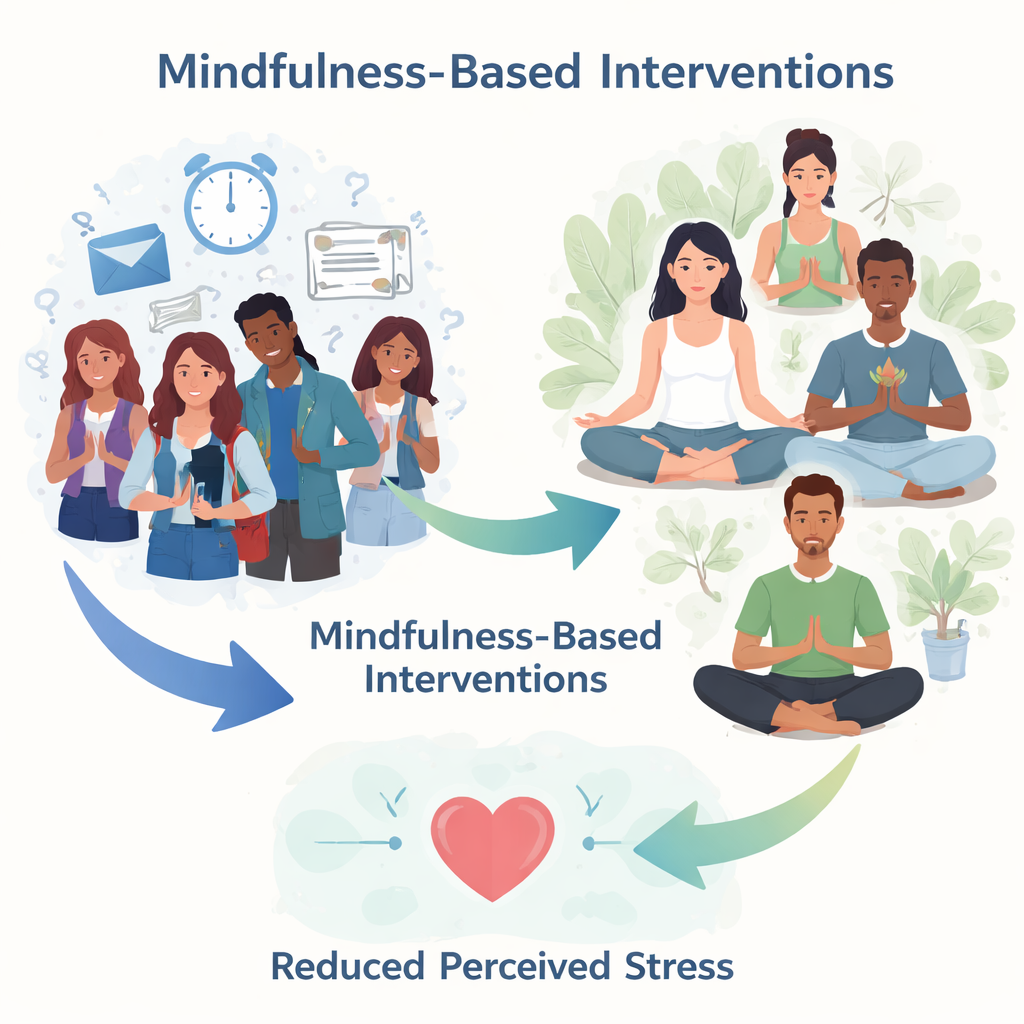
Many adults feel constantly on edge, juggling work, family, money, and health worries. While life’s demands may not disappear, how we experience them can change. This article looks at whether simple “paying attention” practices—known as mindfulness-based interventions—truly help everyday adults feel less stressed, not just people in therapy or with diagnosed conditions. By pulling together results from multiple rigorous trials, the authors ask a practical question: if ordinary people add structured mindfulness into their lives, do they actually end up feeling calmer?
What the Researchers Set Out to Test
The team focused on one clear idea: perceived stress, or how overwhelmed people feel, rather than how many problems they have on paper. To keep things consistent, they only included studies that measured stress with the same questionnaire, the Perceived Stress Scale, a widely used checklist of how often life feels “out of control.” They searched several major scientific databases for randomized controlled trials in which adults without diagnosed mental health conditions were assigned either to a mindfulness program or to some form of comparison group, such as a waitlist or basic health information. All participants had to be 18 or older and provide stress scores both before and after the program.
Who Took Part and What They Did
Seventeen trials involving 1,641 adults made the cut. The people studied were drawn from many walks of life: university and medical students, nurses, doctors, emergency department staff, other healthcare workers, office employees, and community-dwelling adults. The trials spanned North and South America, Europe, Asia, and Oceania. Mindfulness programs ranged from classic group courses, like mindfulness-based stress reduction, to shorter trainings and self-guided smartphone apps such as Headspace, Calm, and other digital tools. Some courses ran for only a few days, while others lasted up to ten weeks, but all aimed to teach participants to notice their thoughts, feelings, and body sensations in a more accepting, less reactive way.
How Much Stress Levels Actually Changed
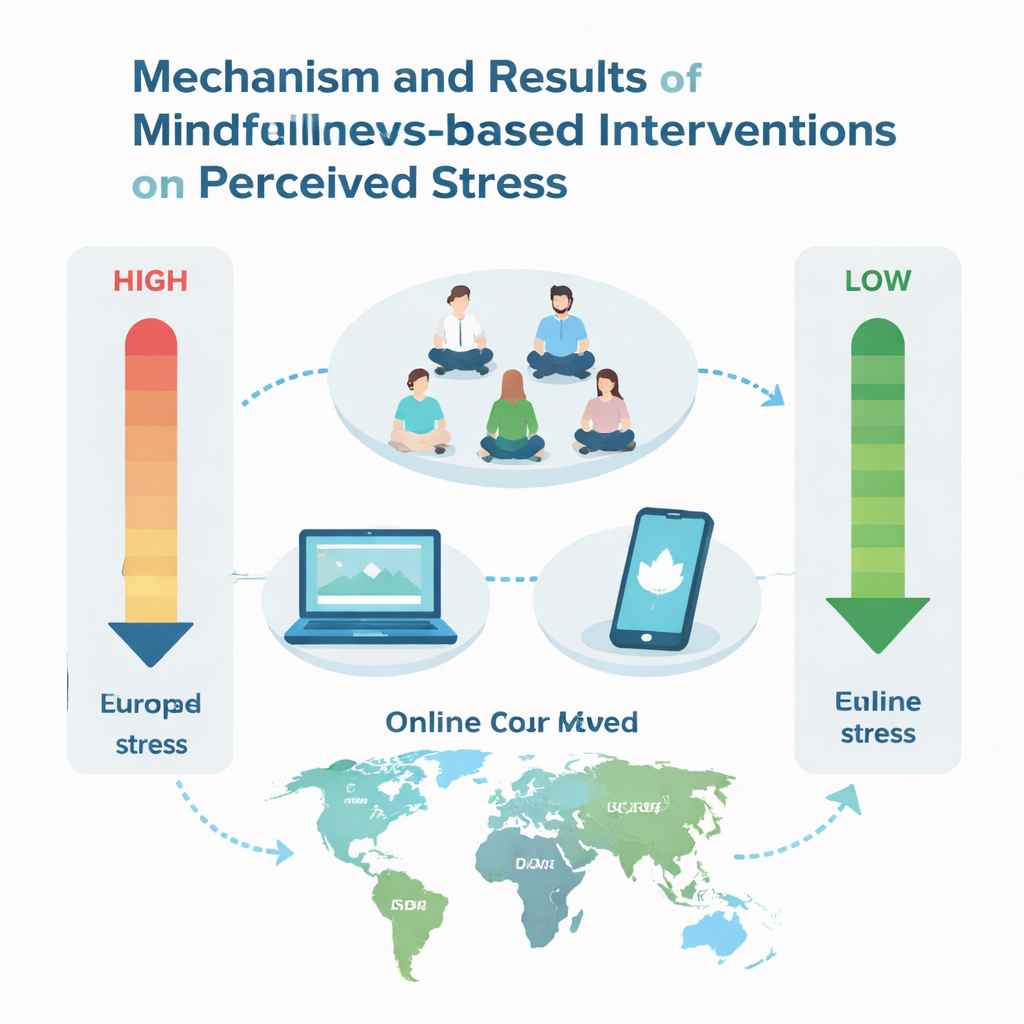
Before the programs began, stress levels in the mindfulness and comparison groups were similar, confirming that any later differences were not just due to one group starting out more frazzled. After the interventions, however, a clear pattern emerged. People who took part in mindfulness training reported a moderate drop in perceived stress, while those in the control groups showed only small or borderline changes, which might reflect the passage of time or general expectations of improvement. When the two groups were compared after the programs ended, the mindfulness groups had noticeably lower stress scores overall. This finding held up across regions and types of participants, suggesting that mindfulness is broadly helpful rather than being tied to one culture or job.
Apps, Classes, and Global Reach
The researchers also explored whether the way mindfulness was delivered made a difference. Both direct programs—face-to-face classes or guided online sessions—and indirect ones—self-paced apps and digital platforms—reduced stress. Interestingly, app-based and other indirect approaches often showed slightly larger effects, though with more variation, likely because the programs differed more in length, content, and how much participants stuck with them. Across North America, Europe, South America, Asia, and Oceania, mindfulness groups consistently ended up less stressed than their comparison groups, even though the size of the benefit varied. Careful checks suggested that the overall result was not driven by a few unusually positive studies or by missing negative ones.
What This Means for Everyday Life
For readers wondering whether mindfulness is more than a buzzword, this study offers encouraging news. Across many trials and types of people, learning to pay calm, non-judgmental attention to the present was linked to feeling less overwhelmed by life’s challenges. The authors note that the studies still differ a lot in who they include, how long the programs last, and what comparisons they use, and most focus only on short-term changes right after training. Even so, the direction of the findings is remarkably consistent. The takeaway for the layperson is straightforward: structured mindfulness practice—whether in a class or through a well-designed app—appears to be a practical, scalable way to dial down everyday stress, and future work will explore how long these benefits last and how they relate to changes in the body, such as heart rate or stress hormones.
Citation: Rajan, A., Kumar, M. & Raj P, P. Effects of mindfulness-based interventions on perceived stress among non-clinical adults: a systematic review and meta-analysis. npj Mental Health Res 5, 9 (2026). https://doi.org/10.1038/s44184-026-00188-4
Keywords: mindfulness, stress reduction, mental health, mobile health apps, adult well-being