Clear Sky Science · en
Learning from boundlessness: epistemic shifts towards a holistic worldview following psychedelic experiences
Why losing your boundaries might change everything
Psychedelic drugs like psilocybin and LSD are often in the news for their potential to treat depression and other mental health problems. But many people who take them outside the clinic report something more far‑reaching: a deep sense that the world, other people, and even their own identity have changed. This study asks what actually shifts in people’s way of understanding reality after such powerful experiences, and how feelings of awe and boundlessness might nudge them toward a more connected, compassionate worldview.
Listening to voices after powerful trips
Researchers surveyed 90 adults who said they had gone through long‑lasting, significant changes after using psychedelics such as psilocybin, LSD, ayahuasca, or DMT. Participants, mostly based in the UK and other Western countries, completed standard questionnaires about awe and about how strongly they felt connected to other people, non‑human beings, and the world. They also wrote open‑ended descriptions of how their sense of self, others, reality, boundaries, normality, and intuition had changed. This mixed approach let the team pair numbers with rich personal accounts of transformation. 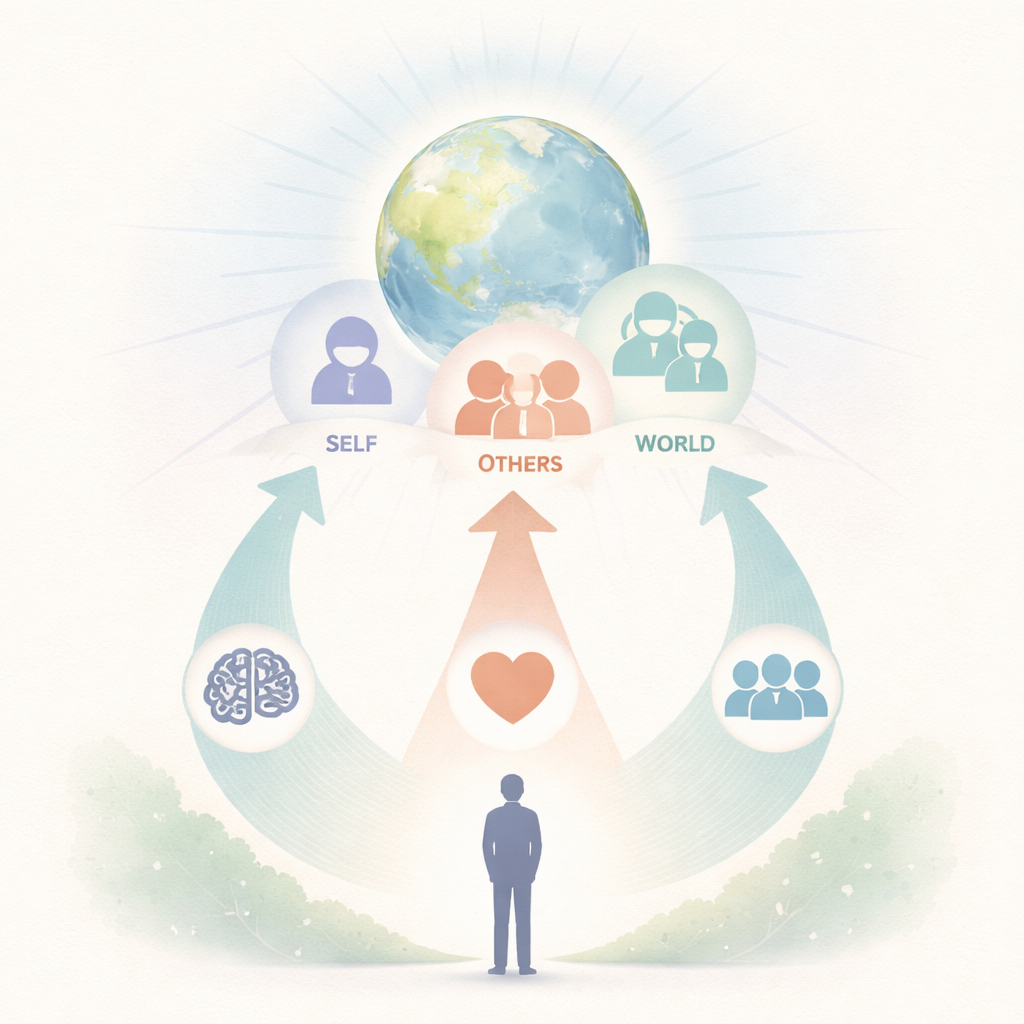
Awe, vastness, and feeling closer to everything
During their most transformative trip, participants reported intense awe: a feeling that something far larger than themselves was unfolding, often accompanied by a sense of unity. When the researchers compared awe scores with people’s current sense of overlap between self and others, they found a clear pattern. Those who had felt the greatest vastness and connectedness during the trip were more likely to say that they now experience a strong overlap between themselves, other humans, non‑human life, and the world as a whole. In simple terms, a powerful “wow” moment seemed linked to a lasting feeling that personal boundaries are softer and that one is part of a larger whole.
New ways of seeing self, others, and reality
The written stories revealed recurring themes of change. Many people described deeper self‑insight, greater kindness toward themselves, and a shift in priorities away from narrow goals toward meaning, authenticity, and purpose. In their relationships, they often reported stronger empathy, compassion, and an appreciation that everyone carries their own struggles and inner world. On a broader scale, participants said their picture of reality had opened up. They were more likely to see nature as alive and meaningful, to question the idea that there is a single, fixed “normal,” and to view social rules as human constructions rather than absolute truths. For many, fear of death softened, and curiosity about big questions—existence, spirituality, and consciousness—grew.
Living with softer boundaries
When asked directly about the line between self and world, most participants said it now felt more fluid. Some spoke of oneness or interrelatedness, describing life as an interconnected web in which every part has a role. Others felt that boundaries are somewhat illusory or malleable rather than hard walls. These shifts were not always easy. Alongside positive changes, a minority reported increased vulnerability, anxiety, or confusion after their experiences, and some struggled to integrate unusual perceptions into everyday life. Yet over half felt more able to cope with uncertainty and the unexpected, suggesting that, for many, learning to live with “groundlessness” became a source of strength rather than distress. 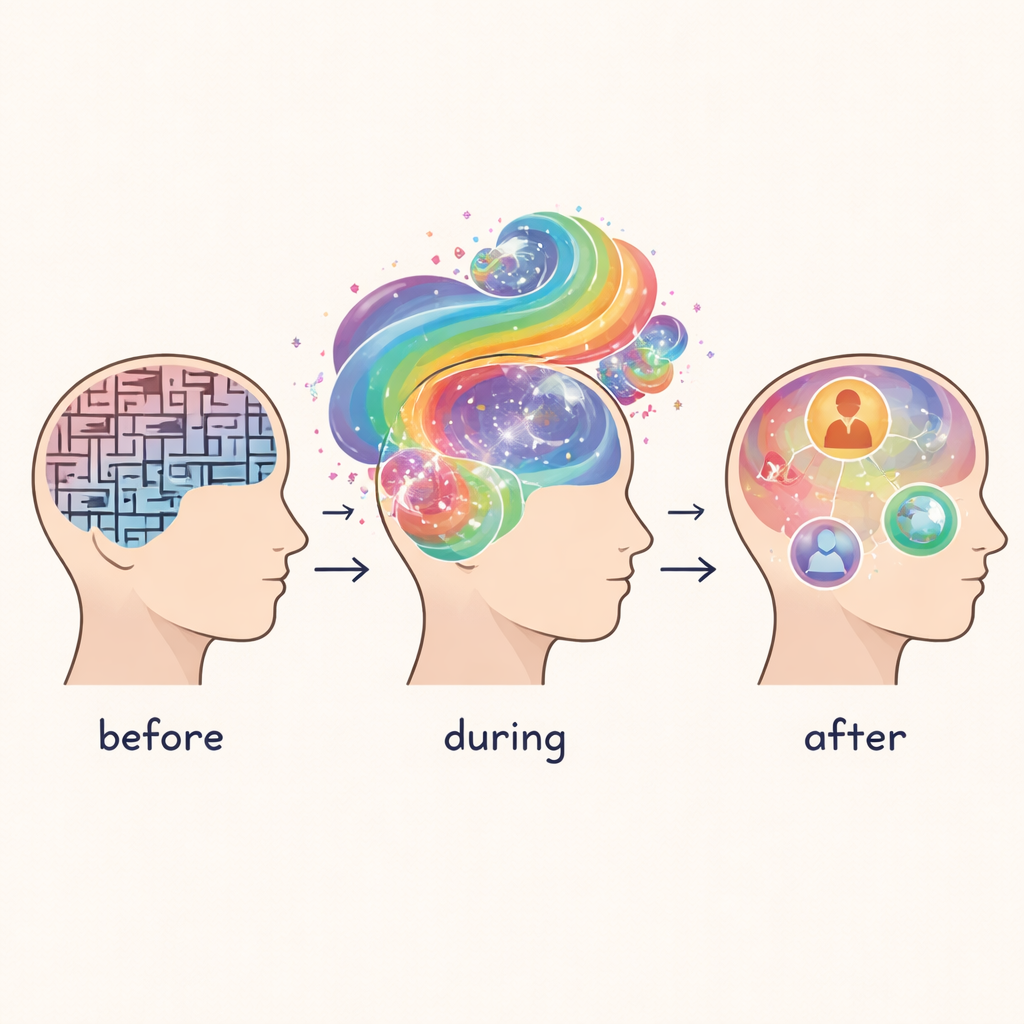
From trippy moments to a holistic outlook
Taken together, the findings suggest that psychedelic experiences can do more than lift mood. By powerfully challenging our usual sense of self and loosening fixed ideas about what is real and normal, they can spark lasting shifts toward seeing the world as complex, interconnected, and worthy of care. People often emerge feeling more compassionate, more accepting of differences, and more attuned to their intuition and values. At the same time, these boundary‑shaking experiences can be destabilizing without support. The authors argue that careful guidance and integration are crucial so that moments of awe become stepping stones toward a reflective, holistic worldview rather than sources of confusion or harm.
Citation: Argyri, E.K., Fraser, F., Schilling, S. et al. Learning from boundlessness: epistemic shifts towards a holistic worldview following psychedelic experiences. npj Mental Health Res 5, 6 (2026). https://doi.org/10.1038/s44184-026-00186-6
Keywords: psychedelics, awe, worldview, interconnectedness, compassion