Clear Sky Science · en
Towards climate-ready marine protected areas: challenges and strategic pathways
Why Changing Seas Matter to All of Us
Oceans feed billions of people, shield coasts from storms, store vast amounts of carbon, and offer places for work and recreation. As climate change heats and acidifies the seas while human activities strain marine life, many countries are turning to Marine Protected Areas (MPAs) as underwater parks. This article asks a timely question: how must these protected areas evolve so they still work in a rapidly changing ocean, and how can they help both nature and coastal communities adapt to the climate crisis?
The Promise and Limits of Today’s Ocean Parks
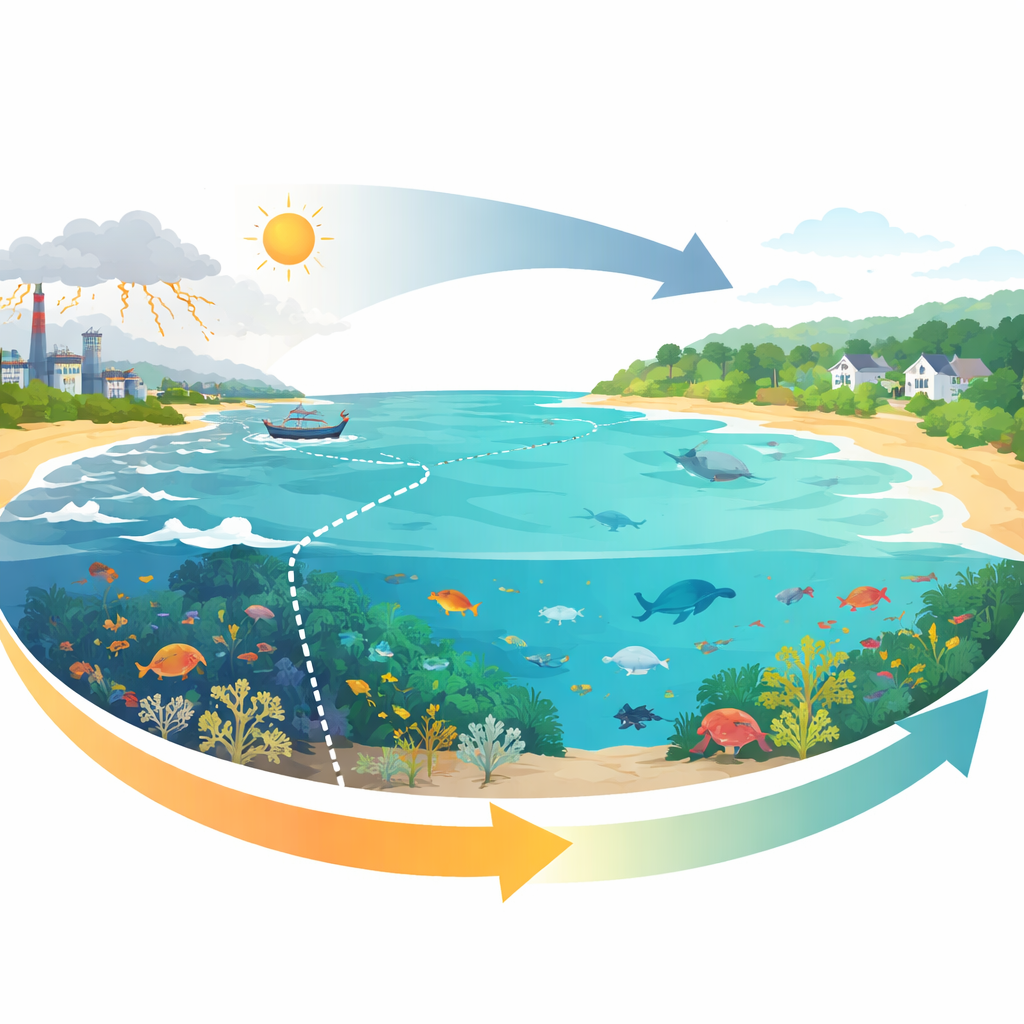
MPAs are stretches of sea where certain activities are restricted to safeguard wildlife and habitats. When well designed and enforced, they can boost fish populations, preserve fragile ecosystems such as seagrass meadows, and support tourism and small-scale fisheries nearby through “spillover” of marine life. They also help lock away carbon in seabeds and vegetation and soften the blow of storms and erosion along coasts. Yet the study shows that many MPAs, especially in Europe, exist largely “on paper”: rules are weak, enforcement is thin, and climate change was rarely considered when they were drawn on the map. As warming waters, shifting currents, and extreme events rearrange marine life, fixed boundaries and old conservation targets often no longer match where species actually live.
What It Means to Be Climate-Ready
To explore how MPAs can keep pace with change, the authors convened more than 70 experts from science, government, civil society, and industry in Europe, then followed up with a smaller group for in‑depth scoring of priorities. They use the term “climate-ready” for MPAs that are explicitly designed and managed to watch for, anticipate, and respond to climate impacts such as warming, acidification, oxygen loss, and moving species. Climate-ready MPAs are not just better wildlife refuges. They are also social and political projects that rely on fair rules, stable funding, and public trust so that restrictions are respected and benefits are shared. From the workshops, three big dimensions emerged: ecological resilience, social and economic fairness, and effective governance.
Keeping Ocean Life Connected and Under Watch
On the ecological side, experts stressed that monitoring is the backbone of climate-readiness. Managers need reliable baseline information on who lives in an area, how food webs are structured, where carbon and nutrients flow, and how conditions are changing to detect warning signs and climate “tipping points.” Participants ranked gaps in data on species, carbon cycles, and the links between sites as among the most critical problems. They also highlighted the need for MPA networks that work as connected pathways, so fish, larvae, and other organisms can move to new, more suitable waters as the climate shifts. Areas that are naturally more sheltered from extremes can serve as “refuges” if they are protected and linked. The group saw great potential in coordinated, long-term monitoring programs and in weaving climate scenarios directly into management plans, even though such steps demand significant effort and cooperation.
People, Livelihoods, and Fair Rules
Healthy seas alone do not guarantee successful MPAs. The study finds that long-term funding shortfalls, weak involvement of local residents, and tensions between conservation, climate goals, and jobs are major stumbling blocks. Coastal communities often view MPAs mainly as a loss of access rather than a source of security and opportunity. Experts argued that climate-ready MPAs must be designed with people, not just for them: involving fishers, tourism operators, and other groups in decisions; using local knowledge to interpret change; and exploring alternative or complementary livelihoods such as carefully managed tourism or low-impact aquaculture where appropriate. Co‑management arrangements—where authorities share responsibility with communities—were ranked as high-impact ways to build trust and improve compliance, though they require time and support to set up.
Better Rules, Smarter Planning, and Lasting Support
The governance dimension focuses on how laws, institutions, and funding streams either enable or block climate-ready MPAs. Participants pointed to fragmented responsibilities across sectors like fisheries, energy, and conservation, and to a lack of strict, well-enforced protected zones as key weaknesses. At the same time, they saw strong opportunities in updating laws so that climate adaptation becomes an explicit purpose of MPAs, aligning marine spatial planning with conservation goals, and improving cooperation across borders. Stable, long-term financing was viewed as essential—from public budgets combined with carefully designed “blue” finance tools—to fund monitoring, enforcement, community engagement, and restoration. Community-led surveillance and enforcement were seen as relatively efficient ways to strengthen real-world protection.
A Roadmap for Future-Proof Ocean Protection
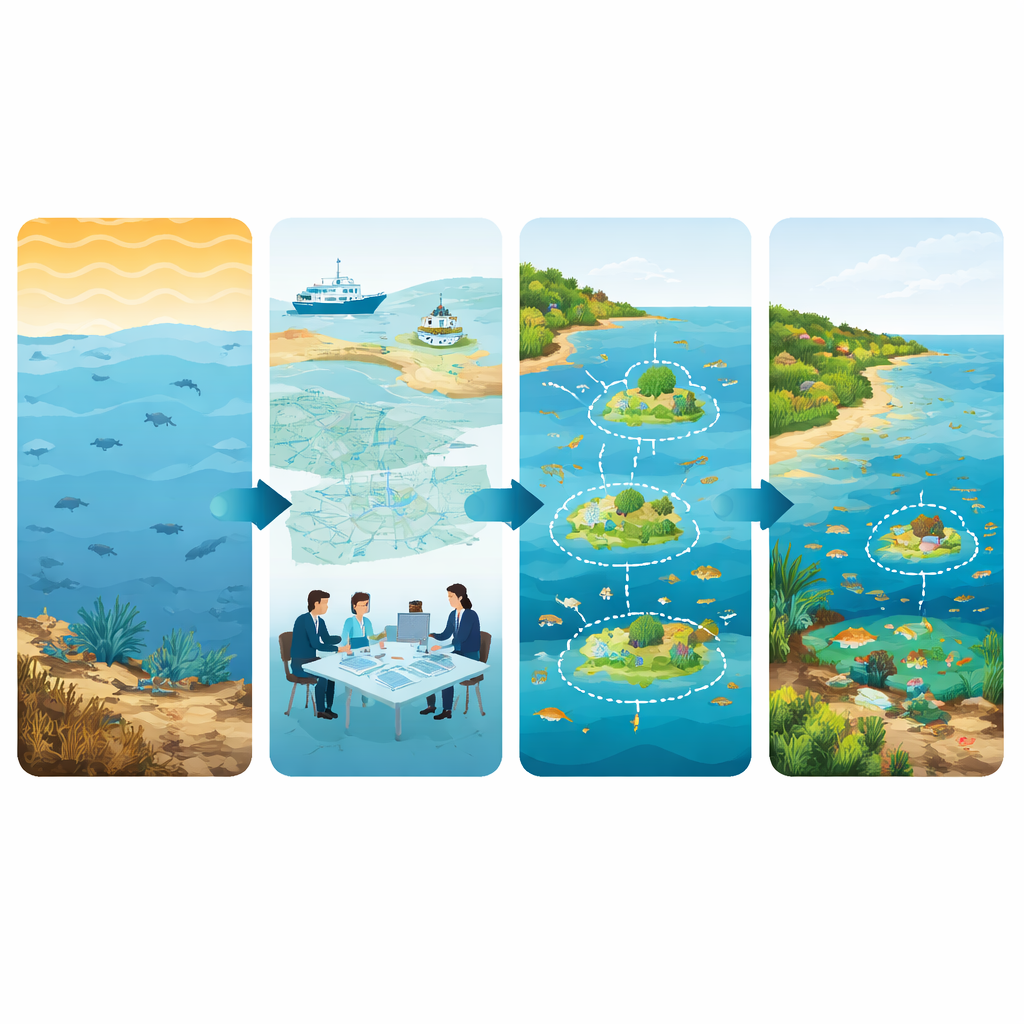
Drawing these strands together, the authors outline twelve recommendations grouped into three tiers: immediate foundations (such as officially recognizing climate adaptation in MPA rules, improving monitoring, and securing funding), enabling steps (like more flexible zoning and cross-sector policy alignment), and long-term knowledge and capacity building (including decision-support tools and training climate‑literate managers). They distill these into four overarching priorities: strengthen ecological resilience with better data and planning; build social legitimacy and fairness through inclusive governance and support for livelihoods; integrate climate and biodiversity policies across sectors; and secure durable finance. In plain terms, the article concludes that MPAs must evolve from static “do‑not‑touch” zones into dynamic systems of resilience—places where science, local experience, and fair institutions work together so oceans and coastal societies can weather the storms of a warming world.
Citation: Fuchs, G., Stelljes, N., Kroos, F. et al. Towards climate-ready marine protected areas: challenges and strategic pathways. npj Ocean Sustain 5, 15 (2026). https://doi.org/10.1038/s44183-026-00184-3
Keywords: marine protected areas, climate adaptation, ocean conservation, coastal communities, environmental governance