Clear Sky Science · en
Charting the course for management: a global analysis of effects of vessels on marine megafauna
Boats, Big Animals, and Busy Seas
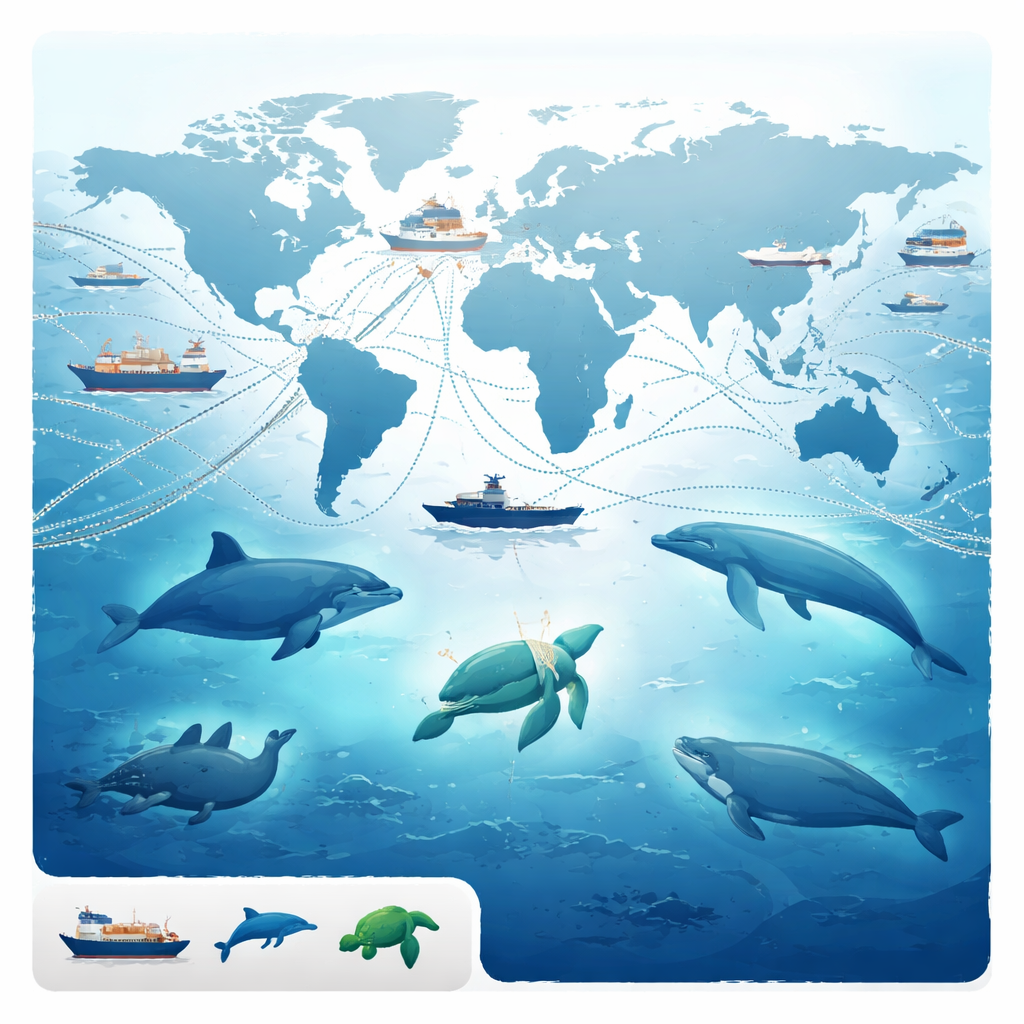
From cargo ships to weekend fishing boats, our oceans are crisscrossed by vessels like never before. This constant traffic does more than move goods and people—it reshapes the lives of whales, dolphins, sea turtles, seals, and large fish. This paper pulls together decades of research from around the world to ask a basic question with big implications: what are all these boats really doing to the ocean’s largest animals, and how can we manage the damage?
The Many Ways Boats Disturb Ocean Giants
Vessels affect marine life in several overlapping ways. Their propellers and hulls can cause direct injuries and deaths when animals are struck. Engines create underwater noise that travels far, interfering with communication and navigation. Anchors and propellers tear up seagrass beds and coral reefs, and boats can carry pollution and invasive species from place to place. The animals most at risk—collectively called marine megafauna—include whales, dolphins, seals, manatees, sea turtles, and large fishes. Many of these species are already threatened with extinction, so even small additional stresses from vessels can tip the balance against their survival.
What a Global Synthesis Reveals
To understand the full picture, the authors carried out a global meta-analysis, combining results from 204 scientific studies published between 1979 and 2022. Altogether, these studies produced 1,850 comparisons of conditions with and without vessel disturbance, covering 57 species and waters around every continent. Most research focused on marine mammals, especially dolphins and whales, with far fewer studies on sea turtles and large fish. The team examined four broad kinds of response: how animals behave, how they vocalize, how their bodies react physiologically, and how their populations and local abundance change over time.
Behavior, Voices, and Bodies Under Pressure
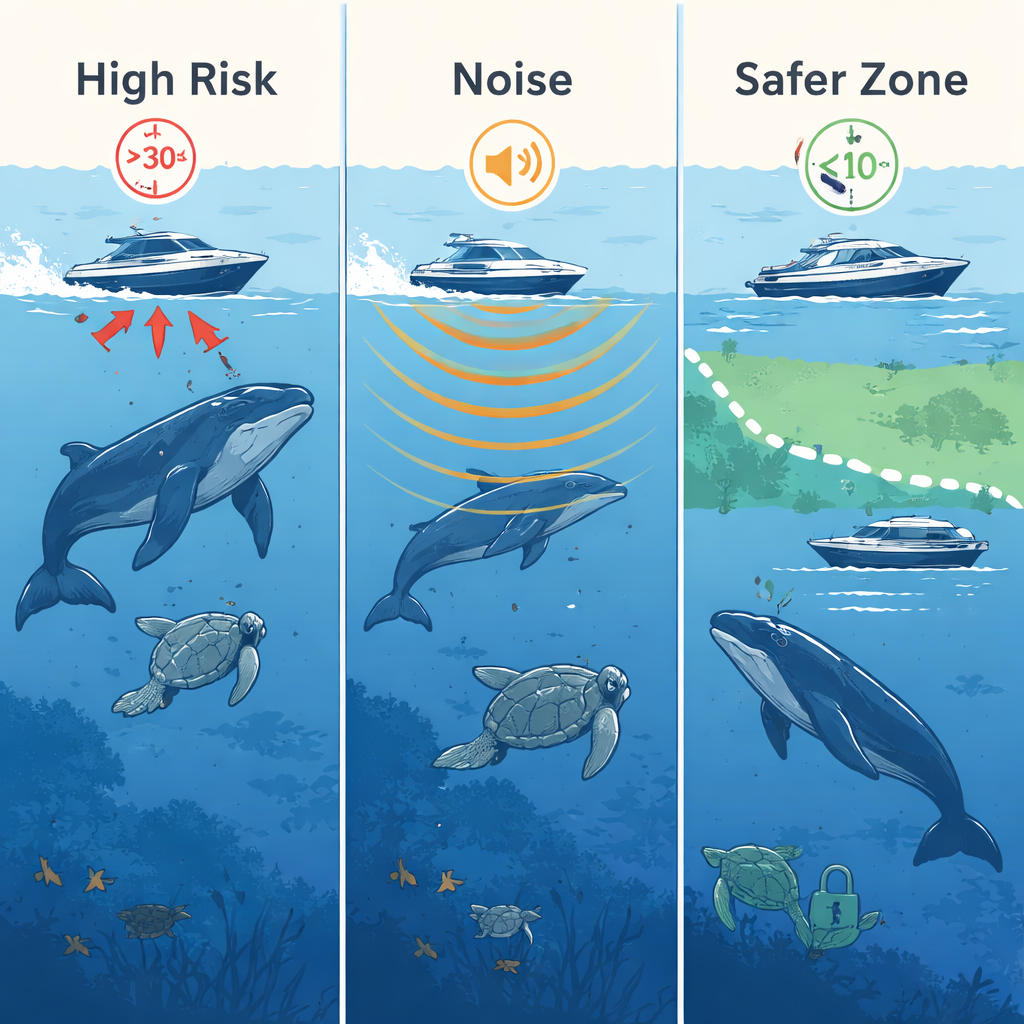
Across studies, behavior was the most commonly measured response, and it showed clear, consistent changes. Animals altered how and where they moved, how they fed, and how they socialized when boats were nearby. The single strongest driver of these changes was how close vessels came: short approach distances caused the largest shifts in behavior in many species. Sea turtles and other marine reptiles stood out as particularly sensitive, often changing course, diving patterns, or habitat use in response to boats. Vocal behavior also shifted. Whales, dolphins, and seals frequently changed the loudness, pitch, or timing of their calls—an attempt to be heard over engine noise. Physiological studies, mostly on marine mammals, documented stress responses such as elevated heart rates and stress hormones, especially when animals faced direct presence of vessels rather than just varying noise levels.
From Individual Stress to Population Risk
When these disturbances occur repeatedly, they can accumulate into population-level problems. The analysis found that species already at higher risk of extinction often showed larger changes in abundance or other population indicators linked to vessel activity. For small or slowly reproducing populations, the loss or reduced breeding success of even a few individuals can have outsized effects. Noise and repeated disturbance can push animals out of important feeding or breeding areas, reduce reproductive success, or increase the chance of deadly strikes. In other words, busy shipping lanes and popular boating spots can quietly erode the prospects of some of the ocean’s most vulnerable inhabitants.
Rethinking How and Where We Operate Boats
The authors conclude that no single fix will protect marine megafauna from vessel impacts. Instead, they propose a “multi-pronged” management approach. Engineering solutions—such as quieter engines, redesigned hulls, propeller guards, and detection systems that alert captains to nearby animals—can reduce both noise and collisions. Policy tools like speed limits, minimum approach distances, and targeted regulations in critical habitats have already shown that they can lower risks when they are enforced and understood by boaters. Spatial and seasonal rules, such as slowing ships where whales are calving or restricting traffic near turtle nesting beaches at key times, can further reduce harm. Crucially, these measures must be backed by education and a culture of stewardship so that commercial operators and recreational boaters alike see themselves as partners in protecting marine wildlife.
Why This Matters for the Future of Our Oceans
For a lay reader, the takeaway is straightforward: the way we move across the sea profoundly shapes the lives of the animals that live in it. The study shows that distance from boats, overall traffic levels, and simple choices like speed and route can mean the difference between safe passage and chronic stress or death for whales, turtles, and other large marine animals. By combining better technology, smart rules, and informed boating habits, society can keep enjoying and benefiting from the ocean while giving its largest and most vulnerable residents a better chance to thrive in an increasingly crowded seascape.
Citation: Saltzman, J., Yeager, E.A., Hlavin, J.F. et al. Charting the course for management: a global analysis of effects of vessels on marine megafauna. npj Ocean Sustain 5, 11 (2026). https://doi.org/10.1038/s44183-026-00182-5
Keywords: vessel traffic, marine megafauna, underwater noise, ship strikes, ocean conservation