Clear Sky Science · en
Determining the percentage of recycled plastic content in a plastic product
Why This Matters for Everyday Plastic Use
Plastic bottles, food containers, and packaging increasingly claim to contain “recycled content,” but today there is no reliable way to check whether those promises are true just by testing the final product. This study introduces a new non-destructive method to estimate how much recycled plastic is actually in a plastic item, using a combination of electrical and optical measurements plus artificial intelligence. The work could help regulators, manufacturers, and consumers verify sustainability claims and support a more honest circular economy for plastics. 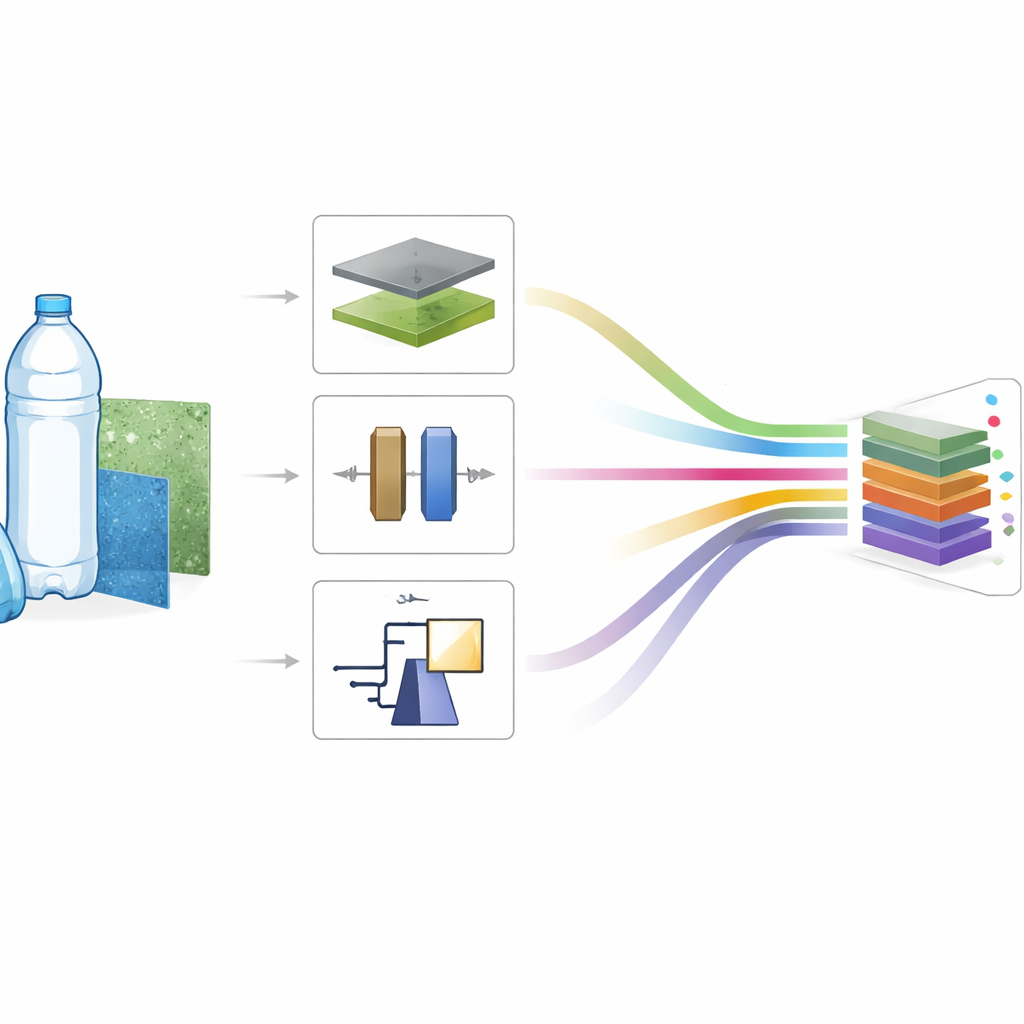
The Challenge of Trusting Recycled Labels
Global plastic waste has reached hundreds of millions of tons per year, yet only a small fraction is truly recycled. Many policies now aim to require that products include a minimum percentage of recycled plastic. The problem is that once plastic has been melted and reshaped, its basic chemical identity looks almost the same whether it is new (“virgin”) or recycled. Standard laboratory tools that measure weight loss on heating, melting behavior, or even detailed molecular structures cannot directly tell how much of a finished item came from recycled sources. Audits of supply chains and optional chemical tracers exist, but they are incomplete, rare in real products, or too easy to bypass.
How Plastic Changes When It Is Recycled
Although recycling does not typically change the overall chemistry of a plastic like PET (the material in most beverage bottles), it does damage its long molecular chains. Repeated heating, melting, and exposure to oxygen break chains apart and introduce defects and tiny impurities. These subtle changes alter how the plastic stores electric charge, how it loses energy as heat in an electric field, and how its molecular bonds vibrate when probed with infrared light. The authors realized that, while no single measurement captures all these effects clearly enough to reveal recycled content, combining several complementary signals might create a reliable fingerprint of how much recycled material is present.
Many Measurements, One Combined Fingerprint
The team built a “multi-modal” sensing setup that uses four different kinds of tests on thin PET films containing known amounts of recycled material from 0% to 100%. First, triboelectric tests repeatedly press and slide metal plates against the plastic, then measure how quickly the built-up charge leaks away. Recycled samples retain charge longer, indicating more electrically active defects. Second, dielectric and impedance measurements place the plastic between capacitor plates and probe how easily it polarizes and how much energy it loses; recycled content tends to reduce its ability to store charge and increase its tendency to dissipate energy. Third, capacitance tests in a simple resistor–capacitor circuit examine how quickly the voltage decays during charging and discharging, again reflecting differences in charge storage linked to defects. Fourth, mid-infrared spectroscopy shines infrared light on the plastic and measures which wavelengths are absorbed, revealing small but systematic shifts in specific molecular bond vibrations as recycling alters chain ends and crystallinity. 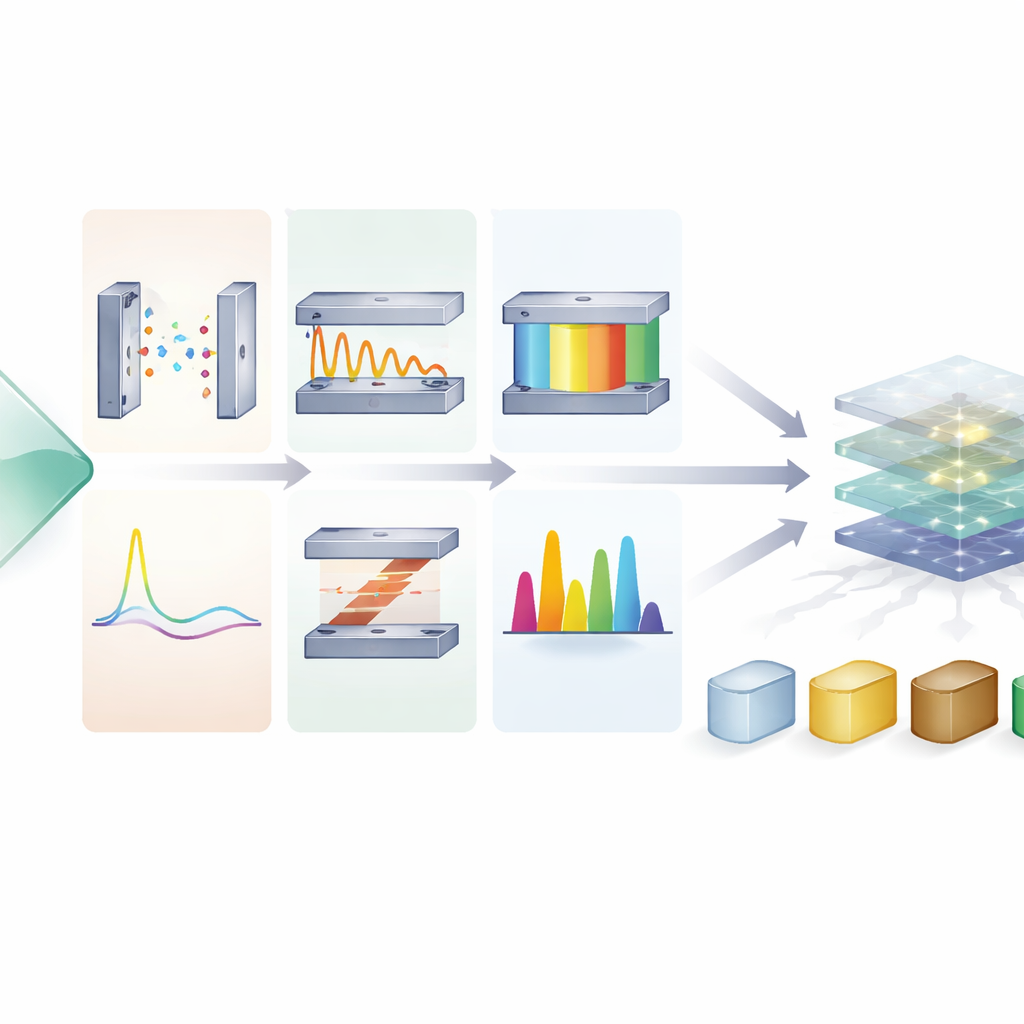
Teaching a Machine to Read the Signals
Because each measurement produces a complex curve rather than a single number, and because the differences between samples can be subtle, the researchers turned to machine learning. They fed all four types of data into a deep neural network designed to compress the rich infrared spectra into compact numerical summaries and then combine those with distilled features from the electrical measurements. To cope with the limited number of physical samples, they used data augmentation, creating many realistic variations based on the statistics of their measurements. The resulting model could classify PET films into discrete recycled-content categories with about 92% overall accuracy across 0–100% and more than 97% accuracy in the practically important range of 0–50% recycled content, where future regulations are likely to focus.
What This Means for a Cleaner Plastic Future
To a non-specialist, the key result is that the authors have shown it is technically feasible to estimate how much recycled plastic is in a product without cutting it apart or adding special markers in advance. By combining several non-destructive tests into a single “fingerprint,” then interpreting that fingerprint with artificial intelligence, their method can tell apart plastics with different recycled content levels with high accuracy—at least for PET made from beverage bottles. With further development, including adaptation to other plastics and more varied waste streams, this approach could underpin handheld or in-line factory tools that verify recycled content claims. That, in turn, would make it much easier to enforce recycling policies, reward honest manufacturers, and ensure that the plastics we use and reuse move us closer to a genuine circular economy.
Citation: Zhao, Y., Adhivarahan, C., Jyothula, C.L. et al. Determining the percentage of recycled plastic content in a plastic product. Commun Eng 5, 51 (2026). https://doi.org/10.1038/s44172-026-00639-y
Keywords: recycled plastics, plastic waste, polyethylene terephthalate, non-destructive testing, machine learning sensors